Ch. 5 · Driving Method
Which of the following is correct when you pass a place where the sign shown is posted?
[Multiple choice · Easy]
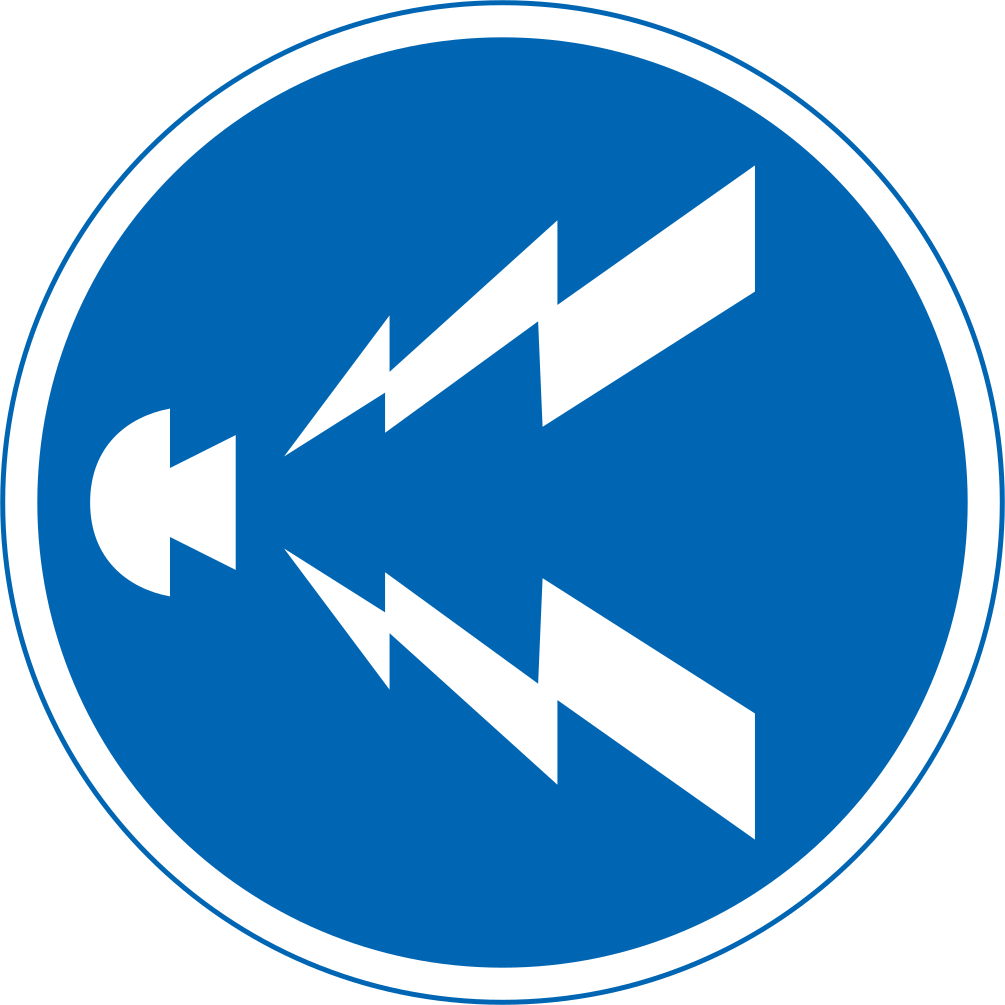
- A.You only need to sound the horn if you sense danger.
- B.You must sound the horn.✓
- C.If you slow to a stop-ready speed (jokō), you do not need to sound the horn.
- D.At night, you may flash your headlights instead of sounding the horn.
Answer: B: You must sound the horn.
Explanation
The sign shown is “Sound Horn.” When you pass a place with this sign, you must sound the horn — even if you are driving slowly, and even at night. The separate “Horn Zone” sign works differently: inside that zone you sound the horn when passing intersections, bends, and hilltops with poor visibility.
Driving school curriculumStage 1 – Topic 10: Lane changes and similar maneuvers


Source: Ch. 5 Driving Method · Section (第5節 進路変更など) · Rules of the Road, Ch.5 §5 Changing Course / 1(5) You must sound the horn when passing a place with a “Sound Horn” sign (Appendix 3(1) 36), and when passing an intersection, bend, or hilltop with poor visibility inside a section with a “Horn Zone” sign (Appendix 3(1) 37).
🤖 Dig deeper with AI
Send this question's context to ChatGPT for a richer explanation. The prompt also asks the AI to point you back to this chapter's practice quiz.
If the button doesn't open ChatGPT, tap Copy and paste it into Claude, Gemini, or any other LLM you prefer. On a free plan, Claude (claude.ai) tends to produce more accurate explanations that respect this site's content.
See the glossary for definitions of key terms.
Source content excerpted from the NPA “Rules of the Road” instructional manual, in the public domain under Japanese Copyright Act Article 13(2). Explanations are AI-assisted and copyrighted by the MenkyoQuest editorial team.