Written-test study material
Ch. 1 · Common Conduct
Chapter 1 of the Japanese driving license written test: traffic signals, signs, road markings, and the basic conduct expected of all road users. Free AI-explained practice questions for both provisional and full license preparation.
Key topics
Signal and Sign Hierarchy. Police officer hand signals override traffic lights; traffic controller signals override signs and markings. Regulatory signs (red circle, blue background) prohibit or mandate actions; warning signs (yellow diamond) advise caution but carry no penalty. Road Marking Colors. Yellow solid line = stopping and parking prohibited; yellow broken line = parking prohibited (stopping allowed); solid yellow center line = no crossing to overtake. Special Signals. Flashing yellow = jokō and proceed with caution; flashing red = complete stop, then proceed. Arrow signals permit only the indicated direction; pedestrians must not start crossing when the green signal flashes. Prohibited Actions. Never ask an intoxicated person to drive, even "just a little" alcohol. No littering, no placing signs that mimic traffic controls, no parking on roads to shop.
Common pitfalls
Signal vs. Police Priority. Police hand signals always override traffic lights, not the reverse. Yellow Line Confusion. Solid yellow line at road edge = stopping and parking banned; broken yellow = parking only banned. "No Overtaking" Does Not Mean No Passing. The sign prohibits overtaking, but passing a stationary or slow vehicle may be allowed depending on context.
All 122 questions in this chapter
Tap any question to expand its choices, answer, and explanation.
Q1Traffic rules are established as a common set of promises that everyone must follow in order to use the roads safely and smoothly.[True / False · Easy]
Answer: ✓ True
Explanation: The text clearly states, "Traffic rules are established as a common set of promises that everyone must follow in order to use the roads safely and smoothly." This statement is correct.
Driving school curriculum: Stage 1 – Topic 1: Driver's mindset
Source: Ch. 1 · Section (第1節 基本的な心構え) · 1 交通規則を守ること - 交通規則は、このようなことから、みんなが道路を安全、円滑に通行する上で守るべき共通の約束事として決められているものです。
Q2Following traffic rules is a fundamental right of being a member of society.[True / False · Medium]
Answer: ✕ False
Explanation: The text states, "Following traffic rules is a fundamental responsibility of being a member of society." The correct term is "responsibility," not "right." This is a trick question involving word substitution.
Driving school curriculum: Stage 1 – Topic 1: Driver's mindset
Source: Ch. 1 · Section (第1節 基本的な心構え) · 1 交通規則を守ること - 言い換えれば、交通規則を守ることは、社会人としての基本的な責務なのです。
Q3When using the road, you must be considerate not to cause unpleasant noise or other disturbances to people living along the roadside.[True / False · Easy]
Answer: ✓ True
Explanation: Guideline (2) in the text clearly states, "Do not think only of your own convenience when traveling, but be considerate not to cause unpleasant noise or other disturbances to people living along the roadside." This statement is correct.
Driving school curriculum: Stage 1 – Topic 1: Driver's mindset
Source: Ch. 1 · Section (第1節 基本的な心構え) · 2 道路を通行するときの心構え(2)自分の通行の利便だけを考えるのではなく、沿道で生活している人々に対して、不愉快な騒音などの迷惑を掛けないように配慮すること。
Q4Pedestrians do not need to know the characteristics of vehicles, but vehicle drivers must be well aware of characteristics such as blind spots and the inner-wheel difference.[True / False · Medium]
Answer: ✕ False
Explanation: Guideline (5) in the text states, "Not only vehicle drivers, but also pedestrians and people riding specified small motorized bicycles or bicycles must be well aware of vehicle characteristics such as blind spots and the inner-wheel difference." Pedestrians also need to know these characteristics.
Driving school curriculum: Stage 1 – Topic 1: Driver's mindset
Source: Ch. 1 · Section (第1節 基本的な心構え) · 2 道路を通行するときの心構え(5)自動車の運転者はもちろん、歩行者、特定小型原動機付自転車や自転車に乗る人も、自動車の死角、内輪差など自動車の特性をよく知つておくこと。
Q5Autonomous vehicles in specified autonomous operation mode may have a driver on board and may suddenly stop on the road.[True / False · Hard]
Answer: ✕ False
Explanation: Guideline (6) in the text states, "Be well aware that autonomous vehicles in specified autonomous operation mode have no driver on board and may suddenly stop on the road." The correct statement is that there is "no driver," so "may have a driver on board" is incorrect.
Driving school curriculum: Stage 1 – Topic 1: Driver's mindset
Source: Ch. 1 · Section (第1節 基本的な心構え) · 2 道路を通行するときの心構え(6)特定自動運行中の自動運転車については、運転者がいないことや道路上で突然停止することがあることをよく知つておくこと。
Q6If you see someone in trouble due to a traffic accident or vehicle breakdown, it is important to cooperate with each other by contacting authorities or providing assistance.[True / False · Easy]
Answer: ✓ True
Explanation: The Rules of the Road, section on Mindset (4), clearly states: "If you see someone in trouble due to a traffic accident or breakdown, cooperate with each other by contacting authorities or providing assistance." The statement is correct.
Driving school curriculum: Stage 1 – Topic 1: Driver's mindset
Source: Ch. 1 · Section (第1節 基本的な心構え) · 2 道路を通行するときの心構え(4)交通事故や、故障で困つている人を見たら、連絡や救護に当たるなど、お互いに協力しあうこと。
Q7A person operating a remotely operated small vehicle must always be near the vehicle.[True / False · Medium]
Answer: ✕ False
Explanation: The Rules of the Road, section on Mindset (7), states: "Regarding remotely operated small vehicles, be aware that the person operating them may not always be nearby, and that they may stop suddenly on the road." Since the operator may not always be nearby, the statement is incorrect.
Driving school curriculum: Stage 1 – Topic 1: Driver's mindset
Source: Ch. 1 · Section (第1節 基本的な心構え) · 2 道路を通行するときの心構え(7)遠隔操作型小型車については、通行させている人が近くにいないこともあることや道路上で突然停止することがあることをよく知つておくこと。
Q8Which of the following is incorrect as a mindset when using the road?[Multiple choice · Medium]
- A.Pay attention to the movements of pedestrians and vehicles around you, and travel with consideration for others.
- B.Do not throw objects on the road or place things there without permission.
- C.Travel with your own convenience as the top priority.
- D.Acquire the knowledge necessary for emergency first aid in case of an accident.
Answer: C: Travel with your own convenience as the top priority.
Explanation: The Rules of the Road, section on Mindset (2), states: "Do not think only of your own convenience, but also consider not causing unpleasant noise or other inconvenience to people living along the road." Thinking only of your own convenience is incorrect. The other options align with the mindset described in the Rules of the Road.
Driving school curriculum: Stage 1 – Topic 1: Driver's mindset
Source: Ch. 1 · Section (第1節 基本的な心構え) · 2 道路を通行するときの心構え(1)(2)(3)(8)
Q9What does emergency first aid mean? Choose the correct answer.[Multiple choice · Hard]
- A.Preventive measures to avoid traffic accidents.
- B.The necessary emergency treatment to rescue injured persons at the scene of a traffic accident.
- C.Emergency treatment to repair a broken-down vehicle.
- D.The act of contacting the police or ambulance after a traffic accident.
Answer: B: The necessary emergency treatment to rescue injured persons at the scene of a traffic accident.
Explanation: The Rules of the Road, section on Mindset (3), clearly defines it as: "Emergency first aid (refers to the necessary emergency treatment to rescue injured persons at the scene of a traffic accident)." Option 2 is correct. The other options are not described in the Rules of the Road.
Driving school curriculum: Stage 1 – Topic 1: Driver's mindset
Source: Ch. 1 · Section (第1節 基本的な心構え) · 2 道路を通行するときの心構え(3)応急救護処置(交通事故の現場においてその負傷者を救護するため必要な応急の処置をいいます。)
Q10Which of the following is NOT mentioned in the Rules of the Road regarding what you should know about autonomous vehicles?[Multiple choice · Medium]
- A.They may be used without the driver looking ahead.
- B.There may be no driver in an autonomous vehicle during specified autonomous operation.
- C.An autonomous vehicle during specified autonomous operation may stop suddenly on the road.
- D.Autonomous vehicles are always safer than manual driving.
Answer: D: Autonomous vehicles are always safer than manual driving.
Explanation: The Rules of the Road, section on Mindset (6), mentions that autonomous vehicles may be used without the driver looking ahead, that there may be no driver during specified autonomous operation, and that they may stop suddenly on the road. However, there is no statement that "autonomous vehicles are always safer than manual driving."
Driving school curriculum: Stage 1 – Topic 1: Driver's mindset
Source: Ch. 1 · Section (第1節 基本的な心構え) · 2 道路を通行するときの心構え(6)自動運転車については、運転者が前方を見ないで使われることもあることをよく知つておくこと。また、特定自動運行中の自動運転車については、運転者がいないことや道路上で突然停止することがあることをよく知つておくこと。
Q11You must obey traffic light signals.[True / False · Easy]
Answer: ✓ True
Explanation: Article 1(1) of the Rules of the Road states that "you must obey traffic light signals." This is a fundamental principle of traffic rules. The types of traffic light signals and their meanings are defined in the appendix.
Driving school curriculum: Stage 1 – Topic 3: Following road signs and markings
Source: Ch. 1 · Section (第2節 信号、標識・標示に従うこと) · 1 信号の意味(1)
Q12If the signal to the side is red, the signal ahead must be green.[True / False · Medium]
Answer: ✕ False
Explanation: Article 1(2) of the Rules of the Road states that "even if the signal to the side is red, the signal ahead is not necessarily green." Special traffic lights exist, such as those where all directions are temporarily red or staggered-timing signals, so you must always check the signal ahead.
Driving school curriculum: Stage 1 – Topic 3: Following road signs and markings
Source: Ch. 1 · Section (第2節 信号、標識・標示に従うこと) · 1 信号の意味(2)
Q13Specified small motorized bicycles must also obey signals on traffic lights marked "Pedestrians and Bicycles Only."[True / False · Hard]
Answer: ✓ True
Explanation: Article 1(3) of the Rules of the Road states that "specified small motorized bicycles and other bicycles must also obey the signals when the traffic light is marked 'Pedestrians and Bicycles Only.'"
Driving school curriculum: Stage 1 – Topic 3: Following road signs and markings
Source: Ch. 1 · Section (第2節 信号、標識・標示に従うこと) · 1 信号の意味(3)
Q14When there is a white sign with a blue left-pointing arrow, you may turn left even if the signal ahead is red or yellow, but you must not interfere with pedestrians crossing in accordance with the signal.[True / False · Medium]
Answer: ✓ True
Explanation: Article 1(4) of the Rules of the Road states that "vehicles may turn left even if the signal ahead is red or yellow, while paying attention to pedestrians and surrounding traffic," and "you must not interfere with pedestrians, specified small motorized bicycles, or bicycles crossing in accordance with the traffic light."
Driving school curriculum: Stage 1 – Topic 3: Following road signs and markings
Source: Ch. 1 · Section (第2節 信号、標識・標示に従うこと) · 1 信号の意味(4)
Q15Which of the following correctly lists the types of main road signs?[Multiple choice · Easy]
- A.Three types: regulatory signs, indication signs, and warning signs
- B.Four types: regulatory signs, indication signs, warning signs, and guide signs
- C.Three types: regulatory signs, indication signs, and guide signs
- D.Three types: regulatory signs, warning signs, and guide signs
Answer: B: Four types: regulatory signs, indication signs, warning signs, and guide signs
Explanation: Article 2(1) of the Rules of the Road states that "main road signs include four types: regulatory signs, indication signs, warning signs, and guide signs." All four types are included in main road signs.
Driving school curriculum: Stage 1 – Topic 3: Following road signs and markings
Source: Ch. 1 · Section (第2節 信号、標識・標示に従うこと) · 2 標識の意味(1)
Q16Regulatory signs inform road users in advance of dangers and situations requiring caution on the road and urge caution.[True / False · Medium]
Answer: ✕ False
Explanation: According to Article 2(2) of the Rules of the Road, regulatory signs "prohibit specific traffic methods or designate that traffic must follow specific methods." Warning signs, as described in Article 2(4), serve the role of informing road users of dangers on the road.
Driving school curriculum: Stage 1 – Topic 3: Following road signs and markings
Source: Ch. 1 · Section (第2節 信号、標識・標示に従うこと) · 2 標識の意味(2)(4)
Q17Guide signs indicate place names, directions, distances, and other information to facilitate traffic.[True / False · Easy]
Answer: ✓ True
Explanation: Article 2(5) of the Rules of the Road states that "guide signs indicate place names, directions, distances, and other information to facilitate traffic." Their purpose is to improve convenience for road users.
Driving school curriculum: Stage 1 – Topic 3: Following road signs and markings
Source: Ch. 1 · Section (第2節 信号、標識・標示に従うこと) · 2 標識の意味(5)
Q18Which of the following correctly describes auxiliary signs?[Multiple choice · Medium]
- A.Auxiliary signs are attached above main signs
- B.Auxiliary signs supplement the meaning of regulatory signs and other signs, and are usually attached below main signs
- C.Auxiliary signs are the same size as main signs
- D.Auxiliary signs are used only with indication signs
Answer: B: Auxiliary signs supplement the meaning of regulatory signs and other signs, and are usually attached below main signs
Explanation: Article 2(6) of the Rules of the Road states that "auxiliary signs are usually attached below main signs and indicate the reason for a regulation or specify the times, days of the week, types of vehicles, and other conditions to which the regulation applies."
Driving school curriculum: Stage 1 – Topic 3: Following road signs and markings
Source: Ch. 1 · Section (第2節 信号、標識・標示に従うこと) · 2 標識の意味(6)
Q19There are two types of road markings: regulatory markings and indication markings.[True / False · Easy]
Answer: ✓ True
Explanation: Article 3(1) of the Rules of the Road states that "road markings refer to lines, symbols, or letters shown on the road surface by paint or road studs, and there are two types: regulatory markings and indication markings."
Driving school curriculum: Stage 1 – Topic 3: Following road signs and markings
Source: Ch. 1 · Section (第2節 信号、標識・標示に従うこと) · 3 標示の意味(1)
Q20Which of the following correctly describes indication markings?[Multiple choice · Hard]
- A.Markings that prohibit or designate specific traffic methods
- B.Markings that indicate that a specific traffic method is permitted or designate locations determined by road traffic rules
- C.Markings that show dangers or situations requiring caution on the road
- D.Markings that show place names or directions
Answer: B: Markings that indicate that a specific traffic method is permitted or designate locations determined by road traffic rules
Explanation: Article 3(2) of the Rules of the Road states that "indication markings indicate that a specific traffic method is permitted or designate locations determined by road traffic rules." Examples include markings indicating that diagonal crossing is permitted and markings showing vehicle stopping positions.
Driving school curriculum: Stage 1 – Topic 3: Following road signs and markings
Source: Ch. 1 · Section (第2節 信号、標識・標示に従うこと) · 3 標示の意味(2)
Q21When a police officer is directing traffic using hand signals, even if those hand signals differ from the traffic light signals, the police officer's hand signals take priority.[True / False · Easy]
Answer: ✓ True
Explanation: This is correct because Article 1 of the Rules of the Road states: "Even if the hand signals or light signals differ from the traffic light signals, the signals given by the police officer or traffic-directing officer take priority." Police officers' hand signals have priority over traffic lights.
Driving school curriculum: Stage 1 – Topic 2: Following traffic signals
Source: Ch. 1 · Section (第3節 警察官などの指示に従うこと) · 手信号や灯火による信号が信号機の信号と違つていても、その警察官や交通巡視員の信号の方が優先します。
Q22A traffic-directing officer's light signals take priority even when they differ from traffic light signals.[True / False · Medium]
Answer: ✓ True
Explanation: Article 1 of the Rules of the Road states that "when a police officer or traffic-directing officer is directing traffic using hand signals or light signals," those signals take priority even if they differ from traffic lights. Therefore, a traffic-directing officer's light signals also take priority.
Driving school curriculum: Stage 1 – Topic 2: Following traffic signals
Source: Ch. 1 · Section (第3節 警察官などの指示に従うこと) · 手信号や灯火による信号が信号機の信号と違つていても、その警察官や交通巡視員の信号の方が優先します。
Q23Even if instructions given by a police officer differ from traffic regulations indicated by road markings, the road markings take priority.[True / False · Hard]
Answer: ✕ False
Explanation: Article 2 of the Rules of the Road clearly states: "Even if instructions given by a police officer differ from traffic regulations indicated by road signs or road markings, the instructions take priority." Therefore, the police officer's instructions, not the road markings, take priority, making this statement incorrect.
Driving school curriculum: Stage 1 – Topic 2: Following traffic signals
Source: Ch. 1 · Section (第3節 警察官などの指示に従うこと) · 警察官が行う指示が標識・標示によつて示された交通の規制と違つていても、指示の方が優先します。
Q24When a police officer gives necessary instructions about the method of travel, you must act in accordance with those instructions.[True / False · Easy]
Answer: ✓ True
Explanation: This is correct because Article 2 of the Rules of the Road clearly states: "Police officers and traffic-directing officers may give necessary instructions about the method of travel, etc., and in such cases, you must act in accordance with the instructions given by the police officer or traffic-directing officer."
Driving school curriculum: Stage 1 – Topic 2: Following traffic signals
Source: Ch. 1 · Section (第3節 警察官などの指示に従うこと) · 警察官や交通巡視員が通行の方法などについて必要な指示をすることがありますが、その場合は、警察官や交通巡視員の指示に従つて行動しなければなりません。
Q25When a traffic-directing officer's instructions differ from traffic regulations indicated by road signs, you must follow the road signs.[True / False · Medium]
Answer: ✕ False
Explanation: The Rules of the Road state that "even when instructions by a police officer or equivalent (警察官等) differ from regulations shown by signs or markings, the instructions take priority." The term 警察官等 covers both police officers and traffic-directing officers (per Road Traffic Act §74), so when a traffic-directing officer's instructions conflict with a sign, you must follow the instructions rather than the sign.
Driving school curriculum: Stage 1 – Topic 2: Following traffic signals
Source: Ch. 1 · Section (第3節 警察官などの指示に従うこと) · 警察官が行う指示が標識・標示によつて示された交通の規制と違つていても、指示の方が優先します。
Q26When a police officer's hand signals and a traffic-directing officer's light signals give different instructions, you must follow whichever signal was given first.[True / False · Hard]
Answer: ✕ False
Explanation: The Rules of the Road text does not address priority when a police officer's and a traffic-control officer's signals differ. Moreover, under Article 6 of the Road Traffic Act a police officer's directions take precedence; there is no rule to "follow whichever signal was given first," so this statement is incorrect.
Driving school curriculum: Stage 1 – Topic 2: Following traffic signals
Source: Ch. 1 · Section (第3節 警察官などの指示に従うこと) · 本文に該当する記述なし
Q27When a police officer or traffic-directing officer is directing traffic, you must follow their signals.[True / False · Easy]
Answer: ✓ True
Explanation: This is correct because Article 1 of the Rules of the Road clearly states: "When a police officer or traffic-directing officer is directing traffic using hand signals or light signals, you must follow these hand signals or signals." The obligation to comply is clearly specified.
Driving school curriculum: Stage 1 – Topic 2: Following traffic signals
Source: Ch. 1 · Section (第3節 警察官などの指示に従うこと) · 警察官や交通巡視員が手信号や灯火による信号により交通整理を行つている場合は、この手信号や信号に従わなければなりません。
Q28When a police officer's hand signals and traffic light signals show different instructions, which should you follow?[Multiple choice · Medium]
- A.The traffic light signals
- B.The police officer's hand signals
- C.Whichever signal you saw first
- D.You may follow either one
Answer: B: The police officer's hand signals
Explanation: Article 1 of the Rules of the Road clearly states: "Even if the hand signals or light signals differ from the traffic light signals, the signals given by the police officer or traffic-directing officer take priority." Therefore, you must follow the police officer's hand signals.
Driving school curriculum: Stage 1 – Topic 2: Following traffic signals
Source: Ch. 1 · Section (第3節 警察官などの指示に従うこと) · 手信号や灯火による信号が信号機の信号と違つていても、その警察官や交通巡視員の信号の方が優先します。
Q29When a police officer's instructions and traffic regulations indicated by road signs or road markings differ, which takes priority?[Multiple choice · Hard]
- A.Regulations indicated by road signs or road markings
- B.The police officer's instructions
- C.Whichever was installed more recently
- D.The driver judges based on the situation
Answer: B: The police officer's instructions
Explanation: Article 2 of the Rules of the Road clearly states: "Even if instructions given by a police officer differ from traffic regulations indicated by road signs or road markings, the instructions take priority." Therefore, the police officer's instructions, not the road signs or road markings, take priority.
Driving school curriculum: Stage 1 – Topic 2: Following traffic signals
Source: Ch. 1 · Section (第3節 警察官などの指示に従うこと) · 警察官が行う指示が標識・標示によつて示された交通の規制と違つていても、指示の方が優先します。
Q30Which methods of signaling are described in the text as being available for police officers or traffic-directing officers to use when directing traffic?[Multiple choice · Medium]
- A.Hand signals only
- B.Light signals only
- C.Hand signals or light signals
- D.Audio signals
Answer: C: Hand signals or light signals
Explanation: Article 1 of the Rules of the Road states: "When a police officer or traffic-directing officer is directing traffic using hand signals or light signals." Therefore, both hand signals and light signals are indicated as methods that can be used.
Driving school curriculum: Stage 1 – Topic 2: Following traffic signals
Source: Ch. 1 · Section (第3節 警察官などの指示に従うこと) · 警察官や交通巡視員が手信号や灯火による信号により交通整理を行つている場合
Q31You must not play catch or roller-skate in places with heavy traffic.[True / False · Easy]
Answer: ✓ True
Explanation: The Rules of the Road, Chapter 1, Section 4, Item 1(2) explicitly states that "playing catch, roller-skating, etc. in places with heavy traffic" is a dangerous act on the road and is prohibited.
Driving school curriculum: Stage 1 – Topic 1: Driver's mindset
Source: Ch. 1 · Section (第4節 道路でしてはいけないことなど) · 1(2) 交通量の多いところでキャッチボールやローラースケートなどをすること。
Q32Throwing empty cans from a vehicle is prohibited, but throwing paper waste is acceptable.[True / False · Medium]
Answer: ✕ False
Explanation: The Rules of the Road, Chapter 1, Section 4, Item 1(5) states that you must not "throw cigarette butts, paper waste, empty cans, etc. from a vehicle." Paper waste is explicitly included among the items prohibited from being thrown.
Driving school curriculum: Stage 1 – Topic 1: Driver's mindset
Source: Ch. 1 · Section (第4節 道路でしてはいけないことなど) · 1(5) 車からたばこの吸い殻、紙くず、空きかんなどを投げ捨てたり、体や物を外に出したりすること。
Q33You must not stagger around drunk or stand talking on the road in a way that obstructs traffic.[True / False · Easy]
Answer: ✓ True
Explanation: The Rules of the Road, Chapter 1, Section 4, Item 1(1) explicitly states that "staggering around drunk, standing and talking, sitting, lying down, etc. in a way that obstructs traffic" is a dangerous act on the road that must not be done.
Driving school curriculum: Stage 1 – Topic 1: Driver's mindset
Source: Ch. 1 · Section (第4節 道路でしてはいけないことなど) · 1(1) 酒に酔つてふらついたり、立ち話をしたり、座つたり、寝そべつたりなどして交通の妨げとなること。
Q34If a person has a license, you may ask them to drive even if they are under the influence of alcohol.[True / False · Medium]
Answer: ✕ False
Explanation: The Rules of the Road, Chapter 1, Section 4, Item 4 explicitly states "you must not ask someone without a license or someone under the influence of alcohol to drive." Regardless of whether they have a license, asking someone under the influence of alcohol to drive is prohibited.
Driving school curriculum: Stage 1 – Topic 1: Driver's mindset
Source: Ch. 1 · Section (第4節 道路でしてはいけないことなど) · 4 免許を持たない人や酒気を帯びた人に運転を頼んだりしてはいけません。
Q35Placing an advertising sign near a road sign is acceptable as long as it does not use colors similar to traffic lights.[True / False · Hard]
Answer: ✕ False
Explanation: The Rules of the Road, Chapter 1, Section 4, Item 3 states that you must not "place advertising signs near road signs." There is no condition regarding colors; placing advertising signs near road signs is itself prohibited.
Driving school curriculum: Stage 1 – Topic 1: Driver's mindset
Source: Ch. 1 · Section (第4節 道路でしてはいけないことなど) · 3 信号機の近くに信号と似た色のネオンサインを設けたり、標識の近くに広告看板を設けたり、また、信号機や標識・標示を勝手に操作したり、移したり、壊したりしてはいけません。
Q36You must not grab onto moving vehicles or streetcars from the outside.[True / False · Easy]
Answer: ✓ True
Explanation: The Rules of the Road, Chapter 1, Section 4, Item 1(6) explicitly states that "grabbing onto moving vehicles or streetcars from the outside" is a dangerous act on the road that must not be done.
Driving school curriculum: Stage 1 – Topic 1: Driver's mindset
Source: Ch. 1 · Section (第4節 道路でしてはいけないことなど) · 1(6) 走つている車や路面電車に外からつかまること。
Q37Even when there is a risk of freezing, you may sprinkle water on the road in front of your own property.[True / False · Medium]
Answer: ✕ False
Explanation: The Rules of the Road, Chapter 1, Section 4, Item 1(8) states that "sprinkling water when there is a risk of freezing" is a dangerous act on the road that must not be done. There is no condition regarding whether it is in front of your own property.
Driving school curriculum: Stage 1 – Topic 1: Driver's mindset
Source: Ch. 1 · Section (第4節 道路でしてはいけないことなど) · 1(8) 凍り付くおそれのあるときに水をまくこと。
Q38Which of the following is correctly identified as something you must not do on the road?[Multiple choice · Medium]
- A.Rushing the driver or engaging in behavior that interferes with driving
- B.Sounding the horn when unavoidable to prevent danger
- C.Driving with high beams at night when there are no oncoming or preceding vehicles
- D.Stopping for no more than five minutes to load or unload while ready to drive immediately
Answer: A: Rushing the driver or engaging in behavior that interferes with driving
Explanation: The Rules of the Road, Chapter 1, Section 4, Item 4 explicitly states "do not rush the driver or engage in behavior that interferes with driving." Offering food or encouraging safe driving is not prohibited, and asking a licensed person to drive is acceptable if they are not under the influence of alcohol.
Driving school curriculum: Stage 1 – Topic 1: Driver's mindset
Source: Ch. 1 · Section (第4節 道路でしてはいけないことなど) · 4 免許を持たない人や酒気を帯びた人に運転を頼んだりしてはいけません。また、運転者に先を急がせたり、運転の邪魔になる行為をしないようにしましよう。
Q39Which statement about preventing drunk driving is correct?[Multiple choice · Medium]
- A.You may serve alcohol to someone who is about to drive a vehicle, but you must not offer it to them
- B.You must not serve or offer alcohol to someone who is about to drive a vehicle
- C.You may offer alcohol to someone who does not have a driver's license
- D.If a drinking person hires a substitute-driving service (運転代行), they must NEVER ride in their own vehicle while the substitute driver operates it
Answer: B: You must not serve or offer alcohol to someone who is about to drive a vehicle
Explanation: The Rules of the Road, Chapter 1, Section 4, Item 5 explicitly states "you must not serve or offer alcohol to someone who is about to drive a vehicle." Both serving and offering alcohol are prohibited. On option D: the Rules do NOT forbid a drinking person from riding as a passenger while a substitute-driving service (運転代行) drives their car — that is in fact the normal use of the service.
Driving school curriculum: Stage 1 – Topic 1: Driver's mindset
Source: Ch. 1 · Section (第4節 道路でしてはいけないことなど) · 5 これから車を運転しようとする人に酒を出したり、勧めたりしてはいけません。
Q40Which statement about overloading is incorrect?[Multiple choice · Medium]
- A.Overloading means loading cargo that exceeds the weight limit
- B.You must not ask a driver to drive an overloaded vehicle
- C.You must not sell or hand over cargo that would result in overloading
- D.Overloading is solely the driver's responsibility, and cargo owners bear no responsibility
Answer: D: Overloading is solely the driver's responsibility, and cargo owners bear no responsibility
Explanation: The Rules of the Road, Chapter 1, Section 4, Item 6 states "you must not ask someone to drive an overloaded vehicle, or sell or hand over cargo that would result in overloading," indicating that not only the driver but also cargo owners and others bear responsibility.
Driving school curriculum: Stage 1 – Topic 1: Driver's mindset
Source: Ch. 1 · Section (第4節 道路でしてはいけないことなど) · 6 運転者に、過積載(積載物の重量の制限を超えて物を積むことをいいます。)をして車を運転することを求めたり、過積載となるような物を売り渡したり、引き渡したりしてはいけません。
Q41Traffic rules are promises that must be kept when traveling on roads, so traffic light signals always take priority in any situation and have priority over a police officer's hand signals.[True / False · Medium]
Answer: ✕ False
Explanation: The Rules of the Road states that even when a police officer's or traffic-directing officer's hand signals or light signals differ from traffic light signals, the police officer's or traffic-directing officer's signals take priority. As an exception, when traffic control is being conducted on site, hand signals take priority.
Driving school curriculum: Stage 1 – Topic 2: Following traffic signals
Source: Ch. 1 · Section (第3節 警察官などの指示に従うこと) · Rules of the Road, Ch.1 §3 (Obeying police instructions) — Hand signals and flashlight signals given by police officers or traffic-directing officers override traffic-signal lights. Drivers must also comply with any specific instructions given by them about how to proceed.
Q42When there is a sign with a white background and blue left-pointing arrow at the left edge of the road, you may turn left even if the signal ahead is red or yellow, but you must come to a complete stop before proceeding.[True / False · Medium]
Answer: ✕ False
Explanation: The Rules of the Road states that when this sign is present, you may turn left even if the signal ahead is red or yellow while paying attention to pedestrians and other traffic around you, but it does not require you to come to a complete stop. The correct rule is that you must not interfere with pedestrians or bicycles crossing at the crosswalk.
Driving school curriculum: Stage 1 – Topic 2: Following traffic signals
Source: Ch. 1 · Section (第2節 信号) · Rules of the Road, Ch.1 §2 (Obeying signals, signs & markings) — Drivers and pedestrians must obey traffic-signal lights, road signs, and road markings. The types of signals, signs, and markings and their meanings are listed in Appendix 1 and 3.
Q43Supplementary signs supplement the meaning of main signs, so all regulatory signs always have a supplementary sign attached.[True / False · Hard]
Answer: ✕ False
Explanation: The Rules of the Road states that supplementary signs are sometimes used to supplement the meaning of main signs such as regulatory signs. As an exception, there are many main signs that do not require supplementary signs or do not use them. The expression "usually attached below the main sign" also indicates that they are not always attached.
Driving school curriculum: Stage 1 – Topic 2: Following traffic signals
Source: Ch. 1 · Section (第2節 信号) · Rules of the Road, Ch.1 §2 (Obeying signals, signs & markings) — Drivers and pedestrians must obey traffic-signal lights, road signs, and road markings. The types of signals, signs, and markings and their meanings are listed in Appendix 1 and 3.
Q44It was late at night with little traffic and no one around, so I parked my car on the road in front of a convenience store, shopped inside, then threw an empty drink can by the side of the road before departing.[True / False · Medium]
Answer: ✕ False
Explanation: The Rules of the Road states that you must not place objects on the road that obstruct traffic, and that you must not throw cigarette butts, paper scraps, empty cans, or other items from your vehicle. Regardless of traffic volume or surrounding conditions, these actions are prohibited.
Driving school curriculum: Stage 1 – Topic 1: Driver's mindset
Source: Ch. 1 · Section (第4節 道路でしてはいけないことなど) · Rules of the Road, Ch.1 §4 (Prohibited acts on the road) — Listed prohibited acts include drunken loitering, sports interfering with traffic, throwing objects, scattering hazardous debris, leaning out of moving vehicles, and asking unlicensed or impaired persons to drive.
Q45After a drinking party, my friend said "I only drank a little, so it's fine," and other participants also said "it should be no problem," so I asked my friend to drive me home.[True / False · Medium]
Answer: ✕ False
Explanation: The Rules of the Road states that you must not ask someone without a license or someone who has consumed alcohol to drive. Also, you must not serve or offer alcohol to someone who is about to drive a vehicle. Regardless of other people's opinions or the person's subjective judgment, asking someone who has consumed alcohol to drive is prohibited.
Driving school curriculum: Stage 1 – Topic 1: Driver's mindset
Source: Ch. 1 · Section (第4節 道路でしてはいけないことなど) · Rules of the Road, Ch.1 §4 (Prohibited acts on the road) — Listed prohibited acts include drunken loitering, sports interfering with traffic, throwing objects, scattering hazardous debris, leaning out of moving vehicles, and asking unlicensed or impaired persons to drive.
Q46While stopped at an intersection, you started off without looking at your own signal because the signal on the crossing road had turned red.[True / False · Hard]
Answer: ✕ False
Explanation: Even when the crossing road's signal turns red, your own signal does not necessarily turn green right away (e.g. with time-differential signals). You must confirm that your own signal has turned green before starting off.
Driving school curriculum: Stage 1 – Topic 2: Following traffic signals
Source: Ch. 1 · Section (第2節 信号) · Rules of the Road, Ch.1 §2 (Obeying signals, signs & markings) — Drivers and pedestrians must obey traffic-signal lights, road signs, and road markings. The types of signals, signs, and markings and their meanings are listed in Appendix 1 and 3.
Q47At a location with a stop sign, you must come to a complete stop just before the stop line even if there is no stop marking on the road.[True / False · Easy]
Answer: ✓ True
Explanation: The Rules of the Road define the stop sign as a regulatory sign that requires a complete stop. If there is a stop line, you must stop just before it; if there is no stop line, you must stop just before the intersection.
Driving school curriculum: Stage 1 – Topic 2: Following traffic signals
Source: Ch. 1 · Section (第2節 信号) · Rules of the Road, Ch.1 §2 / 2(2) Regulatory signs prohibit certain traffic behaviors or designate specific ways of traveling. The types of signs and their meanings are as listed in Appendix 3(1).
Q48At night, visibility was good and there were no other vehicles or pedestrians, so I entered a road with a "No Entry" sign. This is not a traffic violation.[True / False · Medium]
Answer: ✕ False
Explanation: The Rules of the Road define regulatory signs as those that prohibit specific traffic methods. Regardless of traffic volume or time of day, entering where a No Entry sign is posted is a violation. Unless a supplementary sign specifies time restrictions, entry is prohibited at all times.
Driving school curriculum: Stage 1 – Topic 2: Following traffic signals
Source: Ch. 1 · Section (第2節 信号) · Rules of the Road, Ch.1 §2 / 2(2) Regulatory signs prohibit certain traffic behaviors or designate specific ways of traveling. The types of signs and their meanings are as listed in Appendix 3(1).
Q49Which sign prohibits all traffic, including pedestrians?[Multiple choice · Easy]
- A.
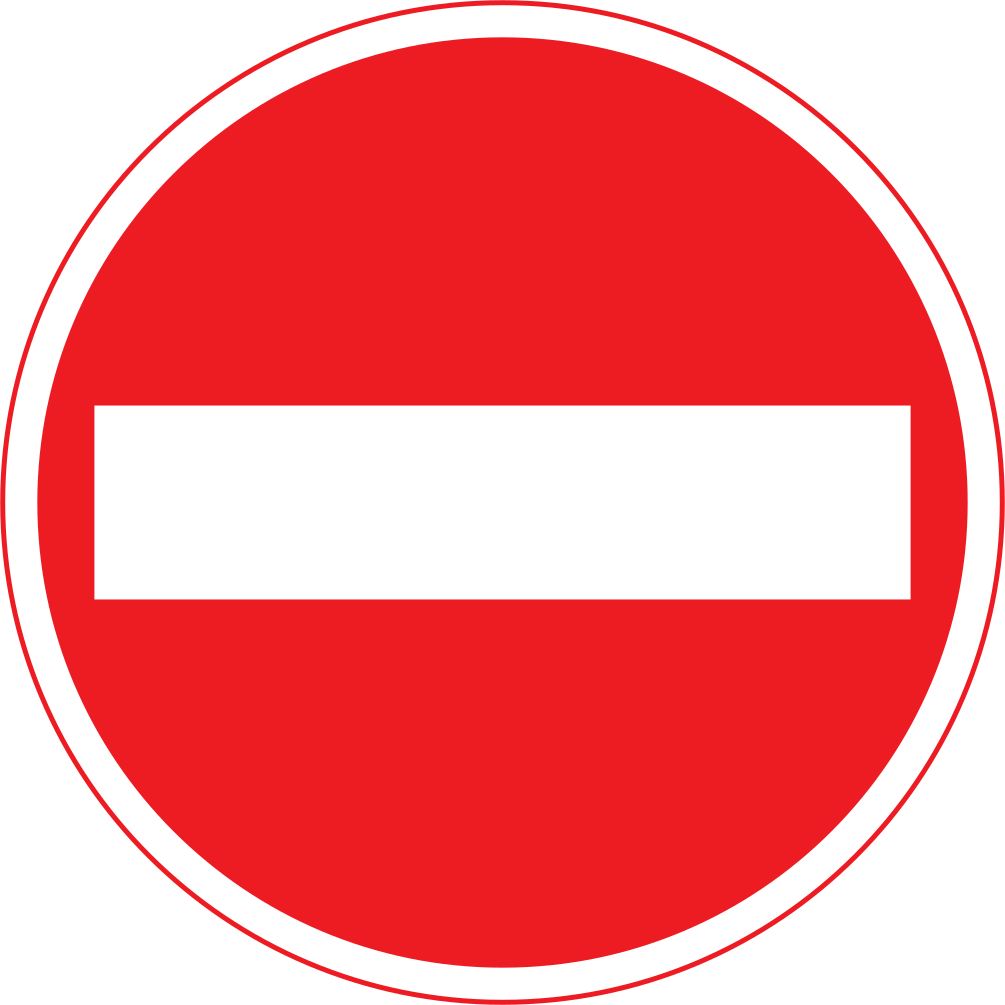 No Entry
 - B.
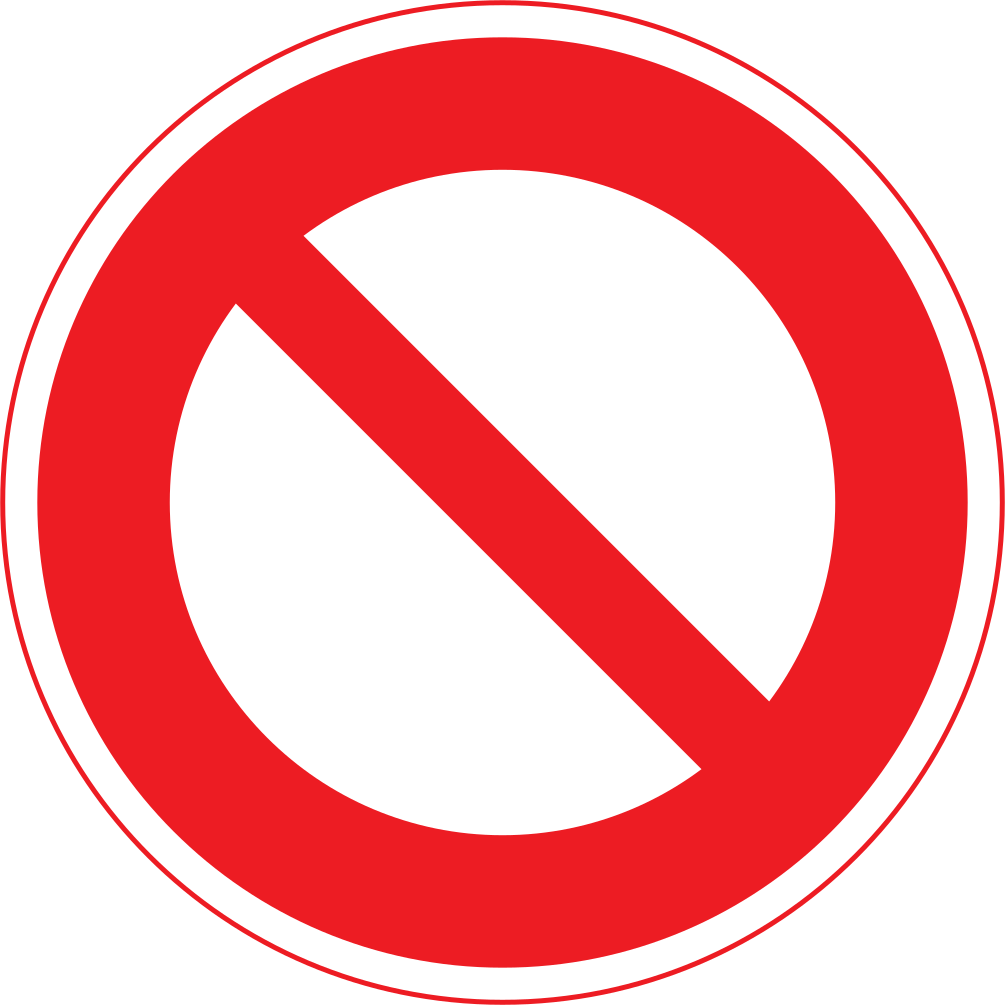 No Vehicles
 - C.
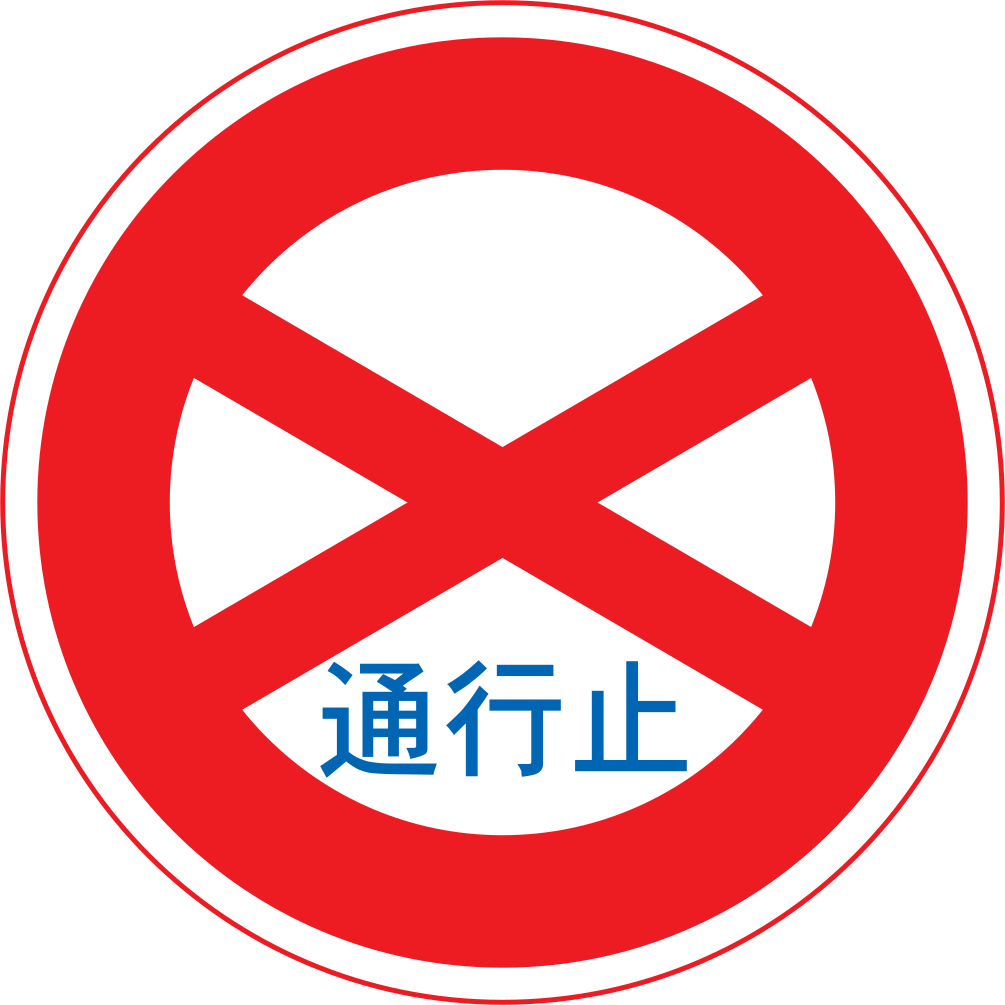 Road Closed
 - D.
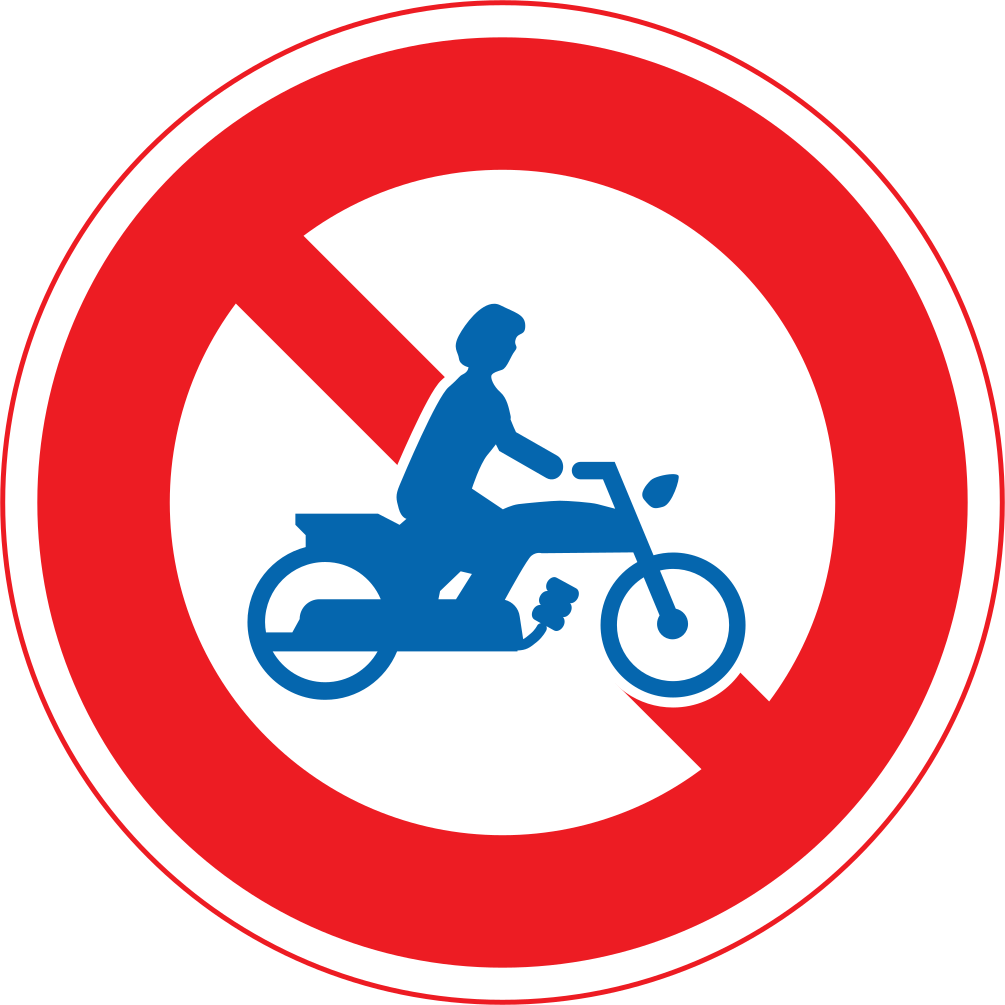 No Motorcycles or Mopeds
Answer: C: Road Closed
Explanation: The Rules of the Road define "Road Closed" (通行止め) as a sign that prohibits all traffic, including not only vehicles but also pedestrians. "No Vehicles" (車両通行止め) applies only to vehicles, so pedestrians can still pass. "No Entry" indicates the exit side of a one-way street, and "No Motorcycles or Mopeds" targets only specific vehicle types.
Driving school curriculum: Stage 1 – Topic 2: Following traffic signals
Source: Ch. 1 · Section (第2節 信号) · Rules of the Road, Ch.1 §2 / 2(2) Regulatory signs prohibit certain traffic behaviors or designate specific ways of traveling. The types of signs and their meanings are as listed in Appendix 3(1).
- A.
Q50On a road with a "Maximum Speed 50" sign, driving at speeds exceeding 50 km/h is not permitted under any circumstances.[True / False · Medium]
Answer: ✓ True
Explanation: The Rules of the Road define a maximum speed sign as indicating that you must not travel faster than that speed. Regardless of weather or traffic conditions, exceeding the posted speed is a violation.
Driving school curriculum: Stage 1 – Topic 2: Following traffic signals
Source: Ch. 1 · Section (第2節 信号) · Rules of the Road, Ch.1 §2 / 2(2) Regulatory signs prohibit certain traffic behaviors or designate specific ways of traveling. The types of signs and their meanings are as listed in Appendix 3(1).
Q51Even in a place with a "No Stopping or Parking" sign, stopping for a brief moment to let someone get on or off is not prohibited.[True / False · Hard]
Answer: ✕ False
Explanation: In a "No Stopping or Parking" area, both parking and stopping are prohibited, so you cannot stop even to let someone get on or off. Stopping for boarding or alighting is permitted only in a "No Parking" area.
Driving school curriculum: Stage 1 – Topic 2: Following traffic signals
Source: Ch. 1 · Section (第2節 信号) · Rules of the Road, Ch.1 §2 / 2(2) Regulatory signs prohibit certain traffic behaviors or designate specific ways of traveling. The types of signs and their meanings are as listed in Appendix 3(1).
Q52Which of the following actions is permitted at a location with a "No Parking" sign?[Multiple choice · Medium]
- A.Parking for 5 minutes to load or unload cargo
- B.Stopping briefly to pick up or drop off passengers
- C.Leaving the vehicle to go shopping
- D.Waiting for a long time with the engine running
Answer: B: Stopping briefly to pick up or drop off passengers
Explanation: The Rules of the Road define "No Parking" as prohibiting only parking, while stopping is allowed. Stopping to pick up or drop off passengers is permitted, but leaving the vehicle or stopping continuously is considered parking and is prohibited.
Driving school curriculum: Stage 1 – Topic 2: Following traffic signals
Source: Ch. 1 · Section (第2節 信号) · Rules of the Road, Ch.1 §2 / 2(2) Regulatory signs prohibit certain traffic behaviors or designate specific ways of traveling. The types of signs and their meanings are as listed in Appendix 3(1).
Q53In a section with an "No Overtaking" sign, you cannot pass or overtake the vehicle in front under any circumstances.[True / False · Easy]
Answer: ✕ False
Explanation: The Rules of the Road define "No Overtaking" as prohibiting overtaking, but passing is not prohibited. Overtaking involves a lane change, while passing means moving ahead of a vehicle in the same lane. Correctly, only overtaking is prohibited.
Driving school curriculum: Stage 1 – Topic 2: Following traffic signals
Source: Ch. 1 · Section (第2節 信号) · Rules of the Road, Ch.1 §2 / 2(2) Regulatory signs prohibit certain traffic behaviors or designate specific ways of traveling. The types of signs and their meanings are as listed in Appendix 3(1).
Q54A "No U-Turn" sign prohibits making a U-turn at that location, but left and right turns are permitted.[True / False · Medium]
Answer: ✓ True
Explanation: The Rules of the Road define "No U-Turn" as a sign that prohibits only U-turns (turning 180 degrees). Normal left and right turns to proceed are not prohibited. Remember to distinguish between U-turns and direction changes.
Driving school curriculum: Stage 1 – Topic 2: Following traffic signals
Source: Ch. 1 · Section (第2節 信号) · Rules of the Road, Ch.1 §2 / 2(2) Regulatory signs prohibit certain traffic behaviors or designate specific ways of traveling. The types of signs and their meanings are as listed in Appendix 3(1).
Q55If a "Proceed Only in Designated Directions" sign displays arrows for going straight and turning left, which of the following is the correct way to proceed at that intersection?[Multiple choice · Hard]
- A.Going straight, turning left, and turning right are all possible
- B.Only going straight is possible; turning left is not allowed
- C.Only turning right is possible; going straight and turning left are not allowed
- D.Only going straight and turning left are possible; turning right is not allowed
Answer: D: Only going straight and turning left are possible; turning right is not allowed
Explanation: The Rules of the Road define "Proceed Only in Designated Directions" as prohibiting travel in any direction other than those shown on the sign. If there are arrows for going straight and turning left, only those two directions are permitted, and turning right is prohibited. Remember that you can only proceed in the directions indicated by the arrows.
Driving school curriculum: Stage 1 – Topic 2: Following traffic signals
Source: Ch. 1 · Section (第2節 信号) · Rules of the Road, Ch.1 §2 / 2(2) Regulatory signs prohibit certain traffic behaviors or designate specific ways of traveling. The types of signs and their meanings are as listed in Appendix 3(1).
Q56You can travel by bicycle on a road with a "No Motorcycles or Mopeds" sign.[True / False · Medium]
Answer: ✓ True
Explanation: The Rules of the Road define "No Motorcycles or Mopeds" as a sign targeting motorized two-wheeled vehicles such as motorcycles and mopeds. Bicycles are classified as light vehicles and are not regulated by this sign, so they can pass.
Driving school curriculum: Stage 1 – Topic 2: Following traffic signals
Source: Ch. 1 · Section (第2節 信号) · Rules of the Road, Ch.1 §2 / 2(2) Regulatory signs prohibit certain traffic behaviors or designate specific ways of traveling. The types of signs and their meanings are as listed in Appendix 3(1).
Q57It is acceptable to drive a standard passenger car on a road where there is a "Large Cargo Vehicles Prohibited" sign.[True / False · Medium]
Answer: ✓ True
Explanation: According to the Rules of the Road, the "Large Cargo Vehicles Prohibited" sign prohibits large cargo vehicles and certain large vehicles from passing. Standard passenger cars are not subject to this restriction and may pass. Check the supplementary sign to confirm which vehicle types are restricted.
Driving school curriculum: Stage 1 – Topic 2: Following traffic signals
Source: Ch. 1 · Section (第2節 信号) · Rules of the Road, Ch.1 §2 / 2(2) Regulatory signs prohibit certain traffic behaviors or designate specific ways of traveling. The types of signs and their meanings are as listed in Appendix 3(1).
Q58In a location where there is a "No Parking" sign with a supplementary sign stating "Except Sundays and Holidays," it does not mean you may always park on Sundays or holidays.[True / False · Hard]
Answer: ✓ True
Explanation: According to the Rules of the Road, supplementary signs supplement the meaning of main signs and specify the times or days when regulations apply. "Except Sundays and Holidays" means the restriction does not apply on Sundays and holidays, but you must still follow other parking prohibitions (such as legally prohibited places near intersections). Be careful with the double-negative trick in this question.
Driving school curriculum: Stage 1 – Topic 2: Following traffic signals
Source: Ch. 1 · Section (第2節 信号) · Rules of the Road, Ch.1 §2 / 2(2) Regulatory signs prohibit certain traffic behaviors or designate specific ways of traveling. The types of signs and their meanings are as listed in Appendix 3(1).
Q59The "Crosswalk" sign is an indication sign that shows the location where pedestrians may cross the road.[True / False · Easy]
Answer: ✓ True
Explanation: According to the Rules of the Road, indication signs designate that certain traffic methods are permitted or indicate specific locations established for road traffic. The crosswalk sign is a typical indication sign showing where pedestrians may cross.
Driving school curriculum: Stage 1 – Topic 2: Following traffic signals
Source: Ch. 1 · Section (第2節 信号) · Rules of the Road, Ch.1 §2 / 2(3) Indication signs indicate that a particular traffic behavior is permitted, or that a location has a specific traffic designation. Types and meanings are listed in Appendix 3(1).
Q60In a location where there is a "Parking Permitted" sign, you may park without any time limit under any circumstances.[True / False · Medium]
Answer: ✕ False
Explanation: The "Parking Permitted" sign indicates that parking is allowed, but there may be restrictions on time, days, or vehicle types indicated by supplementary signs. According to the Rules of the Road, supplementary signs supplement the meaning of main signs and specify the times, days, and other conditions when regulations apply.
Driving school curriculum: Stage 1 – Topic 2: Following traffic signals
Source: Ch. 1 · Section (第2節 信号) · Rules of the Road, Ch.1 §2 / 2(3) Indication signs indicate that a particular traffic behavior is permitted, or that a location has a specific traffic designation. Types and meanings are listed in Appendix 3(1).
Q61Which of the following is an indication sign?[Multiple choice · Medium]
- A.No Parking
- B.
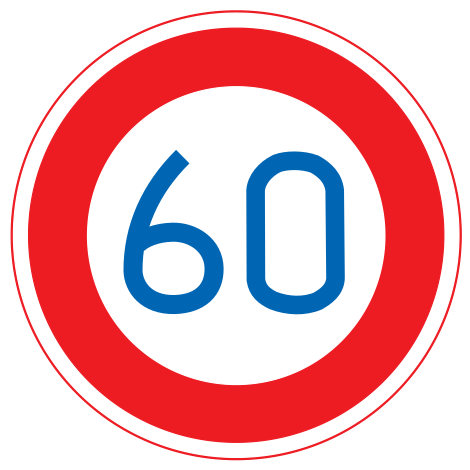 Maximum Speed
 - C.
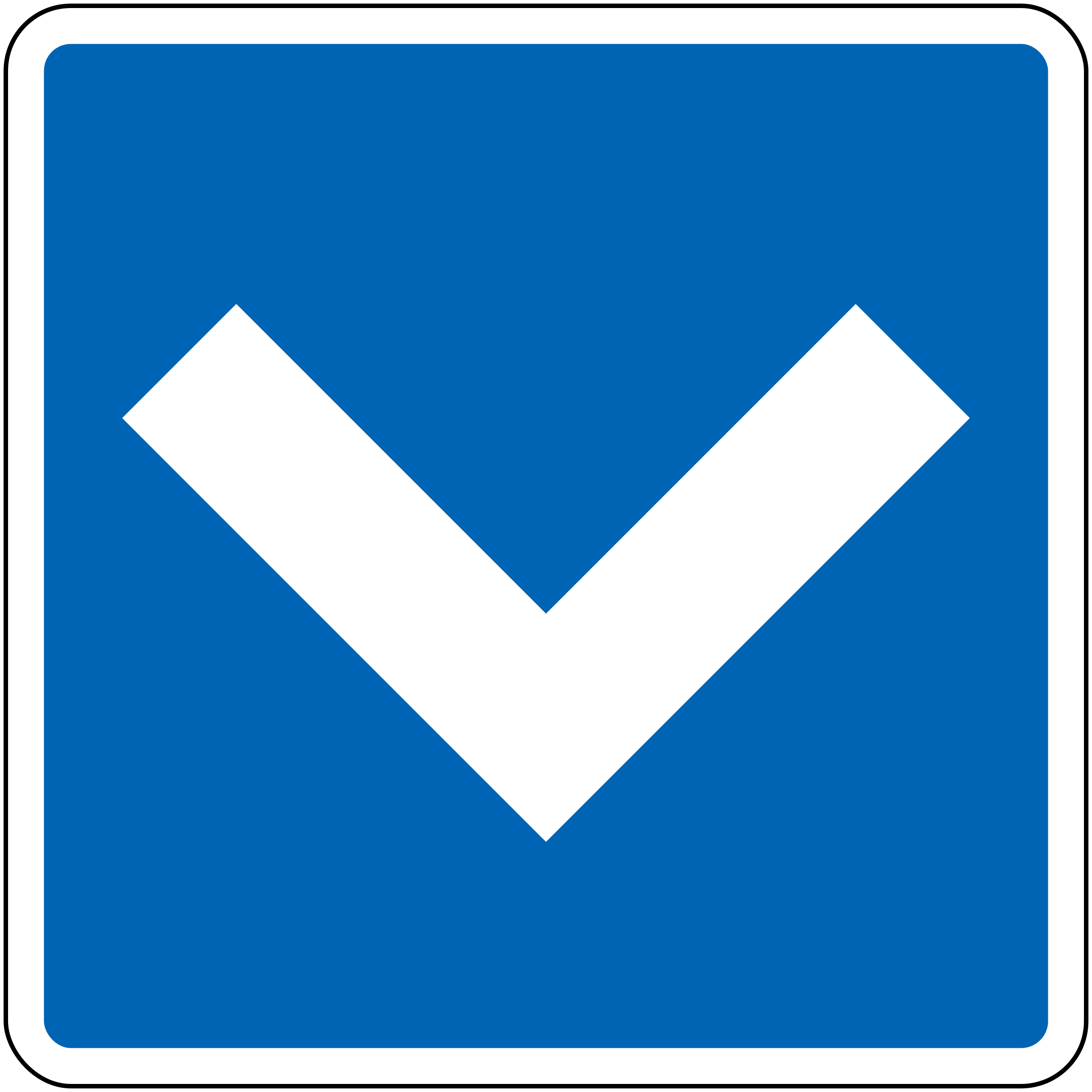 Safety Zone
 - D.
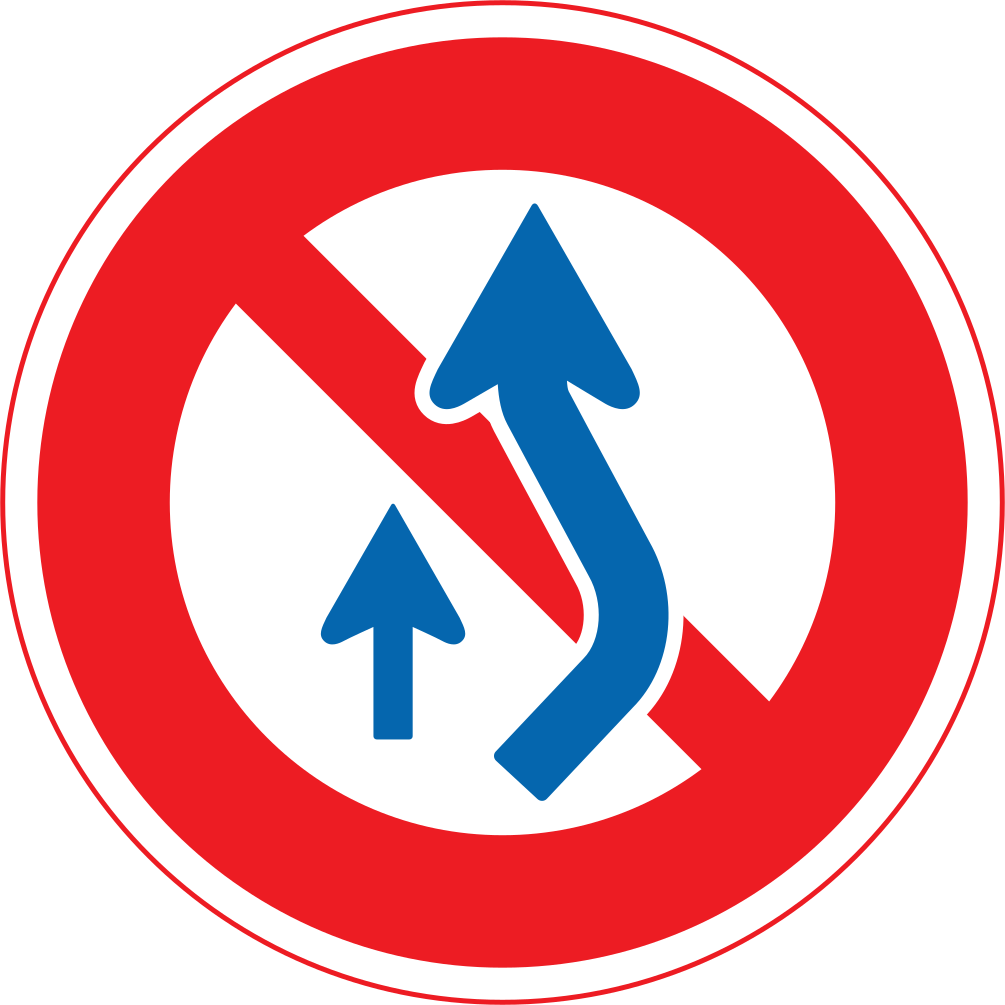 Overtaking Prohibited
Answer: C: Safety Zone
Explanation: According to the Rules of the Road, the safety zone sign is an indication sign that designates a specific location established for road traffic. No Parking, Maximum Speed, and Overtaking Prohibited are regulatory signs.
Driving school curriculum: Stage 1 – Topic 2: Following traffic signals
Source: Ch. 1 · Section (第2節 信号) · Rules of the Road, Ch.1 §2 / 2(3) Indication signs indicate that a particular traffic behavior is permitted, or that a location has a specific traffic designation. Types and meanings are listed in Appendix 3(1).
Q62In a location where there is a "Sound Horn" sign, you must sound your horn, but this is classified as a regulatory sign rather than an indication sign.[True / False · Hard]
Answer: ✓ True
Explanation: "Sound Horn" is a regulatory sign. Regulatory signs prohibit or restrict certain ways of using the road, or order road users to follow a set method; because this sign orders you to sound your horn, it is a regulatory sign. The statement is therefore correct.
Driving school curriculum: Stage 1 – Topic 2: Following traffic signals
Source: Ch. 1 · Section (第2節 信号) · Rules of the Road, Ch.1 §2 / 2(3) Indication signs indicate that a particular traffic behavior is permitted, or that a location has a specific traffic designation. Types and meanings are listed in Appendix 3(1).
Q63In a location where there is a "Streetcar Track Passable" sign, you may drive your vehicle on the streetcar tracks.[True / False · Medium]
Answer: ✓ True
Explanation: According to the Rules of the Road, indication signs designate that certain traffic methods are permitted. "Streetcar Track Passable" is an indication sign that shows you may drive on streetcar tracks that are normally not passable.
Driving school curriculum: Stage 1 – Topic 2: Following traffic signals
Source: Ch. 1 · Section (第2節 信号) · Rules of the Road, Ch.1 §2 / 2(3) Indication signs indicate that a particular traffic behavior is permitted, or that a location has a specific traffic designation. Types and meanings are listed in Appendix 3(1).
Q64What location does the "Bicycle Crossing" sign indicate?[Multiple choice · Easy]
- A.A place where bicycles may be parked
- B.A place where bicycles may cross the road
- C.A place where bicycles may not pass
- D.A place where bicycles must come to a complete stop
Answer: B: A place where bicycles may cross the road
Explanation: According to the Rules of the Road, indication signs designate specific locations established for road traffic. "Bicycle Crossing" is an indication sign that shows the location where bicycles may cross the road.
Driving school curriculum: Stage 1 – Topic 2: Following traffic signals
Source: Ch. 1 · Section (第2節 信号) · Rules of the Road, Ch.1 §2 / 2(3) Indication signs indicate that a particular traffic behavior is permitted, or that a location has a specific traffic designation. Types and meanings are listed in Appendix 3(1).
Q65On a road where there is a "Side-by-Side Riding Permitted" sign, two or more bicycles may ride side by side, and mopeds may also ride side by side.[True / False · Medium]
Answer: ✕ False
Explanation: The "Side-by-Side Riding Permitted" sign is an indication sign that shows bicycles may ride side by side, but it does not apply to mopeds. According to the Rules of the Road, supplementary signs and other indicators specify the types of vehicles to which regulations apply, and this sign applies only to bicycles.
Driving school curriculum: Stage 1 – Topic 2: Following traffic signals
Source: Ch. 1 · Section (第2節 信号) · Rules of the Road, Ch.1 §2 / 2(3) Indication signs indicate that a particular traffic behavior is permitted, or that a location has a specific traffic designation. Types and meanings are listed in Appendix 3(1).
Q66In a location where there is an "Elderly Driver's Badge Vehicle Parking Permitted" sign, regular vehicles without the elderly driver's badge displayed may also park for a short time without issue.[True / False · Hard]
Answer: ✕ False
Explanation: This sign is an indication sign that shows only vehicles displaying the elderly driver's badge may park. According to the Rules of the Road, indication signs designate that certain traffic methods are permitted, and vehicles not meeting the criteria may not park. It is a violation regardless of the length of time.
Driving school curriculum: Stage 1 – Topic 2: Following traffic signals
Source: Ch. 1 · Section (第2節 信号) · Rules of the Road, Ch.1 §2 / 2(3) Indication signs indicate that a particular traffic behavior is permitted, or that a location has a specific traffic designation. Types and meanings are listed in Appendix 3(1).
Q67A warning sign with a black diamond on a yellow background indicating "railroad crossing ahead" gives advance notice of a railroad crossing ahead and calls for caution.[True / False · Easy]
Answer: ✓ True
Explanation: According to the Rules of the Road, warning signs give advance notice to road users of hazards or situations requiring attention on the road, and a sign indicating a railroad crossing ahead is given as an example. A black diamond on a yellow background is the characteristic feature of warning signs.
Driving school curriculum: Stage 1 – Topic 2: Following traffic signals
Source: Ch. 1 · Section (第2節 信号) · Rules of the Road, Ch.1 §2 / 2(4) Warning signs alert road users in advance to hazards or situations on the road that require caution. Types and meanings are listed in Appendix 3(1).
Q68In a section where there is a "road construction" warning sign, you must slow down to a stop-ready speed (jokō) in all cases, and failure to do so is a violation.[True / False · Medium]
Answer: ✕ False
Explanation: Warning signs give advance notice of hazards or situations requiring attention on the road and call for caution, but they do not directly impose an obligation to slow down to a stop-ready speed. You must travel at an appropriate speed according to the construction conditions and other signs, road markings, or instructions from traffic control personnel, but it is not stipulated that you must slow down to a stop-ready speed "in all cases."
Driving school curriculum: Stage 1 – Topic 2: Following traffic signals
Source: Ch. 1 · Section (第2節 信号) · Rules of the Road, Ch.1 §2 / 2(4) Warning signs alert road users in advance to hazards or situations on the road that require caution. Types and meanings are listed in Appendix 3(1).
Q69Which combination of color and shape is correct for the "animals may dash out" warning sign?[Multiple choice · Medium]
- A.Red background with white diamond
- B.Blue background with white circle
- C.Yellow background with black diamond
- D.White background with red triangle
Answer: C: Yellow background with black diamond
Explanation: According to the Rules of the Road, warning signs are designated as black diamonds on a yellow background. The role of warning signs is to give advance notice of locations where animals may dash out. Those with red, blue, or white backgrounds are other types of signs, so be careful.
Driving school curriculum: Stage 1 – Topic 2: Following traffic signals
Source: Ch. 1 · Section (第2節 信号) · Rules of the Road, Ch.1 §2 / 2(4) Warning signs alert road users in advance to hazards or situations on the road that require caution. Types and meanings are listed in Appendix 3(1).
Q70While traveling through a section with a "slippery" warning sign, the road surface was not actually wet, so you ignored the sign and drove at normal speed, but since warning signs have no penalty provisions, this is not a violation.[True / False · Hard]
Answer: ✕ False
Explanation: Warning signs themselves have no direct penalty provisions, but if you ignore the hazard indicated by the sign and cause an accident, you may be charged with violations such as failure to exercise safe driving practices. Furthermore, warning signs give advance notice of hazards, and even if the road surface is not wet at that moment, they indicate locations that become slippery in rainy or freezing conditions. The idea that "you can ignore it because there's no penalty" is incorrect.
Driving school curriculum: Stage 1 – Topic 2: Following traffic signals
Source: Ch. 1 · Section (第2節 信号) · Rules of the Road, Ch.1 §2 / 2(4) Warning signs alert road users in advance to hazards or situations on the road that require caution. Types and meanings are listed in Appendix 3(1).
Q71Which of the following is NOT something a warning sign typically gives advance notice of?[Multiple choice · Medium]
- A.That there is a traffic light ahead
- B.That the location requires caution for crosswinds
- C.That parking is prohibited in the section
- D.That the location has possible falling rocks
Answer: C: That parking is prohibited in the section
Explanation: Indicating parking prohibition is the role of a regulatory sign, not a warning sign. According to the Rules of the Road, warning signs give advance notice of hazards or situations requiring attention on the road, and examples include traffic light ahead, crosswind caution, and falling rocks possible. Remember that things that prohibit traffic methods, such as parking prohibition, are regulatory signs.
Driving school curriculum: Stage 1 – Topic 2: Following traffic signals
Source: Ch. 1 · Section (第2節 信号) · Rules of the Road, Ch.1 §2 / 2(4) Warning signs alert road users in advance to hazards or situations on the road that require caution. Types and meanings are listed in Appendix 3(1).
Q72The signs "school, kindergarten, nursery school, etc. ahead," "left curve ahead," and "right curve ahead" are all classified as warning signs.[True / False · Easy]
Answer: ✓ True
Explanation: According to the Rules of the Road, warning signs give advance notice to road users of hazards or situations requiring attention on the road and call for caution. Locations with schools, kindergartens, nursery schools, etc., and places where the road curves left or right present hazards such as children dashing out or accidents on curves, so advance notice through warning signs is necessary.
Driving school curriculum: Stage 1 – Topic 2: Following traffic signals
Source: Ch. 1 · Section (第2節 信号) · Rules of the Road, Ch.1 §2 / 2(4) Warning signs alert road users in advance to hazards or situations on the road that require caution. Types and meanings are listed in Appendix 3(1).
Q73Which background color is correct for guide signs?[Multiple choice · Easy]
- A.Red or yellow
- B.White or yellow
- C.Blue or green
- D.Black or white
Answer: C: Blue or green
Explanation: According to the Rules of the Road, guide signs indicate place names, directions, distances, etc., to facilitate travel, and use blue or green background colors. Remember that this is a different color scheme from regulatory signs or warning signs.
Driving school curriculum: Stage 1 – Topic 2: Following traffic signals
Source: Ch. 1 · Section (第2節 信号) · Rules of the Road, Ch.1 §2 / 2(5) Guide signs show place names, directions, and distances to help with travel. Types and meanings are listed in Appendix 3(1).
Q74Guide signs not only indicate directions and distances but also have the function of prohibiting or designating specific traffic methods.[True / False · Medium]
Answer: ✕ False
Explanation: According to the Rules of the Road, guide signs are designated as indicating place names, directions, distances, etc., to facilitate travel. Prohibiting or designating specific traffic methods is the role of regulatory signs. Remember that guide signs are solely for providing information.
Driving school curriculum: Stage 1 – Topic 2: Following traffic signals
Source: Ch. 1 · Section (第2節 信号) · Rules of the Road, Ch.1 §2 / 2(5) Guide signs show place names, directions, and distances to help with travel. Types and meanings are listed in Appendix 3(1).
Q75A yellow solid line drawn at the left edge of the road indicates that stopping and parking are prohibited at that location.[True / False · Easy]
Answer: ✓ True
Explanation: According to the Rules of the Road, when a yellow solid line is drawn at the roadside, it is a regulatory marking indicating stopping and parking prohibited. On the other hand, a yellow broken line indicates parking prohibited. Be sure to remember the difference between solid and broken lines.
Driving school curriculum: Stage 1 – Topic 2: Following traffic signals
Source: Ch. 1 · Section (第2節 信号) · Rules of the Road, Ch.1 §2 / 3(2) Regulatory markings prohibit or designate specific traffic behaviors — examples include no-parking markings and bus-lane-only markings. Types and meanings are listed in Appendix 3(2).
Q76Because it was nighttime and traffic was light, you parked for only 5 minutes in a location where a yellow broken line was drawn, but judged that stopping would be acceptable.[True / False · Medium]
Answer: ✕ False
Explanation: A yellow broken line is a regulatory marking indicating parking prohibited. Stopping is permitted, but parking is prohibited regardless of how heavy or light traffic is. According to the Rules of the Road, you must comply with regulatory markings, and there are no exceptions based on circumstances.
Driving school curriculum: Stage 1 – Topic 2: Following traffic signals
Source: Ch. 1 · Section (第2節 信号) · Rules of the Road, Ch.1 §2 / 3(2) Regulatory markings prohibit or designate specific traffic behaviors — examples include no-parking markings and bus-lane-only markings. Types and meanings are listed in Appendix 3(2).
Q77When a white diamond-shaped mark is painted on the road surface, what does this marking indicate?[Multiple choice · Medium]
- A.A stop sign is ahead
- B.A parking prohibited zone is ahead
- C.A crosswalk or bicycle crossing is ahead
- D.An overtaking prohibited zone is ahead
Answer: C: A crosswalk or bicycle crossing is ahead
Explanation: A white diamond-shaped mark is an indication marking that warns drivers that a crosswalk or bicycle crossing is ahead. The Rules of the Road state that it is installed to help drivers recognize the upcoming crossing facility and prepare by slowing down.
Driving school curriculum: Stage 1 – Topic 2: Following traffic signals
Source: Ch. 1 · Section (第2節 信号) · Rules of the Road, Ch.1 §2 / 3(2) Regulatory markings prohibit or designate specific traffic behaviors — examples include no-parking markings and bus-lane-only markings. Types and meanings are listed in Appendix 3(2).
Q78On a road where the center line is marked with a solid yellow line, vehicles cannot cross to the right side to overtake, but they may cross the line to make a right turn or to avoid obstructions.[True / False · Hard]
Answer: ✓ True
Explanation: The Rules of the Road prohibit crossing a solid yellow centre line to overtake. However, crossing it to make a right turn or to avoid obstacles such as roadworks or a broken-down vehicle is allowed as an exception under Road Traffic Act §17(5) (the basis is the Act itself, not the kyousoku text). Only the act of crossing "for overtaking" is prohibited.
Driving school curriculum: Stage 1 – Topic 2: Following traffic signals
Source: Ch. 1 · Section (第2節 信号) · Rules of the Road, Ch.1 §2 / 3(2) Regulatory markings prohibit or designate specific traffic behaviors — examples include no-parking markings and bus-lane-only markings. Types and meanings are listed in Appendix 3(2).
Q79When the boundary line of a traffic lane is marked with a solid yellow line, lane changes are prohibited in all situations.[True / False · Medium]
Answer: ✕ False
Explanation: When the boundary line of a traffic lane is marked with a solid yellow line, lane changes are prohibited in principle, but there are exceptions such as yielding to emergency vehicles or making unavoidable lane changes to turn right or left. The Rules of the Road clarify that this is not an absolute prohibition "in all situations."
Driving school curriculum: Stage 1 – Topic 2: Following traffic signals
Source: Ch. 1 · Section (第2節 信号) · Rules of the Road, Ch.1 §2 / 3(2) Regulatory markings prohibit or designate specific traffic behaviors — examples include no-parking markings and bus-lane-only markings. Types and meanings are listed in Appendix 3(2).
Q80There is an area marked with yellow diagonal lines inside an intersection. What does this marking indicate?[Multiple choice · Easy]
- A.An area where you can pass at a slow speed
- B.A stopping-prohibited area
- C.A stopping position for motorcycles only
- D.A priority area for route buses
Answer: B: A stopping-prohibited area
Explanation: An area marked with yellow diagonal lines is a regulatory marking indicating a stopping-prohibited area. The Rules of the Road state that it is placed at locations within intersections where stopping due to congestion would obstruct other traffic, and vehicles must not stop in this area.
Driving school curriculum: Stage 1 – Topic 2: Following traffic signals
Source: Ch. 1 · Section (第2節 信号) · Rules of the Road, Ch.1 §2 / 3(2) Regulatory markings prohibit or designate specific traffic behaviors — examples include no-parking markings and bus-lane-only markings. Types and meanings are listed in Appendix 3(2).
Q81The light turned red at an intersection with a stop line, but stopping before the stop line would have risked a rear-end collision with the vehicle behind, so I crossed the stop line and stopped just before the intersection.[True / False · Hard]
Answer: ✕ False
Explanation: The Rules of the Road state that when there is a stop line, you must stop just before it. Crossing the stop line due to concerns about vehicles behind you is not permitted. The correct approach is to maintain a sufficient following distance and drive at a speed that allows you to stop safely before the stop line.
Driving school curriculum: Stage 1 – Topic 2: Following traffic signals
Source: Ch. 1 · Section (第2節 信号) · Rules of the Road, Ch.1 §2 / 3(2) Regulatory markings prohibit or designate specific traffic behaviors — examples include no-parking markings and bus-lane-only markings. Types and meanings are listed in Appendix 3(2).
Q82A crosswalk marking painted with white lines on the road surface is an indication marking that designates a place where pedestrians may cross.[True / False · Easy]
Answer: ✓ True
Explanation: The Rules of the Road state that indication signs and markings designate specific traffic methods that are permitted or designated places in road traffic. The crosswalk marking is a representative example, indicating a place where pedestrians can cross safely.
Driving school curriculum: Stage 1 – Topic 2: Following traffic signals
Source: Ch. 1 · Section (第2節 信号) · Rules of the Road, Ch.1 §2 / 3(2) Indication markings show that a specific traffic behavior is permitted, or designate a location for a traffic purpose — examples include diagonal-crossing markings and stop-position markings. Types and meanings are listed in Appendix 3(2).
Q83A lane with a bus-only lane marking cannot be used by any vehicles, so general vehicles must not enter even in emergencies.[True / False · Medium]
Answer: ✕ False
Explanation: A bus-only lane is a regulatory marking defined by Road Traffic Act §20 and the Rules of the Road Ch.1 §2. In principle non-bus vehicles cannot use it, but exceptions exist for right/left turns, where signs or markings expressly permit it, or for emergency vehicles (§20(2)). "No vehicles can use it" and "entry prohibited in any case" are incorrect — operating hours and exception conditions must be checked.
Driving school curriculum: Stage 1 – Topic 2: Following traffic signals
Source: Ch. 1 · Section (第2節 信号) · Rules of the Road, Ch.1 §2 / 3(2) Indication markings show that a specific traffic behavior is permitted, or designate a location for a traffic purpose — examples include diagonal-crossing markings and stop-position markings. Types and meanings are listed in Appendix 3(2).
Q84What is the name of the marking painted on the road surface that uses arrows to designate travel directions such as straight ahead, right turn, and left turn?[Multiple choice · Medium]
- A.Travel direction designation marking
- B.Vehicle travel zone marking
- C.Travel direction by lane
- D.Lane designation marking
Answer: C: Travel direction by lane
Explanation: The Rules of the Road refer to this marking as "travel direction by lane." It uses arrows on the road surface to indicate straight ahead, right turn, left turn, etc., and designates which direction vehicles may proceed from each lane. It is commonly seen before intersections.
Driving school curriculum: Stage 1 – Topic 2: Following traffic signals
Source: Ch. 1 · Section (第2節 信号) · Rules of the Road, Ch.1 §2 / 3(2) Indication markings show that a specific traffic behavior is permitted, or designate a location for a traffic purpose — examples include diagonal-crossing markings and stop-position markings. Types and meanings are listed in Appendix 3(2).
Q85Even if there is no diagonal crossing permitted marking at an intersection, pedestrians may cross diagonally along the diagonal line if the signal is green.[True / False · Hard]
Answer: ✕ False
Explanation: The Rules of the Road state that diagonal crossing is permitted only when there is a marking indicating that diagonal crossing is allowed. At intersections without such markings, pedestrians must cross at right angles along the crosswalk, even if the signal is green. The diagonal crossing permitted marking is a type of indication marking and is installed only at specific locations.
Driving school curriculum: Stage 1 – Topic 2: Following traffic signals
Source: Ch. 1 · Section (第2節 信号) · Rules of the Road, Ch.1 §2 / 3(2) Indication markings show that a specific traffic behavior is permitted, or designate a location for a traffic purpose — examples include diagonal-crossing markings and stop-position markings. Types and meanings are listed in Appendix 3(2).
Q86At a location with a marking indicating a streetcar stop, vehicles may pass freely when the streetcar is not stopped, but when the streetcar is stopped and passengers are boarding or alighting, vehicles must come to a complete stop behind it unless there is a safety zone.[True / False · Medium]
Answer: ✓ True
Explanation: The Rules of the Road state that the streetcar stop marking indicates the location of the stop, and when a streetcar is stopped and passengers are boarding or alighting, following vehicles must come to a complete stop behind the stop unless there is a safety zone. When there is a safety zone or when passengers are not boarding or alighting, vehicles may pass at a slow speed. This is an important rule to protect the safety of passengers.
Driving school curriculum: Stage 1 – Topic 2: Following traffic signals
Source: Ch. 1 · Section (第2節 信号) · Rules of the Road, Ch.1 §2 / 3(2) Indication markings show that a specific traffic behavior is permitted, or designate a location for a traffic purpose — examples include diagonal-crossing markings and stop-position markings. Types and meanings are listed in Appendix 3(2).
Q87When a green light is displayed, motor vehicles may proceed in any direction: straight, left, or right.[True / False · Easy]
Answer: ✓ True
Explanation: A green light indicates that you "may proceed": motor vehicles may go straight, turn left, or turn right (light vehicles and mopeds that must make a two-stage right turn follow a different method for turning right). There is no obligation to proceed.
Driving school curriculum: Stage 1 – Topic 2: Following traffic signals
Source: Ch. 1 · Section (第2節 信号) · Rules of the Road, Ch.1 §2 (Signals, Signs & Markings) / 1. Signals: Drivers must obey traffic-signal lights. When a police officer or traffic-directing officer is controlling traffic by hand signals or flashlight, those signals override the traffic-signal lights.
Q88When a yellow light is displayed, you may proceed only if you are too close to the stop line to stop safely.[True / False · Medium]
Answer: ✓ True
Explanation: According to the Rules of the Road, a yellow light means you must stop in principle, but you may proceed only if you cannot stop safely at the stop line. Make sure you understand this exception correctly.
Driving school curriculum: Stage 1 – Topic 2: Following traffic signals
Source: Ch. 1 · Section (第2節 信号) · Rules of the Road, Ch.1 §2 (Signals, Signs & Markings) / 1. Signals: Drivers must obey traffic-signal lights. When a police officer or traffic-directing officer is controlling traffic by hand signals or flashlight, those signals override the traffic-signal lights.
Q89Because it was nighttime and traffic was light, I came to a stop at the red light, checked for safety, and then proceeded.[True / False · Medium]
Answer: ✕ False
Explanation: A red light means stop, and you must stop at the stop line regardless of traffic volume. You may stop and then proceed only when the signal is flashing red. You cannot proceed through a red light regardless of the situation.
Driving school curriculum: Stage 1 – Topic 2: Following traffic signals
Source: Ch. 1 · Section (第2節 信号) · Rules of the Road, Ch.1 §2 (Signals, Signs & Markings) / 1. Signals: Drivers must obey traffic-signal lights. When a police officer or traffic-directing officer is controlling traffic by hand signals or flashlight, those signals override the traffic-signal lights.
Q90When a flashing yellow signal is displayed, you must slow down to a stop-ready speed (jokō) and proceed with caution for other traffic.[True / False · Medium]
Answer: ✕ False
Explanation: A flashing yellow signal means "proceed with caution for other traffic," but there is no obligation to slow down to jokō. Correctly, you may proceed at normal speed while paying attention. Be careful not to confuse this with jokō.
Driving school curriculum: Stage 1 – Topic 2: Following traffic signals
Source: Ch. 1 · Section (第2節 信号) · Rules of the Road, Ch.1 §2 (Signals, Signs & Markings) / 1. Signals: Drivers must obey traffic-signal lights. When a police officer or traffic-directing officer is controlling traffic by hand signals or flashlight, those signals override the traffic-signal lights.
Q91When a flashing red signal is displayed, you must come to a complete stop, confirm safety, and then proceed.[True / False · Easy]
Answer: ✓ True
Explanation: Under Rules of the Road Ch.1 §2 and the Road Traffic Act Enforcement Order §2, a flashing red signal means "stop at the stop line, then proceed when safe to do so." Unlike a flashing yellow signal (which permits proceeding with caution and has no mandatory stop), a flashing red always requires a full stop first.
Driving school curriculum: Stage 1 – Topic 2: Following traffic signals
Source: Ch. 1 · Section (第2節 信号) · Rules of the Road, Ch.1 §2 (Signals, Signs & Markings) / 1. Signals: Drivers must obey traffic-signal lights. When a police officer or traffic-directing officer is controlling traffic by hand signals or flashlight, those signals override the traffic-signal lights.
Q92When a green arrow signal pointing left is displayed, in which direction may a vehicle proceed?[Multiple choice · Medium]
- A.You may proceed only in the direction of the arrow, which is left
- B.You may proceed in the direction of the arrow (left) and also straight
- C.You may proceed only in the direction of the arrow (left), but if other signals are green you may proceed in other directions
- D.Arrow signals are for streetcars only, so regular vehicles do not need to follow them
Answer: A: You may proceed only in the direction of the arrow, which is left
Explanation: According to the Rules of the Road, a green arrow signal indicates that you may proceed in the direction of the arrow. A left-pointing arrow permits only left turns. Note that yellow arrow signals are for streetcars only.
Driving school curriculum: Stage 1 – Topic 2: Following traffic signals
Source: Ch. 1 · Section (第2節 信号) · Rules of the Road, Ch.1 §2 (Signals, Signs & Markings) / 1. Signals: Drivers must obey traffic-signal lights. When a police officer or traffic-directing officer is controlling traffic by hand signals or flashlight, those signals override the traffic-signal lights.
Q93When a pedestrian signal starts flashing green, pedestrians who have already started crossing must finish crossing quickly or turn back, but pedestrians who have not yet started crossing must not begin crossing.[True / False · Hard]
Answer: ✓ True
Explanation: According to the Rules of the Road, a flashing green pedestrian signal means "do not start crossing." Pedestrians already crossing must finish quickly or turn back, but new pedestrians may not begin crossing.
Driving school curriculum: Stage 1 – Topic 2: Following traffic signals
Source: Ch. 1 · Section (第2節 信号) · Rules of the Road, Ch.1 §2 (Signals, Signs & Markings) / 1. Signals: Drivers must obey traffic-signal lights. When a police officer or traffic-directing officer is controlling traffic by hand signals or flashlight, those signals override the traffic-signal lights.
Q94When a police officer has both arms extended horizontally, how should vehicles respond?[Multiple choice · Hard]
- A.All vehicles in all directions must stop immediately
- B.Traffic to the sides of the officer's body may proceed, but traffic in front must stop
- C.Traffic in front of the officer's body may proceed, but traffic to the sides must stop
- D.You may proceed in the direction the arms are pointing
Answer: B: Traffic to the sides of the officer's body may proceed, but traffic in front must stop
Explanation: According to the Rules of the Road, a police officer's hand signal with both arms extended horizontally means "traffic to the sides may proceed, traffic in front must stop." Vehicles traveling perpendicular to the officer's body may proceed, while vehicles facing the front or back of the officer must stop.
Driving school curriculum: Stage 1 – Topic 2: Following traffic signals
Source: Ch. 1 · Section (第2節 信号) · Rules of the Road, Ch.1 §2 (Signals, Signs & Markings) / 1. Signals: Drivers must obey traffic-signal lights. When a police officer or traffic-directing officer is controlling traffic by hand signals or flashlight, those signals override the traffic-signal lights.
Q95When a traffic signal and a police officer's hand signal give different instructions, the traffic signal takes priority.[True / False · Medium]
Answer: ✕ False
Explanation: According to the Rules of the Road, when a traffic signal and a police officer's hand signal differ, the police officer's hand signal takes priority. Follow the officer's directions when traffic is being controlled on site.
Driving school curriculum: Stage 1 – Topic 2: Following traffic signals
Source: Ch. 1 · Section (第2節 信号) · Rules of the Road, Ch.1 §2 (Signals, Signs & Markings) / 1. Signals: Drivers must obey traffic-signal lights. When a police officer or traffic-directing officer is controlling traffic by hand signals or flashlight, those signals override the traffic-signal lights.
Q96When a police officer raises an arm overhead, traffic in front must stop, but traffic to the sides may proceed while slowing down to a stop-ready speed (jokō).[True / False · Hard]
Answer: ✕ False
Explanation: When a police officer raises an arm vertically, it has the same meaning as a yellow light for traffic facing the officer's front and back, and the same meaning as a red light for traffic running parallel to the officer's sides. So traffic to the sides must also stop, and this statement—that side traffic may proceed slowly—is incorrect.
Driving school curriculum: Stage 1 – Topic 2: Following traffic signals
Source: Ch. 1 · Section (第2節 信号) · Rules of the Road, Ch.1 §2 (Signals, Signs & Markings) / 1. Signals: Drivers must obey traffic-signal lights. When a police officer or traffic-directing officer is controlling traffic by hand signals or flashlight, those signals override the traffic-signal lights.
Q97What does this sign mean?[Multiple choice · Easy]
- A.Maximum Speed
- B.Road Closed
- C.No Vehicles
- D.Minimum Speed
Answer: B: Road Closed
Explanation: "Road Closed" is a regulatory sign that prohibits all traffic — pedestrians, cyclists, and vehicles. It is more restrictive than "No Vehicles", which only restricts vehicles.
Driving school curriculum: Stage 1 – Topic 2: Following traffic signals
Source: Ch. 1 · Section (第2節 信号) · Rules of the Road, Ch.1 §2 / 2(2) Regulatory signs prohibit certain traffic behaviors or designate specific ways of traveling. The types of signs and their meanings are as listed in Appendix 3(1). This question relates to the “Road Closed” sign/marking (see Appendix 3(1) or 3(2)).
Q98What does this sign mean?[Multiple choice · Easy]
- A.No Vehicles
- B.No Parking
- C.One Way
- D.Road Closed
Answer: A: No Vehicles
Explanation: "No Vehicles" prohibits all vehicles including cars, motorcycles, and bicycles. Unlike "Road Closed", pedestrians can still pass.
Driving school curriculum: Stage 1 – Topic 2: Following traffic signals
Source: Ch. 1 · Section (第2節 信号) · Rules of the Road, Ch.1 §2 / 2(2) Regulatory signs prohibit certain traffic behaviors or designate specific ways of traveling. The types of signs and their meanings are as listed in Appendix 3(1). This question relates to the “No Vehicles” sign/marking (see Appendix 3(1) or 3(2)).
Q99What does this sign mean?[Multiple choice · Easy]
- A.Designated Direction Only
- B.Stop
- C.Do Not Enter
- D.No Vehicles
Answer: C: Do Not Enter
Explanation: "Do Not Enter" prohibits vehicles from entering from this side. It is typically placed at the exit side of a one-way street.
Driving school curriculum: Stage 1 – Topic 2: Following traffic signals
Source: Ch. 1 · Section (第2節 信号) · Rules of the Road, Ch.1 §2 / 2(2) Regulatory signs prohibit certain traffic behaviors or designate specific ways of traveling. The types of signs and their meanings are as listed in Appendix 3(1). This question relates to the “Do Not Enter” sign/marking (see Appendix 3(1) or 3(2)).
Q100What does this sign mean?[Multiple choice · Easy]
- A.Maximum Speed
- B.Minimum Speed
- C.One Way
- D.No Parking
Answer: D: No Parking
Explanation: "No Parking" prohibits parking only; brief stopping (under 5 minutes for loading or passenger drop-off) is allowed.
Driving school curriculum: Stage 1 – Topic 2: Following traffic signals
Source: Ch. 1 · Section (第2節 信号) · Rules of the Road, Ch.1 §2 / 2(2) Regulatory signs prohibit certain traffic behaviors or designate specific ways of traveling. The types of signs and their meanings are as listed in Appendix 3(1). This question relates to the “No Parking” sign/marking (see Appendix 3(1) or 3(2)).
Q101What does this sign mean?[Multiple choice · Easy]
- A.No Stopping or Parking
- B.No Overtaking
- C.Designated Direction Only
- D.No Vehicles
Answer: A: No Stopping or Parking
Explanation: "No Stopping or Parking" prohibits both parking AND stopping. The only exceptions are stops under police instruction or to avoid imminent danger — passenger pickup/drop-off is NOT an exception under this sign.
Driving school curriculum: Stage 1 – Topic 2: Following traffic signals
Source: Ch. 1 · Section (第2節 信号) · Rules of the Road, Ch.1 §2 / 2(2) Regulatory signs prohibit certain traffic behaviors or designate specific ways of traveling. The types of signs and their meanings are as listed in Appendix 3(1). This question relates to the “No Stopping or Parking” sign/marking (see Appendix 3(1) or 3(2)).
Q102What does this sign mean?[Multiple choice · Easy]
- A.No Overtaking by Crossing the Center Line
- B.Minimum Speed
- C.Designated Direction Only
- D.Road Closed
Answer: A: No Overtaking by Crossing the Center Line
Explanation: In zones with this sign, you may not cross the center line to overtake another vehicle.
Driving school curriculum: Stage 1 – Topic 2: Following traffic signals
Source: Ch. 1 · Section (第2節 信号) · Rules of the Road, Ch.1 §2 / 2(2) Regulatory signs prohibit certain traffic behaviors or designate specific ways of traveling. The types of signs and their meanings are as listed in Appendix 3(1). This question relates to the “No Overtaking” sign/marking (see Appendix 3(1) or 3(2)).
Q103What does this sign mean?[Multiple choice · Easy]
- A.Minimum Speed
- B.Maximum Speed
- C.Weight Limit
- D.Height Limit
Answer: B: Maximum Speed
Explanation: You must not drive faster than the speed shown on the sign. Exceeding the limit is a violation regardless of weather or traffic conditions.
Driving school curriculum: Stage 1 – Topic 2: Following traffic signals
Source: Ch. 1 · Section (第2節 信号) · Rules of the Road, Ch.1 §2 / 2(2) Regulatory signs prohibit certain traffic behaviors or designate specific ways of traveling. The types of signs and their meanings are as listed in Appendix 3(1). This question relates to the “Maximum Speed” sign/marking (see Appendix 3(1) or 3(2)).
Q104What does this sign mean?[Multiple choice · Easy]
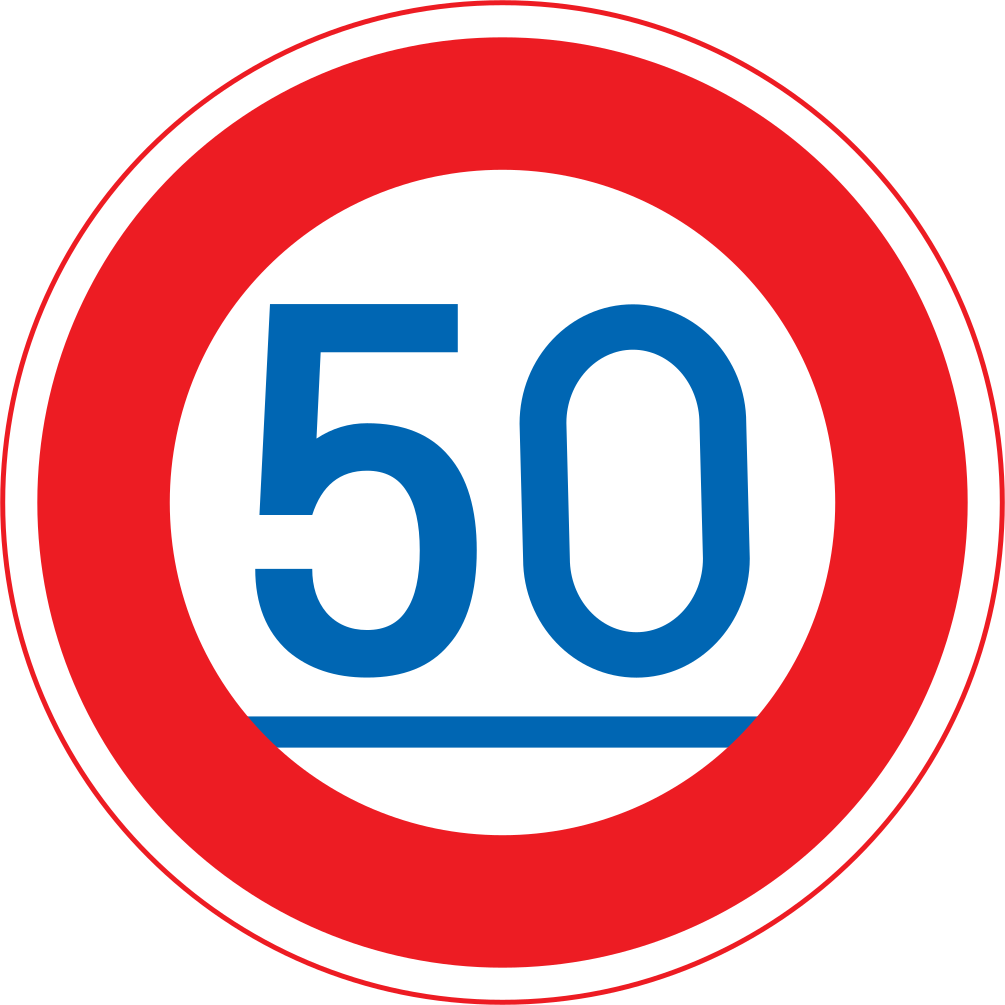
- A.Maximum Speed
- B.Minimum Speed
- C.Height Limit
- D.Motor Vehicles Only
Answer: B: Minimum Speed
Explanation: You must not drive slower than the speed shown on the sign. Often set on expressways.
Driving school curriculum: Stage 1 – Topic 2: Following traffic signals
Source: Ch. 1 · Section (第2節 信号) · Rules of the Road, Ch.1 §2 / 2(2) Regulatory signs prohibit certain traffic behaviors or designate specific ways of traveling. The types of signs and their meanings are as listed in Appendix 3(1). This question relates to the “Minimum Speed” sign/marking (see Appendix 3(1) or 3(2)).
Q105What does this sign mean?[Multiple choice · Easy]
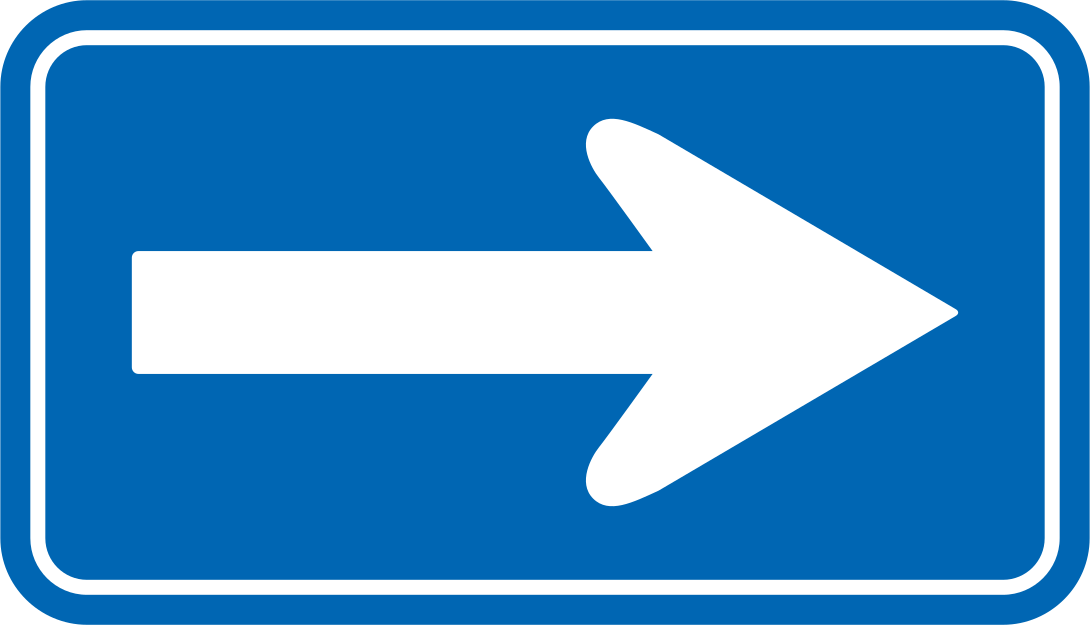
- A.Designated Direction Only
- B.Designated Lanes by Direction
- C.One Way
- D.Driving Permitted on Tramway
Answer: C: One Way
Explanation: The "One Way" sign indicates that traffic may travel only in the direction of the arrow. Reverse travel is prohibited.
Driving school curriculum: Stage 1 – Topic 2: Following traffic signals
Source: Ch. 1 · Section (第2節 信号) · Rules of the Road, Ch.1 §2 / 2(2) Regulatory signs prohibit certain traffic behaviors or designate specific ways of traveling. The types of signs and their meanings are as listed in Appendix 3(1). This question relates to the “One Way” sign/marking (see Appendix 3(1) or 3(2)).
Q106What does this sign mean?[Multiple choice · Easy]
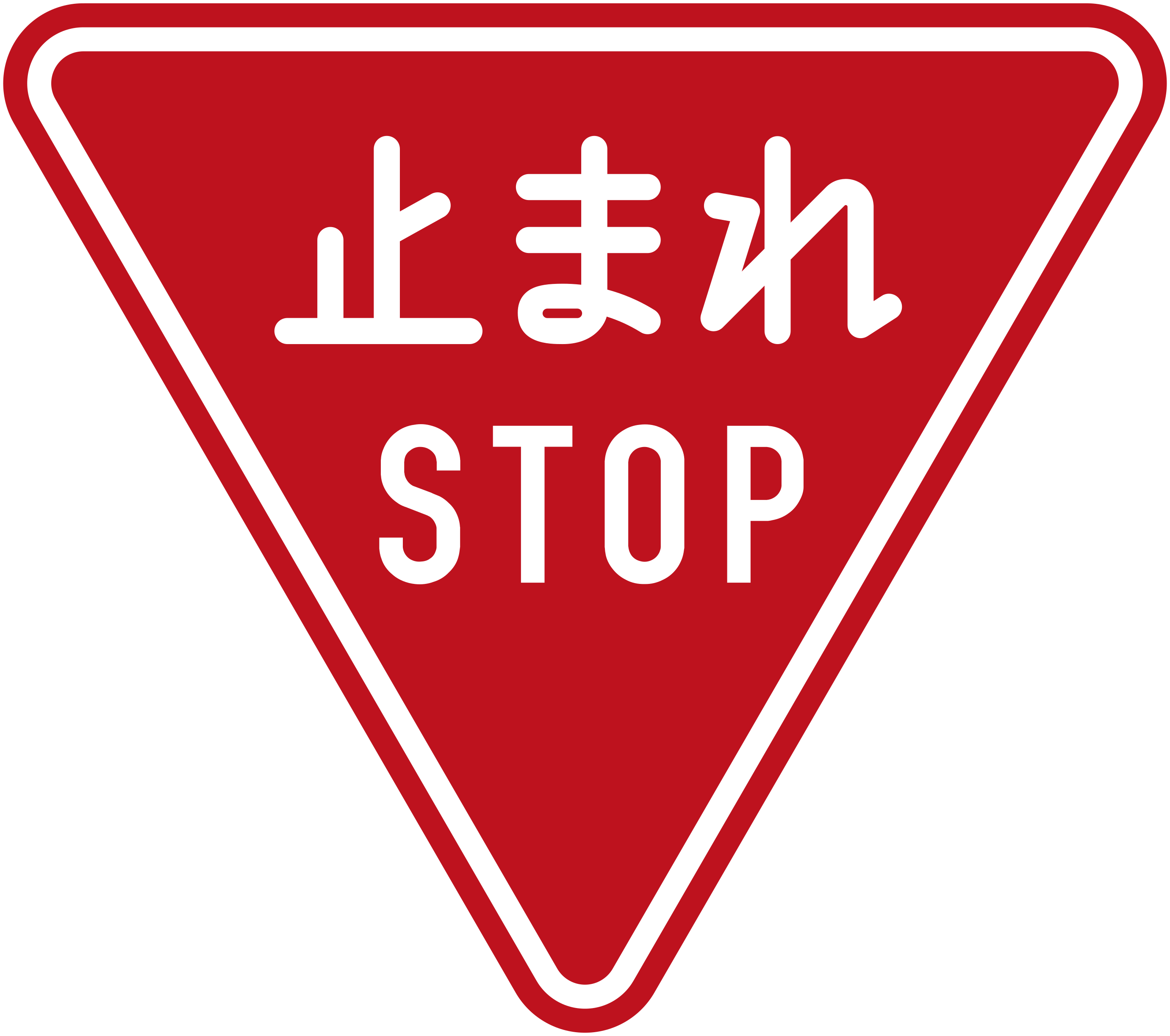
- A.Slow Down
- B.Stop
- C.No Stopping or Parking
- D.Do Not Enter
Answer: B: Stop
Explanation: At intersections with the "Stop" sign, you must come to a complete stop directly before the stop line and confirm safety before proceeding.
Driving school curriculum: Stage 1 – Topic 2: Following traffic signals
Source: Ch. 1 · Section (第2節 信号) · Rules of the Road, Ch.1 §2 / 2(2) Regulatory signs prohibit certain traffic behaviors or designate specific ways of traveling. The types of signs and their meanings are as listed in Appendix 3(1). This question relates to the “Stop” sign/marking (see Appendix 3(1) or 3(2)).
Q107What does this sign mean?[Multiple choice · Easy]
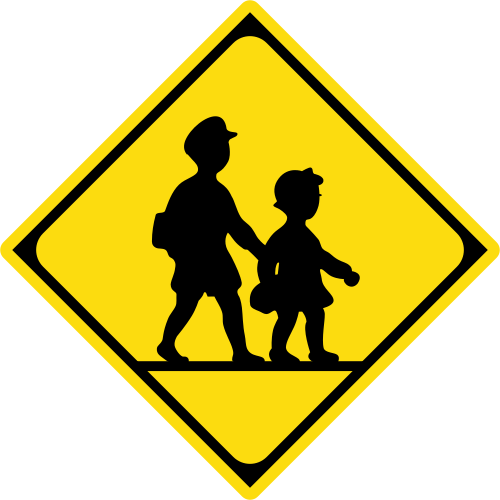
- A.Falling Rocks
- B.Intersection Ahead
- C.Railroad Crossing Ahead
- D.Merging Traffic
Answer: C: Railroad Crossing Ahead
Explanation: Yellow diamond warning sign indicating an upcoming railroad crossing. At the crossing, stop just before it and confirm safety with eyes and ears before crossing.
Driving school curriculum: Stage 1 – Topic 2: Following traffic signals
Source: Ch. 1 · Section (第2節 信号) · Rules of the Road, Ch.1 §2 / 2(4) Warning signs alert road users in advance to hazards or situations on the road that require caution. Types and meanings are listed in Appendix 3(1). This question relates to the “Railroad Crossing Ahead” sign/marking (see Appendix 3(1) or 3(2)).
Q108What does this sign mean?[Multiple choice · Easy]
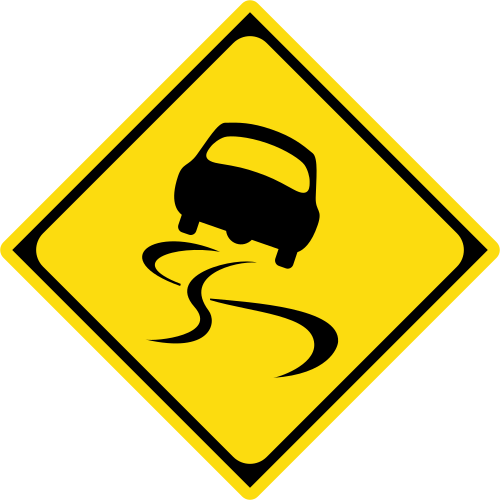
- A.Pedestrians Only
- B.School Zone Ahead
- C.Pedestrian Crossing Ahead
- D.No Pedestrian Crossing
Answer: B: School Zone Ahead
Explanation: Warns of an upcoming school, kindergarten, or daycare. Slow down in case children dart into the road.
Driving school curriculum: Stage 1 – Topic 2: Following traffic signals
Source: Ch. 1 · Section (第2節 信号) · Rules of the Road, Ch.1 §2 / 2(4) Warning signs alert road users in advance to hazards or situations on the road that require caution. Types and meanings are listed in Appendix 3(1). This question relates to the “School Crossing” sign/marking (see Appendix 3(1) or 3(2)).
Q109What does this sign mean?[Multiple choice · Easy]
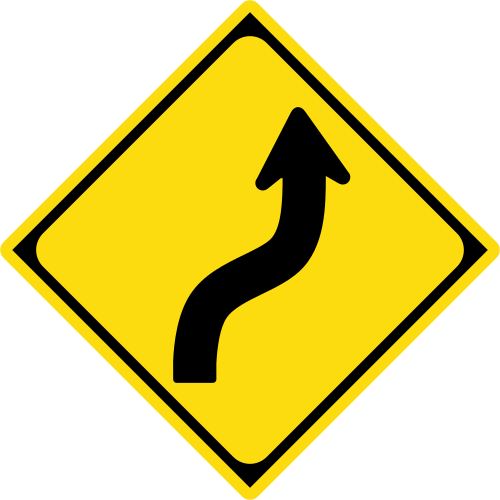
- A.Bend (right or left)
- B.Reverse Bend (right or left)
- C.Winding Road (right or left)
- D.Reverse Sharp Bend (right or left)
Answer: B: Reverse Bend (right or left)
Explanation: Warns of a reverse bend ahead — an S-shaped pair of curves in opposite directions. This differs from a 'winding road' sign, which shows three or more successive bends. Slow down before the curves.
Driving school curriculum: Stage 1 – Topic 2: Following traffic signals
Source: Ch. 1 · Section (第2節 信号) · Rules of the Road, Ch.1 §2 / 2(4) Warning signs alert road users in advance to hazards or situations on the road that require caution. Types and meanings are listed in Appendix 3(1). This question relates to the “Curve Ahead” sign/marking (see Appendix 3(1) or 3(2)).
Q110What does this sign mean?[Multiple choice · Easy]
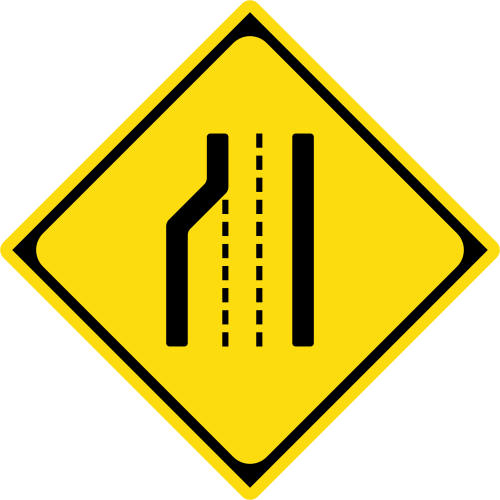
- A.Falling Rocks
- B.School Zone Ahead
- C.Slippery Road
- D.Winding Road (right or left)
Answer: C: Slippery Road
Explanation: Warns that the road surface may be slippery. Reduce speed especially in rain or icy conditions.
Driving school curriculum: Stage 1 – Topic 2: Following traffic signals
Source: Ch. 1 · Section (第2節 信号) · Rules of the Road, Ch.1 §2 / 2(4) Warning signs alert road users in advance to hazards or situations on the road that require caution. Types and meanings are listed in Appendix 3(1). This question relates to the “Slippery Road” sign/marking (see Appendix 3(1) or 3(2)).
Q111What does this sign mean?[Multiple choice · Easy]
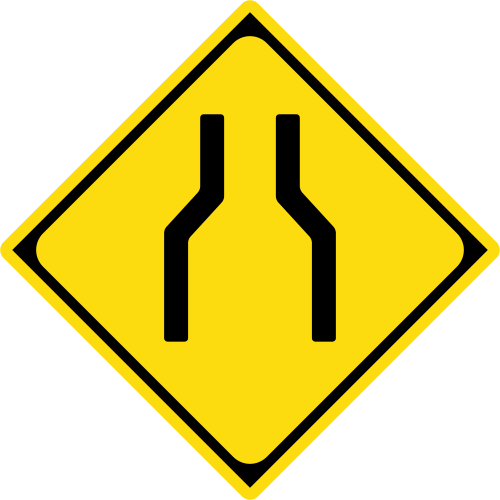
- A.Falling Rocks
- B.Slippery Road
- C.School Zone Ahead
- D.Railroad Crossing Ahead
Answer: A: Falling Rocks
Explanation: Warns of possible falling rocks on the road ahead. Often seen on mountain roads.
Driving school curriculum: Stage 1 – Topic 2: Following traffic signals
Source: Ch. 1 · Section (第2節 信号) · Rules of the Road, Ch.1 §2 / 2(4) Warning signs alert road users in advance to hazards or situations on the road that require caution. Types and meanings are listed in Appendix 3(1). This question relates to the “Falling Rocks” sign/marking (see Appendix 3(1) or 3(2)).
Q112What does this sign mean?[Multiple choice · Easy]
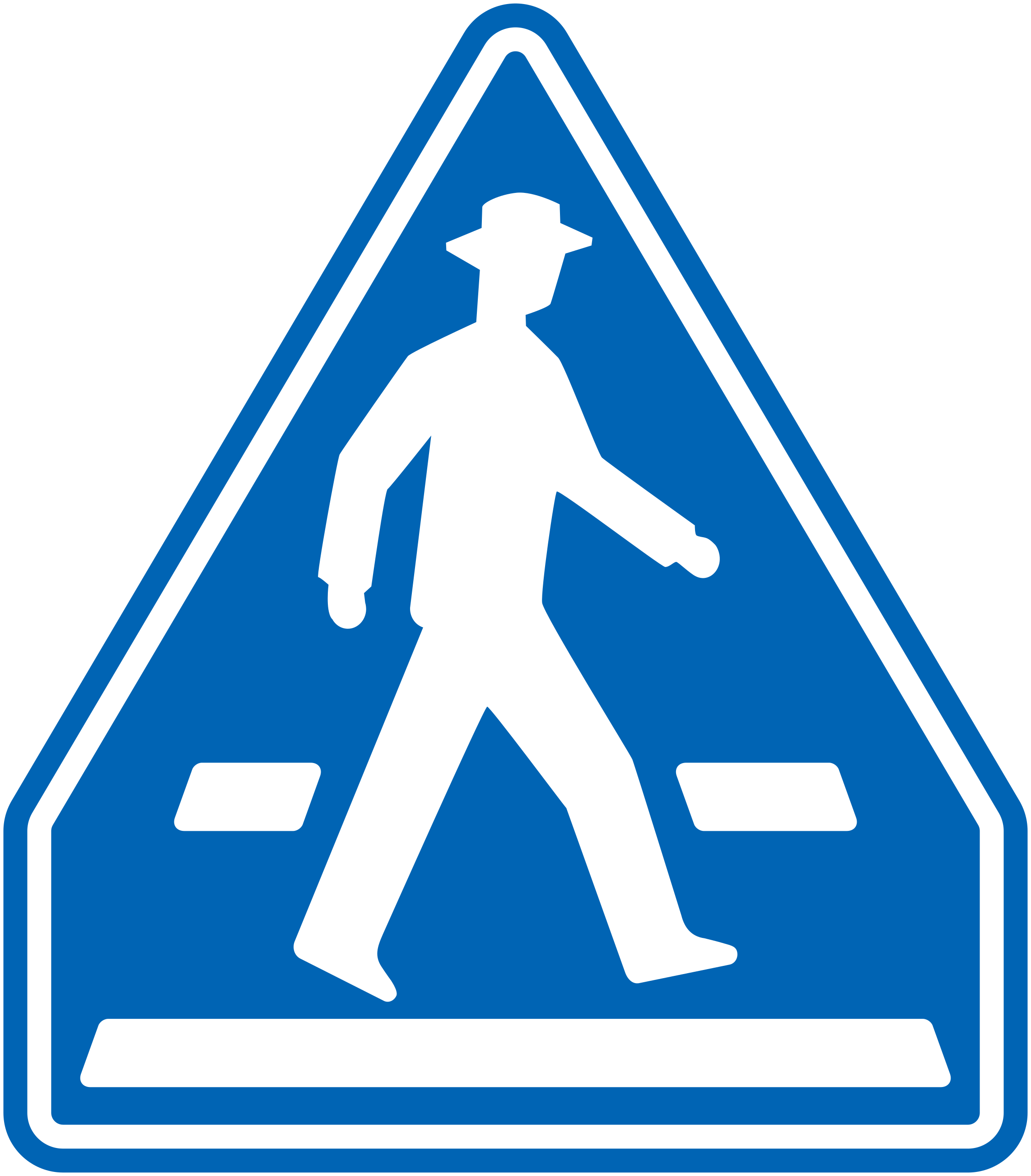
- A.Pedestrian and Bicycle Crossing
- B.Pedestrian Crossing
- C.Bicycle Crossing
- D.Pedestrians Only
Answer: B: Pedestrian Crossing
Explanation: Indication sign showing a pedestrian crossing. Approach with caution, check for pedestrians, and stop if anyone is crossing or about to.
Driving school curriculum: Stage 1 – Topic 2: Following traffic signals
Source: Ch. 1 · Section (第2節 信号) · Rules of the Road, Ch.1 §2 / 2(3) Indication signs indicate that a particular traffic behavior is permitted, or that a location has a specific traffic designation. Types and meanings are listed in Appendix 3(1). This question relates to the “Pedestrian Crossing” sign/marking (see Appendix 3(1) or 3(2)).
Q113What does this sign mean?[Multiple choice · Easy]
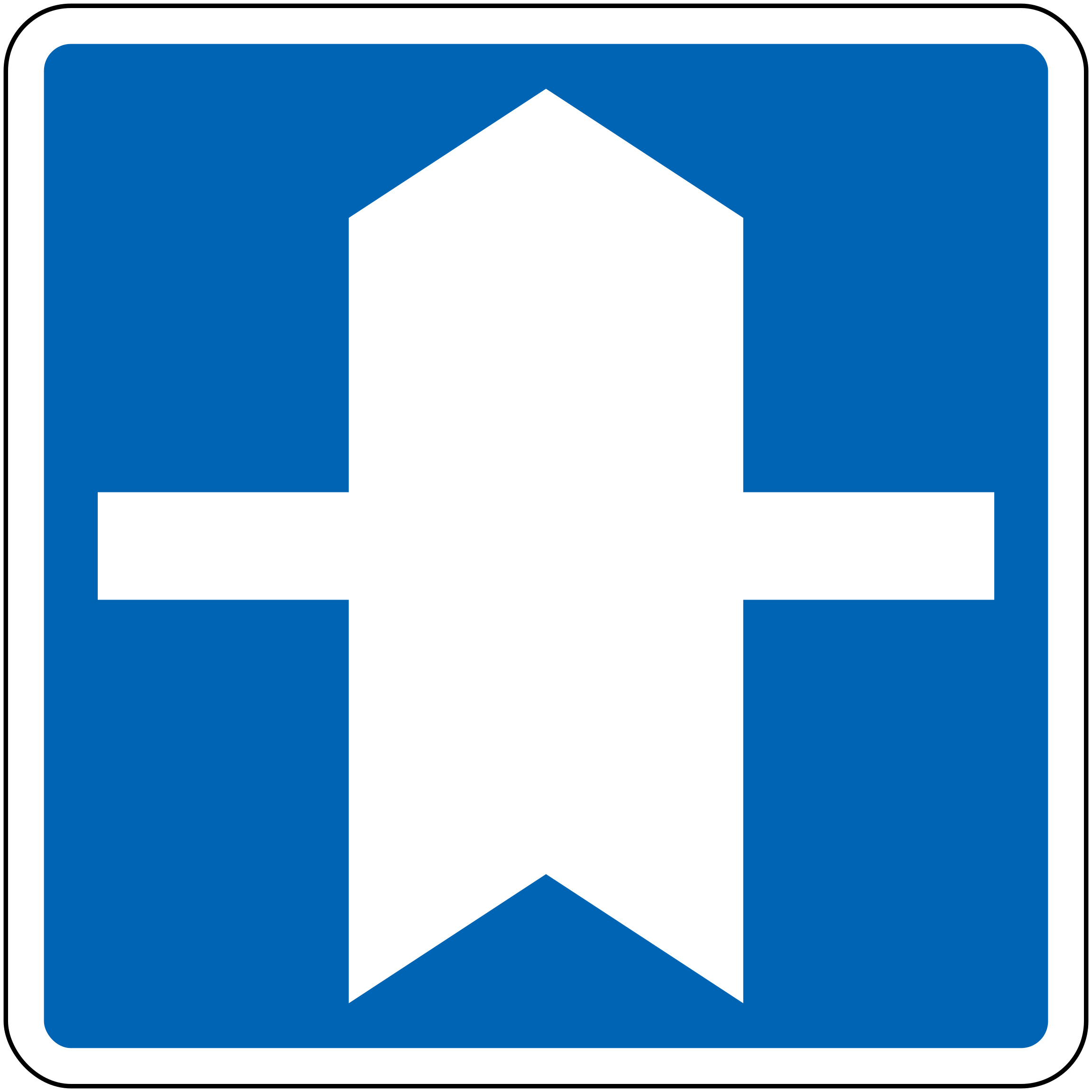
- A.Stopping Permitted
- B.Parking with Roadside Space
- C.Time-Limited Parking Zone
- D.Parking Permitted
Answer: D: Parking Permitted
Explanation: Indication sign showing where parking is permitted. You may park within the specified manner and time.
Driving school curriculum: Stage 1 – Topic 2: Following traffic signals
Source: Ch. 1 · Section (第2節 信号) · Rules of the Road, Ch.1 §2 / 2(3) Indication signs indicate that a particular traffic behavior is permitted, or that a location has a specific traffic designation. Types and meanings are listed in Appendix 3(1). This question relates to the “Parking Permitted” sign/marking (see Appendix 3(1) or 3(2)).
Q114What does this sign mean?[Multiple choice · Easy]
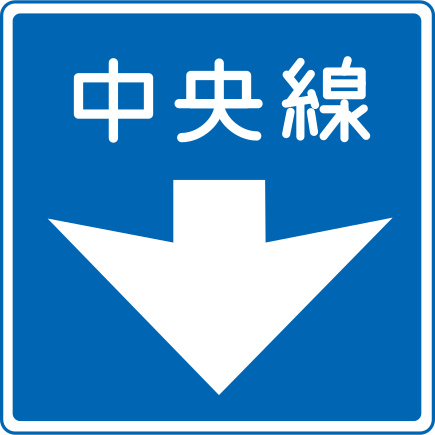
- A.Parking Permitted
- B.Bicycles May Ride Abreast
- C.Stopping Permitted
- D.Priority Road
Answer: C: Stopping Permitted
Explanation: Indication sign showing where stopping is permitted. Note that parking may still be prohibited.
Driving school curriculum: Stage 1 – Topic 2: Following traffic signals
Source: Ch. 1 · Section (第2節 信号) · Rules of the Road, Ch.1 §2 / 2(3) Indication signs indicate that a particular traffic behavior is permitted, or that a location has a specific traffic designation. Types and meanings are listed in Appendix 3(1). This question relates to the “Stopping Permitted” sign/marking (see Appendix 3(1) or 3(2)).
Q115What does this sign mean?[Multiple choice · Easy]

- A.Yellow Signal
- B.Green Signal
- C.Red Signal
- D.Right Arrow Signal
Answer: C: Red Signal
Explanation: A red signal means both vehicles and pedestrians must stop. Stop directly before the stop line.
Driving school curriculum: Stage 1 – Topic 2: Following traffic signals
Source: Ch. 1 · Section (第2節 信号) · Rules of the Road, Ch.1 §2 (Signals, Signs & Markings) / 1. Signals: Drivers must obey traffic-signal lights. When a police officer or traffic-directing officer is controlling traffic by hand signals or flashlight, those signals override the traffic-signal lights. This question relates to the “Red Signal” sign/marking (see Appendix 3(1) or 3(2)).
Q116What does this sign mean?[Multiple choice · Easy]

- A.Yellow Signal
- B.Red Signal
- C.Right Arrow Signal
- D.Green Signal
Answer: D: Green Signal
Explanation: A green signal means vehicles and pedestrians may proceed. However, you must confirm other traffic is safe before going.
Driving school curriculum: Stage 1 – Topic 2: Following traffic signals
Source: Ch. 1 · Section (第2節 信号) · Rules of the Road, Ch.1 §2 (Signals, Signs & Markings) / 1. Signals: Drivers must obey traffic-signal lights. When a police officer or traffic-directing officer is controlling traffic by hand signals or flashlight, those signals override the traffic-signal lights. This question relates to the “Green Signal” sign/marking (see Appendix 3(1) or 3(2)).
Q117If a traffic-directing police officer is signalling with both arms held straight up overhead, this carries the same meaning as a red light for vehicles approaching from the direction the arms point toward.[True / False · Hard]
Answer: ✕ False
Explanation: With a uniformed officer's arms raised straight up, traffic that faces the officer's front or back is treated as if a red signal were displayed, while traffic moving parallel to the outstretched arms (i.e. coming from the officer's sides) is treated as if a yellow signal were displayed. The question's claim about "vehicles approaching from the direction the arms point toward" describes the sides — that traffic gets a yellow, not a red. Reference: Road Traffic Act Enforcement Order Article 2 (1); Rules of the Road Chapter 1, Section 3, Appendix Table 1 (3).
Driving school curriculum: Stage 1 – Topic 2: Following traffic signals
Source: Ch. 1 · Section (第3節 警察官などの指示に従うこと) · 第3節 警察官などの指示に従うこと
Q118When an emergency vehicle approaches, you must avoid the intersection if you are near one, pull over to the left side of the road, and come to a complete stop.[True / False · Easy]
Answer: ✓ True
Explanation: The Rules of the Road state that when an emergency vehicle approaches near an intersection, you must avoid the intersection, pull over to the left side of the road, and come to a complete stop. It is important to note that near an intersection, you must not only yield but also come to a complete stop.
Driving school curriculum: Stage 1 – Topic 5: Priority for emergency vehicles
Source: Ch. 1 · Section (第2節 信号、標識・標示に従うこと) · 第5章第2節5「緊急自動車が近づいてきたときは、交差点の付近では、交差点を避けて、道路の左側に寄つて一時停止をし」
Q119When an emergency vehicle approaches at a location other than near an intersection, you must pull over to the left side of the road and yield.[True / False · Easy]
Answer: ✓ True
Explanation: The Rules of the Road state that when an emergency vehicle approaches at a location other than near an intersection, you must pull over to the left side of the road and yield. While a complete stop is not required as it is near an intersection, you are obligated to pull over to the left and yield.
Driving school curriculum: Stage 1 – Topic 5: Priority for emergency vehicles
Source: Ch. 1 · Section (第2節 信号、標識・標示に従うこと) · 第5章第2節5「その他のところでは、道路の左側に寄つて進路を譲らなければなりません。」
Q120When an emergency vehicle approaches on a one-way road, you must always pull over to the left side, even if pulling over to the left would obstruct the emergency vehicle.[True / False · Medium]
Answer: ✕ False
Explanation: The Rules of the Road state that on a one-way road, if pulling over to the left would obstruct the emergency vehicle, you must pull over to the right side instead. The trick in this question is that on a one-way road, you are not always required to pull over to the left.
Driving school curriculum: Stage 1 – Topic 5: Priority for emergency vehicles
Source: Ch. 1 · Section (第2節 信号、標識・標示に従うこと) · 第5章第2節5「一方通行の道路で左側に寄ると、かえつて緊急自動車の妨げとなるようなときは、右側に寄らなければなりません。」
Q121When an emergency vehicle approaches near an intersection, you must enter the intersection, then pull over to the left side of the road and slow down to a stop-ready speed (jokō).[True / False · Hard]
Answer: ✕ False
Explanation: The Rules of the Road state that near an intersection, you must "avoid the intersection," pull over to the left side of the road, and "come to a complete stop." Entering the intersection or merely slowing down to a stop-ready speed is not permitted.
Driving school curriculum: Stage 1 – Topic 5: Priority for emergency vehicles
Source: Ch. 1 · Section (第2節 信号、標識・標示に従うこと) · 第5章第2節5「交差点の付近では、交差点を避けて、道路の左側に寄つて一時停止をし」
Q122Which of the following is correct regarding how vehicles should proceed when an emergency vehicle approaches, according to the Rules of the Road?[Multiple choice · Medium]
- A.Near an intersection, you must pull over to the right side of the road and come to a complete stop.
- B.At locations other than near an intersection, you must pull over to the left side of the road and yield.
- C.On a one-way road, you must always pull over to the left side regardless of the situation.
- D.Near an intersection, you may pass through the intersection while slowing down to a stop-ready speed.
Answer: B: At locations other than near an intersection, you must pull over to the left side of the road and yield.
Explanation: The Rules of the Road state that at locations other than near an intersection, you must pull over to the left side of the road and yield. Near an intersection, you must avoid the intersection, pull over to the left, and come to a complete stop. On a one-way road, if the left side would obstruct the emergency vehicle, you must pull over to the right. There is no provision for passing through at a stop-ready speed.
Driving school curriculum: Stage 1 – Topic 5: Priority for emergency vehicles
Source: Ch. 1 · Section (第2節 信号、標識・標示に従うこと) · 第5章第2節5「その他のところでは、道路の左側に寄つて進路を譲らなければなりません。」「交差点の付近では、交差点を避けて、道路の左側に寄つて一時停止をし」「一方通行の道路で左側に寄ると、かえつて緊急自動車の妨げとなるようなときは、右側に寄らなければなりません。」