Written-test study material
Ch. 1 · Common Conduct
Bab 1 ujian tertulis SIM Jepang: lampu lalu lintas, rambu, marka jalan, dan etika dasar bagi semua pengguna jalan. Soal latihan gratis dengan penjelasan AI untuk persiapan SIM sementara (karimen) maupun SIM penuh (honmen).
Key topics
Sinyal, rambu, dan marka jalan. Pahami perbedaan antara regulatory sign (merah/biru, melarang atau mewajibkan), warning sign (kuning belah ketupat, peringatan bahaya), indication sign (biru persegi, petunjuk fasilitas), dan guide sign (hijau, arah tujuan). Ketahui arti garis kuning utuh/putus-putus untuk larangan parkir atau berhenti, serta fungsi garis berhenti dan marka penyeberangan.
Prioritas isyarat petugas. Hand signal polisi atau petugas pengatur lalu lintas selalu didahulukan melebihi lampu lalu lintas, rambu, dan marka jalan. Jika ada perbedaan instruksi, ikuti petugas terlebih dahulu.
Lampu lalu lintas dan panah. Hijau berarti boleh jalan ke segala arah; kuning berarti berhenti kecuali sudah terlalu dekat; merah berarti berhenti penuh. Lampu panah hijau memperbolehkan arah tertentu meski lampu utama merah. Kuning berkedip berarti hati-hati; merah berkedip berarti stop penuh lalu cek keamanan.
Larangan mengemudi mabuk dan membantu pelanggar. Dilarang keras mengemudi dalam pengaruh alkohol, dan juga dilarang meminta atau membiarkan orang mabuk mengemudi. Jangan membuang sampah dari kendaraan atau melakukan tindakan yang mengganggu lalu lintas di jalan.
Kendaraan darurat. Saat kendaraan darurat mendekat, menepi ke kiri jalan dan berhenti (di sekitar persimpangan hindari masuk persimpangan); di jalan satu arah boleh menepi ke kanan jika lebih aman.
Common pitfalls
Keliru membedakan "berhenti" vs "parkir". Garis kuning utuh melarang keduanya; garis putus-putus kuning hanya melarang parkir (berhenti singkat boleh). Rambu "Parkir Dilarang" membolehkan berhenti sementara untuk naik-turun penumpang.
Salah prioritas isyarat. Banyak yang mengira lampu lalu lintas lebih utama, padahal hand signal petugas polisi selalu menang atas semua sinyal dan rambu.
Mengabaikan rambu tambahan (supplementary sign). Contoh: rambu "Parkir Dilarang" dengan tambahan "Kecuali Minggu/Libur" tidak berarti boleh parkir sepanjang hari Minggu—hanya pada jam tertentu sesuai aturan lokal. Perhatikan detail waktu dan kondisi.
All 122 questions in this chapter
Tap any question to expand its choices, answer, and explanation.
Q1Peraturan lalu lintas ditetapkan sebagai janji bersama yang harus dipatuhi agar semua orang dapat melintas di jalan dengan aman dan lancar.[True / False · Easy]
Answer: ✓ Benar
Explanation: Dalam teks tertulis "Peraturan lalu lintas ditetapkan sebagai janji bersama yang harus dipatuhi agar semua orang dapat melintas di jalan dengan aman dan lancar", sehingga pernyataan ini benar.
Driving school curriculum: Tahap 1 – Topik 1: Sikap pengemudi
Source: Ch. 1 · Section (第1節 基本的な心構え) · 1 交通規則を守ること - 交通規則は、このようなことから、みんなが道路を安全、円滑に通行する上で守るべき共通の約束事として決められているものです。
Q2Mematuhi peraturan lalu lintas adalah hak dasar sebagai anggota masyarakat.[True / False · Medium]
Answer: ✕ Salah
Explanation: Dalam teks disebutkan "Mematuhi peraturan lalu lintas adalah kewajiban dasar sebagai anggota masyarakat", sehingga yang benar adalah "kewajiban" bukan "hak". Soal ini merupakan jebakan dengan mengganti kata.
Driving school curriculum: Tahap 1 – Topik 1: Sikap pengemudi
Source: Ch. 1 · Section (第1節 基本的な心構え) · 1 交通規則を守ること - 言い換えれば、交通規則を守ることは、社会人としての基本的な責務なのです。
Q3Saat melintas di jalan, Anda harus mempertimbangkan agar tidak menimbulkan gangguan seperti kebisingan yang tidak menyenangkan bagi orang-orang yang tinggal di sepanjang jalan.[True / False · Easy]
Answer: ✓ Benar
Explanation: Dalam sikap dasar (2) teks tertulis "Tidak hanya memikirkan kemudahan lalu lintas sendiri, tetapi juga harus mempertimbangkan agar tidak menimbulkan gangguan seperti kebisingan yang tidak menyenangkan bagi orang-orang yang tinggal di sepanjang jalan", sehingga pernyataan ini benar.
Driving school curriculum: Tahap 1 – Topik 1: Sikap pengemudi
Source: Ch. 1 · Section (第1節 基本的な心構え) · 2 道路を通行するときの心構え(2)自分の通行の利便だけを考えるのではなく、沿道で生活している人々に対して、不愉快な騒音などの迷惑を掛けないように配慮すること。
Q4Pejalan kaki tidak perlu mengetahui karakteristik kendaraan, tetapi pengemudi kendaraan harus mengetahui dengan baik karakteristik kendaraan seperti titik buta dan perbedaan radius putar dalam.[True / False · Medium]
Answer: ✕ Salah
Explanation: Dalam sikap dasar (5) teks disebutkan "Tidak hanya pengemudi kendaraan, tetapi juga pejalan kaki, pengendara sepeda bermotor kecil khusus dan sepeda harus mengetahui dengan baik karakteristik kendaraan seperti titik buta dan perbedaan radius putar dalam", sehingga pejalan kaki juga perlu mengetahuinya.
Driving school curriculum: Tahap 1 – Topik 1: Sikap pengemudi
Source: Ch. 1 · Section (第1節 基本的な心構え) · 2 道路を通行するときの心構え(5)自動車の運転者はもちろん、歩行者、特定小型原動機付自転車や自転車に乗る人も、自動車の死角、内輪差など自動車の特性をよく知つておくこと。
Q5Kendaraan otonom dalam mode pengemudian otomatis khusus mungkin memiliki pengemudi di dalamnya, dan dapat berhenti tiba-tiba di jalan.[True / False · Hard]
Answer: ✕ Salah
Explanation: Dalam sikap dasar (6) teks disebutkan "Kendaraan otonom dalam mode pengemudian otomatis khusus tidak memiliki pengemudi dan dapat berhenti tiba-tiba di jalan", sehingga yang benar adalah "tidak memiliki" pengemudi. Pernyataan "mungkin memiliki" adalah salah.
Driving school curriculum: Tahap 1 – Topik 1: Sikap pengemudi
Source: Ch. 1 · Section (第1節 基本的な心構え) · 2 道路を通行するときの心構え(6)特定自動運行中の自動運転車については、運転者がいないことや道路上で突然停止することがあることをよく知つておくこと。
Q6Jika Anda melihat orang yang mengalami kesulitan karena kecelakaan lalu lintas atau kerusakan kendaraan, penting untuk saling membantu dengan melakukan kontak atau memberikan pertolongan.[True / False · Easy]
Answer: ✓ Benar
Explanation: Dalam sikap dasar (4) teks tertulis "Jika Anda melihat orang yang mengalami kesulitan karena kecelakaan lalu lintas atau kerusakan kendaraan, saling membantu dengan melakukan kontak atau memberikan pertolongan", sehingga pernyataan ini benar.
Driving school curriculum: Tahap 1 – Topik 1: Sikap pengemudi
Source: Ch. 1 · Section (第1節 基本的な心構え) · 2 道路を通行するときの心構え(4)交通事故や、故障で困つている人を見たら、連絡や救護に当たるなど、お互いに協力しあうこと。
Q7Orang yang mengoperasikan kendaraan kecil jarak jauh harus selalu berada di dekat kendaraan tersebut.[True / False · Medium]
Answer: ✕ Salah
Explanation: Dalam sikap dasar (7) teks disebutkan "Kendaraan kecil jarak jauh mungkin dioperasikan oleh orang yang tidak berada di dekatnya, dan dapat berhenti tiba-tiba di jalan", sehingga orang yang mengoperasikan mungkin tidak berada di dekatnya dan pernyataan ini salah.
Driving school curriculum: Tahap 1 – Topik 1: Sikap pengemudi
Source: Ch. 1 · Section (第1節 基本的な心構え) · 2 道路を通行するときの心構え(7)遠隔操作型小型車については、通行させている人が近くにいないこともあることや道路上で突然停止することがあることをよく知つておくこと。
Q8Manakah di antara berikut ini yang salah sebagai sikap dasar saat melintas di jalan?[Multiple choice · Medium]
- A.Memperhatikan gerakan pejalan kaki dan kendaraan di sekitar, dan melintas dengan rasa empati terhadap posisi orang lain.
- B.Tidak membuang barang atau menaruh barang sembarangan di jalan.
- C.Melintas dengan mengutamakan kemudahan lalu lintas sendiri.
- D.Membekali diri dengan pengetahuan yang diperlukan untuk tindakan pertolongan darurat untuk mengantisipasi keadaan darurat.
Answer: C: Melintas dengan mengutamakan kemudahan lalu lintas sendiri.
Explanation: Dalam sikap dasar (2) teks disebutkan "Tidak hanya memikirkan kemudahan lalu lintas sendiri, tetapi juga harus mempertimbangkan agar tidak menimbulkan gangguan seperti kebisingan yang tidak menyenangkan bagi orang-orang yang tinggal di sepanjang jalan", sehingga memikirkan kemudahan sendiri saja adalah salah. Pilihan lain sesuai dengan sikap dasar dalam teks.
Driving school curriculum: Tahap 1 – Topik 1: Sikap pengemudi
Source: Ch. 1 · Section (第1節 基本的な心構え) · 2 道路を通行するときの心構え(1)(2)(3)(8)
Q9Apa yang dimaksud dengan tindakan pertolongan darurat? Pilih jawaban yang benar.[Multiple choice · Hard]
- A.Tindakan pencegahan untuk mencegah kecelakaan lalu lintas.
- B.Tindakan darurat yang diperlukan untuk menolong korban di tempat kecelakaan lalu lintas.
- C.Tindakan darurat untuk memperbaiki kendaraan yang rusak.
- D.Tindakan untuk menghubungi polisi atau ambulans setelah kecelakaan lalu lintas.
Answer: B: Tindakan darurat yang diperlukan untuk menolong korban di tempat kecelakaan lalu lintas.
Explanation: Dalam sikap dasar (3) teks didefinisikan dengan jelas bahwa "tindakan pertolongan darurat (tindakan darurat yang diperlukan untuk menolong korban di tempat kecelakaan lalu lintas)", sehingga pilihan 2 adalah benar. Pilihan lain tidak tercantum dalam teks.
Driving school curriculum: Tahap 1 – Topik 1: Sikap pengemudi
Source: Ch. 1 · Section (第1節 基本的な心構え) · 2 道路を通行するときの心構え(3)応急救護処置(交通事故の現場においてその負傷者を救護するため必要な応急の処置をいいます。)
Q10Manakah di antara berikut ini yang tidak tercantum dalam teks mengenai hal yang perlu diketahui tentang kendaraan otonom?[Multiple choice · Medium]
- A.Kendaraan mungkin digunakan tanpa pengemudi melihat ke depan.
- B.Kendaraan otonom dalam mode pengemudian otomatis khusus mungkin tidak memiliki pengemudi.
- C.Kendaraan otonom dalam mode pengemudian otomatis khusus dapat berhenti tiba-tiba di jalan.
- D.Kendaraan otonom selalu lebih aman daripada mengemudi manual.
Answer: D: Kendaraan otonom selalu lebih aman daripada mengemudi manual.
Explanation: Dalam sikap dasar (6) teks disebutkan bahwa kendaraan otonom mungkin digunakan tanpa melihat ke depan, tidak memiliki pengemudi saat mode pengemudian otomatis khusus, dan dapat berhenti tiba-tiba, tetapi tidak ada pernyataan bahwa "selalu lebih aman daripada mengemudi manual".
Driving school curriculum: Tahap 1 – Topik 1: Sikap pengemudi
Source: Ch. 1 · Section (第1節 基本的な心構え) · 2 道路を通行するときの心構え(6)自動運転車については、運転者が前方を見ないで使われることもあることをよく知つておくこと。また、特定自動運行中の自動運転車については、運転者がいないことや道路上で突然停止することがあることをよく知つておくこと。
Q11Anda harus melintas mengikuti sinyal lampu lalu lintas.[True / False · Easy]
Answer: ✓ Benar
Explanation: Dalam teks aturan 1(1) tertulis "Anda harus melintas mengikuti sinyal lampu lalu lintas", dan ini merupakan prinsip dasar peraturan lalu lintas. Jenis sinyal lampu lalu lintas dan maknanya ditetapkan dalam lampiran.
Driving school curriculum: Tahap 1 – Topik 3: Mematuhi rambu dan marka jalan
Source: Ch. 1 · Section (第2節 信号、標識・標示に従うこと) · 1 信号の意味(1)
Q12Jika sinyal samping merah, sinyal depan pasti hijau.[True / False · Medium]
Answer: ✕ Salah
Explanation: Dalam teks aturan 1(2) tertulis "Meskipun sinyal samping merah, sinyal depan belum tentu hijau". Karena ada lampu lalu lintas khusus seperti lampu lalu lintas yang semua arahnya merah secara bersamaan atau lampu lalu lintas beda waktu, Anda harus memeriksa sinyal depan.
Driving school curriculum: Tahap 1 – Topik 3: Mematuhi rambu dan marka jalan
Source: Ch. 1 · Section (第2節 信号、標識・標示に従うこと) · 1 信号の意味(2)
Q13Sepeda motor listrik kecil tertentu juga harus mengikuti sinyal dari lampu lalu lintas yang bertuliskan "Khusus Pejalan Kaki & Sepeda".[True / False · Hard]
Answer: ✓ Benar
Explanation: Dalam Peraturan Lalu Lintas bagian 1(3) tertulis: "Sepeda motor listrik kecil tertentu dan sepeda lainnya juga harus mengikuti sinyal dari lampu lalu lintas tersebut apabila terdapat tulisan 'Khusus Pejalan Kaki & Sepeda' pada lampu lalu lintas itu."
Driving school curriculum: Tahap 1 – Topik 3: Mematuhi rambu dan marka jalan
Source: Ch. 1 · Section (第2節 信号、標識・標示に従うこと) · 1 信号の意味(3)
Q14Apabila ada papan penanda putih dengan panah kiri biru, kendaraan dapat berbelok kiri meskipun sinyal di depan berwarna merah atau kuning, tetapi tidak boleh menghalangi pejalan kaki yang sedang menyeberang sesuai sinyal.[True / False · Medium]
Answer: ✓ Benar
Explanation: Dalam Peraturan Lalu Lintas bagian 1(4) tertulis: "Kendaraan dapat berbelok kiri meskipun sinyal di depan berwarna merah atau kuning, dengan tetap memperhatikan lalu lintas sekitar seperti pejalan kaki" dan "Tidak boleh menghalangi pejalan kaki, sepeda motor listrik kecil tertentu (tokutei kogata gentsuki), atau sepeda yang sedang menyeberang sesuai sinyal lampu lalu lintas."
Driving school curriculum: Tahap 1 – Topik 3: Mematuhi rambu dan marka jalan
Source: Ch. 1 · Section (第2節 信号、標識・標示に従うこと) · 1 信号の意味(4)
Q15Manakah yang benar mengenai jenis-jenis rambu utama?[Multiple choice · Easy]
- A.3 jenis: rambu pengatur, rambu indikasi, rambu peringatan
- B.4 jenis: rambu pengatur, rambu indikasi, rambu peringatan, rambu petunjuk arah
- C.3 jenis: rambu pengatur, rambu indikasi, rambu petunjuk arah
- D.3 jenis: rambu pengatur, rambu peringatan, rambu petunjuk arah
Answer: B: 4 jenis: rambu pengatur, rambu indikasi, rambu peringatan, rambu petunjuk arah
Explanation: Dalam Peraturan Lalu Lintas bagian 2(1) tertulis: "Rambu utama terdiri dari 4 jenis, yaitu rambu pengatur, rambu indikasi, rambu peringatan, dan rambu petunjuk arah." Keempat jenis ini semuanya termasuk dalam rambu utama.
Driving school curriculum: Tahap 1 – Topik 3: Mematuhi rambu dan marka jalan
Source: Ch. 1 · Section (第2節 信号、標識・標示に従うこと) · 2 標識の意味(1)
Q16Rambu pengatur adalah tanda yang memberitahukan pengguna jalan tentang bahaya atau situasi yang harus diwaspadai di jalan.[True / False · Medium]
Answer: ✕ Salah
Explanation: Menurut Peraturan Lalu Lintas bagian 2(2), rambu pengatur adalah "tanda yang melarang metode lalu lintas tertentu atau menetapkan metode tertentu yang harus diikuti saat melintas." Yang memberitahukan bahaya di jalan adalah rambu peringatan sebagaimana dijelaskan di bagian 2(4).
Driving school curriculum: Tahap 1 – Topik 3: Mematuhi rambu dan marka jalan
Source: Ch. 1 · Section (第2節 信号、標識・標示に従うこと) · 2 標識の意味(2)(4)
Q17Rambu petunjuk arah menunjukkan nama tempat, arah, jarak, dan sebagainya untuk memberikan kemudahan dalam berlalu lintas.[True / False · Easy]
Answer: ✓ Benar
Explanation: Dalam Peraturan Lalu Lintas bagian 2(5) tertulis: "Rambu petunjuk arah menunjukkan nama tempat, arah, jarak, dan sebagainya untuk memberikan kemudahan dalam berlalu lintas." Tujuannya adalah meningkatkan kenyamanan pengguna jalan.
Driving school curriculum: Tahap 1 – Topik 3: Mematuhi rambu dan marka jalan
Source: Ch. 1 · Section (第2節 信号、標識・標示に従うこと) · 2 標識の意味(5)
Q18Penjelasan yang benar mengenai rambu tambahan adalah yang mana?[Multiple choice · Medium]
- A.Rambu tambahan dipasang di atas rambu utama
- B.Rambu tambahan melengkapi arti rambu pengatur dan tanda lainnya, biasanya dipasang di bawah rambu utama
- C.Rambu tambahan memiliki ukuran yang sama dengan rambu utama
- D.Rambu tambahan hanya digunakan pada rambu indikasi
Answer: B: Rambu tambahan melengkapi arti rambu pengatur dan tanda lainnya, biasanya dipasang di bawah rambu utama
Explanation: Dalam Peraturan Lalu Lintas bagian 2(6) tertulis: "Rambu tambahan biasanya dipasang di bawah rambu utama, dan menunjukkan alasan regulasi atau menentukan waktu, hari dalam seminggu, jenis kendaraan, dan sebagainya yang menjadi sasaran regulasi tersebut."
Driving school curriculum: Tahap 1 – Topik 3: Mematuhi rambu dan marka jalan
Source: Ch. 1 · Section (第2節 信号、標識・標示に従うこと) · 2 標識の意味(6)
Q19Marka jalan terdiri dari 2 jenis, yaitu marka pengatur dan marka indikasi.[True / False · Easy]
Answer: ✓ Benar
Explanation: Dalam Peraturan Lalu Lintas bagian 3(1) tertulis: "Marka jalan adalah garis, simbol, atau teks yang ditunjukkan pada permukaan jalan dengan cat atau paku jalan, dan terdiri dari 2 jenis, yaitu marka pengatur dan marka indikasi."
Driving school curriculum: Tahap 1 – Topik 3: Mematuhi rambu dan marka jalan
Source: Ch. 1 · Section (第2節 信号、標識・標示に従うこと) · 3 標示の意味(1)
Q20Penjelasan yang benar mengenai marka indikasi adalah yang mana?[Multiple choice · Hard]
- A.Melarang atau menetapkan metode lalu lintas tertentu
- B.Menunjukkan bahwa metode lalu lintas tertentu dapat dilakukan atau menunjukkan tempat yang telah ditetapkan dalam lalu lintas jalan
- C.Menunjukkan bahaya atau situasi yang harus diwaspadai di jalan
- D.Menunjukkan nama tempat atau arah
Answer: B: Menunjukkan bahwa metode lalu lintas tertentu dapat dilakukan atau menunjukkan tempat yang telah ditetapkan dalam lalu lintas jalan
Explanation: Dalam Peraturan Lalu Lintas bagian 3(2) tertulis: "Marka indikasi adalah marka yang menunjukkan bahwa metode lalu lintas tertentu dapat dilakukan atau menunjukkan tempat yang telah ditetapkan dalam lalu lintas jalan." Contohnya adalah marka yang menunjukkan penyeberangan diagonal dapat dilakukan atau marka yang menunjukkan posisi berhenti kendaraan.
Driving school curriculum: Tahap 1 – Topik 3: Mematuhi rambu dan marka jalan
Source: Ch. 1 · Section (第2節 信号、標識・標示に従うこと) · 3 標示の意味(2)
Q21Apabila polisi melakukan pengaturan lalu lintas dengan isyarat tangan, meskipun isyarat tangan tersebut berbeda dengan sinyal lampu lalu lintas, isyarat tangan polisi yang didahulukan.[True / False · Easy]
Answer: ✓ Benar
Explanation: Dalam Peraturan Lalu Lintas pasal 1 tertulis: "Meskipun sinyal isyarat tangan atau lampu berbeda dengan sinyal lampu lalu lintas, sinyal dari polisi atau petugas patroli lalu lintas yang didahulukan." Oleh karena itu pernyataan ini benar. Isyarat tangan polisi didahulukan daripada lampu lalu lintas.
Driving school curriculum: Tahap 1 – Topik 2: Mematuhi lampu lalu lintas
Source: Ch. 1 · Section (第3節 警察官などの指示に従うこと) · 手信号や灯火による信号が信号機の信号と違つていても、その警察官や交通巡視員の信号の方が優先します。
Q22Sinyal lampu dari petugas patroli lalu lintas didahulukan meskipun berbeda dengan sinyal lampu lalu lintas.[True / False · Medium]
Answer: ✓ Benar
Explanation: Dalam Peraturan Lalu Lintas pasal 1 disebutkan bahwa "apabila polisi atau petugas patroli lalu lintas melakukan pengaturan lalu lintas dengan isyarat tangan atau sinyal lampu," sinyal tersebut didahulukan meskipun berbeda dengan lampu lalu lintas. Oleh karena itu, sinyal lampu dari petugas patroli lalu lintas juga didahulukan.
Driving school curriculum: Tahap 1 – Topik 2: Mematuhi lampu lalu lintas
Source: Ch. 1 · Section (第3節 警察官などの指示に従うこと) · 手信号や灯火による信号が信号機の信号と違つていても、その警察官や交通巡視員の信号の方が優先します。
Q23Meskipun instruksi yang diberikan polisi berbeda dengan regulasi lalu lintas yang ditunjukkan oleh marka jalan, marka jalan yang didahulukan.[True / False · Hard]
Answer: ✕ Salah
Explanation: Dalam Peraturan Lalu Lintas pasal 2 tertulis: "Meskipun instruksi yang diberikan polisi berbeda dengan regulasi lalu lintas yang ditunjukkan oleh rambu lalu lintas dan marka jalan, instruksi polisi yang didahulukan." Oleh karena itu, bukan marka jalan melainkan instruksi polisi yang didahulukan, sehingga pernyataan ini salah.
Driving school curriculum: Tahap 1 – Topik 2: Mematuhi lampu lalu lintas
Source: Ch. 1 · Section (第3節 警察官などの指示に従うこと) · 警察官が行う指示が標識・標示によつて示された交通の規制と違つていても、指示の方が優先します。
Q24Apabila polisi memberikan instruksi yang diperlukan mengenai metode berlalu lintas, harus mengikuti instruksi tersebut.[True / False · Easy]
Answer: ✓ Benar
Explanation: Dalam Peraturan Lalu Lintas pasal 2 tertulis: "Polisi atau petugas patroli lalu lintas terkadang memberikan instruksi yang diperlukan mengenai metode berlalu lintas, dan dalam hal tersebut, harus mengikuti instruksi dari polisi atau petugas patroli lalu lintas." Oleh karena itu pernyataan ini benar.
Driving school curriculum: Tahap 1 – Topik 2: Mematuhi lampu lalu lintas
Source: Ch. 1 · Section (第3節 警察官などの指示に従うこと) · 警察官や交通巡視員が通行の方法などについて必要な指示をすることがありますが、その場合は、警察官や交通巡視員の指示に従つて行動しなければなりません。
Q25Jika instruksi petugas pengatur lalu lintas berbeda dengan peraturan lalu lintas yang ditunjukkan oleh rambu, maka harus mengikuti rambu.[True / False · Medium]
Answer: ✕ Salah
Explanation: Peraturan Lalu Lintas menyatakan "Meskipun instruksi yang diberikan oleh polisi atau petugas pengatur lalu lintas berbeda dengan rambu atau marka jalan, instruksi tetap menjadi prioritas". "Polisi atau petugas pengatur lalu lintas" mencakup baik polisi maupun petugas pengatur lalu lintas (berdasarkan Pasal 74 Undang-Undang Lalu Lintas Jalan), sehingga jika instruksi petugas pengatur lalu lintas berbeda dengan rambu, harus mengikuti instruksi, bukan rambu.
Driving school curriculum: Tahap 1 – Topik 2: Mematuhi lampu lalu lintas
Source: Ch. 1 · Section (第3節 警察官などの指示に従うこと) · 警察官が行う指示が標識・標示によつて示された交通の規制と違つていても、指示の方が優先します。
Q26Jika isyarat tangan polisi dan isyarat lampu petugas pengatur lalu lintas memberikan instruksi yang berbeda, harus mengikuti isyarat yang diberikan lebih dulu.[True / False · Hard]
Answer: ✕ Salah
Explanation: Teks Peraturan Lalu Lintas tidak membahas urutan prioritas ketika isyarat polisi dan petugas pengatur lalu lintas berbeda satu sama lain. Selain itu, Pasal 6 Undang-Undang Lalu Lintas Jalan menyatakan bahwa instruksi polisi yang diprioritaskan, dan tidak ada ketentuan "mengikuti yang diberikan lebih dulu", sehingga pernyataan soal ini salah.
Driving school curriculum: Tahap 1 – Topik 2: Mematuhi lampu lalu lintas
Source: Ch. 1 · Section (第3節 警察官などの指示に従うこと) · 本文に該当する記述なし
Q27Jika polisi atau petugas pengatur lalu lintas sedang melakukan pengaturan lalu lintas, harus mengikuti isyarat mereka.[True / False · Easy]
Answer: ✓ Benar
Explanation: Pada Bab 1 Ayat 1 teks Peraturan Lalu Lintas tertulis "Jika polisi atau petugas pengatur lalu lintas melakukan pengaturan lalu lintas melalui isyarat tangan atau isyarat lampu, Anda harus mengikuti isyarat tangan atau isyarat tersebut", sehingga pernyataan ini benar. Kewajiban untuk mengikuti telah ditetapkan dengan jelas.
Driving school curriculum: Tahap 1 – Topik 2: Mematuhi lampu lalu lintas
Source: Ch. 1 · Section (第3節 警察官などの指示に従うこと) · 警察官や交通巡視員が手信号や灯火による信号により交通整理を行つている場合は、この手信号や信号に従わなければなりません。
Q28Jika isyarat tangan polisi dan isyarat lampu lalu lintas menunjukkan instruksi yang berbeda, mana yang harus diikuti?[Multiple choice · Medium]
- A.Isyarat lampu lalu lintas
- B.Isyarat tangan polisi
- C.Isyarat yang dilihat lebih dulu
- D.Boleh mengikuti salah satu
Answer: B: Isyarat tangan polisi
Explanation: Pada Bab 1 Ayat 1 teks Peraturan Lalu Lintas tertulis "Meskipun isyarat tangan atau isyarat lampu berbeda dengan isyarat lampu lalu lintas, isyarat dari polisi atau petugas pengatur lalu lintas tetap menjadi prioritas". Oleh karena itu, harus mengikuti isyarat tangan polisi.
Driving school curriculum: Tahap 1 – Topik 2: Mematuhi lampu lalu lintas
Source: Ch. 1 · Section (第3節 警察官などの指示に従うこと) · 手信号や灯火による信号が信号機の信号と違つていても、その警察官や交通巡視員の信号の方が優先します。
Q29Jika instruksi polisi berbeda dengan peraturan lalu lintas yang ditunjukkan oleh rambu atau marka jalan, mana yang diprioritaskan?[Multiple choice · Hard]
- A.Peraturan rambu atau marka jalan
- B.Instruksi polisi
- C.Yang waktu pemasangannya lebih baru
- D.Pengemudi menilai sesuai situasi
Answer: B: Instruksi polisi
Explanation: Pada Bab 1 Ayat 2 teks Peraturan Lalu Lintas tertulis "Meskipun instruksi yang diberikan polisi berbeda dengan peraturan lalu lintas yang ditunjukkan oleh rambu atau marka jalan, instruksi tetap menjadi prioritas". Oleh karena itu, instruksi polisi diprioritaskan, bukan rambu atau marka jalan.
Driving school curriculum: Tahap 1 – Topik 2: Mematuhi lampu lalu lintas
Source: Ch. 1 · Section (第3節 警察官などの指示に従うこと) · 警察官が行う指示が標識・標示によつて示された交通の規制と違つていても、指示の方が優先します。
Q30Sebagai metode isyarat yang dapat digunakan polisi atau petugas pengatur lalu lintas saat melakukan pengaturan lalu lintas, apa yang tercantum dalam teks?[Multiple choice · Medium]
- A.Hanya isyarat tangan
- B.Hanya isyarat lampu
- C.Isyarat tangan atau isyarat lampu
- D.Isyarat suara
Answer: C: Isyarat tangan atau isyarat lampu
Explanation: Pada Bab 1 Ayat 1 teks Peraturan Lalu Lintas tertulis "Jika polisi atau petugas pengatur lalu lintas melakukan pengaturan lalu lintas melalui isyarat tangan atau isyarat lampu". Oleh karena itu, baik isyarat tangan maupun isyarat lampu ditunjukkan sebagai metode yang dapat digunakan.
Driving school curriculum: Tahap 1 – Topik 2: Mematuhi lampu lalu lintas
Source: Ch. 1 · Section (第3節 警察官などの指示に従うこと) · 警察官や交通巡視員が手信号や灯火による信号により交通整理を行つている場合
Q31Di tempat dengan lalu lintas yang padat, tidak boleh bermain lempar tangkap bola atau sepatu roda.[True / False · Easy]
Answer: ✓ Benar
Explanation: Pada Bab 1 Bagian 4 Ayat 1(2) Peraturan Lalu Lintas, "Bermain lempar tangkap bola atau sepatu roda di tempat dengan lalu lintas yang padat" tertulis sebagai hal berbahaya di jalan, dan ditetapkan sebagai tindakan yang tidak boleh dilakukan.
Driving school curriculum: Tahap 1 – Topik 1: Sikap pengemudi
Source: Ch. 1 · Section (第4節 道路でしてはいけないことなど) · 1(2) 交通量の多いところでキャッチボールやローラースケートなどをすること。
Q32Membuang kaleng kosong dari kendaraan dilarang, tetapi jika kertas bekas boleh dibuang.[True / False · Medium]
Answer: ✕ Salah
Explanation: Pada Bab 1 Bagian 4 Ayat 1(5) Peraturan Lalu Lintas ditetapkan bahwa tidak boleh "Membuang puntung rokok, kertas bekas, kaleng kosong, dan lain-lain dari kendaraan". Kertas bekas juga secara jelas termasuk dalam objek larangan pembuangan.
Driving school curriculum: Tahap 1 – Topik 1: Sikap pengemudi
Source: Ch. 1 · Section (第4節 道路でしてはいけないことなど) · 1(5) 車からたばこの吸い殻、紙くず、空きかんなどを投げ捨てたり、体や物を外に出したりすること。
Q33Tidak boleh mabuk dan sempoyongan atau berbincang-bincang di jalan sehingga mengganggu lalu lintas.[True / False · Easy]
Answer: ✓ Benar
Explanation: Pada Bab 1 Bagian 4 Ayat 1(1) Peraturan Lalu Lintas, "Mabuk dan sempoyongan, berbincang-bincang sambil berdiri, duduk, atau berbaring sehingga mengganggu lalu lintas" tertulis sebagai tindakan berbahaya di jalan yang tidak boleh dilakukan.
Driving school curriculum: Tahap 1 – Topik 1: Sikap pengemudi
Source: Ch. 1 · Section (第4節 道路でしてはいけないことなど) · 1(1) 酒に酔つてふらついたり、立ち話をしたり、座つたり、寝そべつたりなどして交通の妨げとなること。
Q34Jika seseorang memiliki SIM, boleh meminta dia mengemudi meskipun sedang dalam pengaruh alkohol.[True / False · Medium]
Answer: ✕ Salah
Explanation: Pada Bab 1 Bagian 4 Ayat 4 Peraturan Lalu Lintas tertulis "Tidak boleh meminta orang yang tidak memiliki SIM atau orang yang sedang dalam pengaruh alkohol untuk mengemudi". Terlepas dari kepemilikan SIM, meminta orang yang sedang dalam pengaruh alkohol untuk mengemudi adalah dilarang.
Driving school curriculum: Tahap 1 – Topik 1: Sikap pengemudi
Source: Ch. 1 · Section (第4節 道路でしてはいけないことなど) · 4 免許を持たない人や酒気を帯びた人に運転を頼んだりしてはいけません。
Q35Memasang papan reklame di dekat rambu tidak masalah selama tidak berwarna mirip dengan lampu lalu lintas.[True / False · Hard]
Answer: ✕ Salah
Explanation: Pada Bab 1 Bagian 4 Ayat 3 Peraturan Lalu Lintas ditetapkan bahwa tidak boleh "Memasang papan reklame di dekat rambu". Tidak ada syarat mengenai warna, dan memasang papan reklame di dekat rambu itu sendiri sudah dilarang.
Driving school curriculum: Tahap 1 – Topik 1: Sikap pengemudi
Source: Ch. 1 · Section (第4節 道路でしてはいけないことなど) · 3 信号機の近くに信号と似た色のネオンサインを設けたり、標識の近くに広告看板を設けたり、また、信号機や標識・標示を勝手に操作したり、移したり、壊したりしてはいけません。
Q36Tidak boleh bergelantungan dari luar pada kendaraan atau trem yang sedang berjalan.[True / False · Easy]
Answer: ✓ Benar
Explanation: Pada Bab 1 Bagian 4 Ayat 1(6) Peraturan Lalu Lintas, "Bergelantungan dari luar pada kendaraan atau trem yang sedang berjalan" tertulis sebagai tindakan berbahaya di jalan yang tidak boleh dilakukan.
Driving school curriculum: Tahap 1 – Topik 1: Sikap pengemudi
Source: Ch. 1 · Section (第4節 道路でしてはいけないことなど) · 1(6) 走つている車や路面電車に外からつかまること。
Q37Manakah di antara pilihan berikut yang merupakan tindakan yang tidak boleh dilakukan di jalan?[Multiple choice · Medium]
- A.Mendesak pengemudi untuk terburu-buru atau melakukan tindakan yang mengganggu mengemudi
- B.Membunyikan klakson untuk menghindari bahaya ketika tidak ada pilihan lain
- C.Pada malam hari, menggunakan lampu jauh (high beam) saat tidak ada kendaraan lawan arah atau kendaraan di depan
- D.Berhenti tidak lebih dari 5 menit dalam keadaan siap mengemudi untuk bongkar muat barang
Answer: A: Mendesak pengemudi untuk terburu-buru atau melakukan tindakan yang mengganggu mengemudi
Explanation: Dalam Peraturan Lalu Lintas Bab 1 Bagian 4 poin 4 tertulis "jangan mendesak pengemudi untuk terburu-buru atau melakukan tindakan yang mengganggu mengemudi". Menawarkan makanan atau mendorong berkendara aman tidak dilarang, dan meminta orang yang memiliki SIM untuk mengemudi juga tidak masalah selama orang tersebut tidak dalam keadaan mabuk.
Driving school curriculum: Tahap 1 – Topik 1: Sikap pengemudi
Source: Ch. 1 · Section (第4節 道路でしてはいけないことなど) · 4 免許を持たない人や酒気を帯びた人に運転を頼んだりしてはいけません。また、運転者に先を急がせたり、運転の邪魔になる行為をしないようにしましよう。
Q38Manakah pernyataan yang benar mengenai pencegahan mengemudi dalam keadaan mabuk?[Multiple choice · Medium]
- A.Kepada orang yang akan mengemudikan kendaraan boleh menyajikan minuman beralkohol tetapi tidak boleh menawarkannya
- B.Jangan menyajikan atau menawarkan minuman beralkohol kepada orang yang akan mengemudikan kendaraan
- C.Boleh menawarkan minuman beralkohol kepada orang yang tidak memiliki SIM
- D.Orang yang telah minum dan meminta layanan pengemudi pengganti sama sekali tidak boleh ikut dalam kendaraannya sendiri setelah meminta layanan tersebut
Answer: B: Jangan menyajikan atau menawarkan minuman beralkohol kepada orang yang akan mengemudikan kendaraan
Explanation: Dalam Peraturan Lalu Lintas Bab 1 Bagian 4 poin 5 tertulis "jangan menyajikan atau menawarkan minuman beralkohol kepada orang yang akan mengemudikan kendaraan". Baik menyajikan maupun menawarkan minuman beralkohol keduanya dilarang. Mengenai pilihan D tentang layanan pengemudi pengganti, dalam Peraturan Lalu Lintas tidak ada larangan bagi orang yang telah minum untuk ikut dalam kendaraannya sendiri (pemohon dapat ikut dalam kendaraan yang dikemudikan oleh petugas layanan pengganti).
Driving school curriculum: Tahap 1 – Topik 1: Sikap pengemudi
Source: Ch. 1 · Section (第4節 道路でしてはいけないことなど) · 5 これから車を運転しようとする人に酒を出したり、勧めたりしてはいけません。
Q39Manakah pernyataan yang salah mengenai kelebihan muatan (overloading)?[Multiple choice · Medium]
- A.Kelebihan muatan adalah memuat barang melebihi batas berat muatan
- B.Jangan meminta pengemudi untuk mengemudikan kendaraan dengan kelebihan muatan
- C.Jangan menyerahkan atau menjual barang yang menyebabkan kelebihan muatan
- D.Kelebihan muatan hanya tanggung jawab pengemudi, pemilik barang tidak memiliki tanggung jawab
Answer: D: Kelebihan muatan hanya tanggung jawab pengemudi, pemilik barang tidak memiliki tanggung jawab
Explanation: Dalam Peraturan Lalu Lintas Bab 1 Bagian 4 poin 6 ditetapkan bahwa "jangan meminta pengemudi untuk mengemudikan kendaraan dengan kelebihan muatan, atau menyerahkan atau menjual barang yang menyebabkan kelebihan muatan", yang menunjukkan bahwa tidak hanya pengemudi tetapi pemilik barang juga memiliki tanggung jawab.
Driving school curriculum: Tahap 1 – Topik 1: Sikap pengemudi
Source: Ch. 1 · Section (第4節 道路でしてはいけないことなど) · 6 運転者に、過積載(積載物の重量の制限を超えて物を積むことをいいます。)をして車を運転することを求めたり、過積載となるような物を売り渡したり、引き渡したりしてはいけません。
Q40Peraturan lalu lintas adalah aturan yang harus dipatuhi saat melewati jalan, sehingga dalam situasi apa pun sinyal dari lampu lalu lintas adalah yang paling utama dan lebih diprioritaskan daripada isyarat tangan petugas polisi.[True / False · Medium]
Answer: ✕ Salah
Explanation: Dalam Peraturan Lalu Lintas ditetapkan bahwa meskipun isyarat tangan atau sinyal cahaya dari petugas polisi atau petugas patroli lalu lintas berbeda dengan sinyal dari lampu lalu lintas, sinyal dari petugas polisi atau petugas patroli lalu lintas yang lebih diprioritaskan. Sebagai pengecualian, ketika ada pengaturan lalu lintas di lokasi, isyarat tangan lebih diprioritaskan.
Driving school curriculum: Tahap 1 – Topik 2: Mematuhi lampu lalu lintas
Source: Ch. 1 · Section (第3節 警察官などの指示に従うこと) · 第3節 警察官などの指示に従うこと / 1 警察官や交通巡視員が手信号や灯火による信号(付表1(3))により交通整理を行つている場合は、この手信号や信号に従わなければなりません。この場合、手信号や灯火による信号が信号機の信号と違つていても、 その警察官や交通巡視員の信号の方が優先します。2 警察官や交通巡視員が通行の方
Q41Rambu tambahan melengkapi arti dari rambu utama, sehingga semua rambu pengatur pasti dilengkapi dengan rambu tambahan.[True / False · Hard]
Answer: ✕ Salah
Explanation: Dalam Peraturan Lalu Lintas ditetapkan bahwa rambu tambahan kadang-kadang digunakan untuk melengkapi arti dari rambu utama seperti rambu pengatur. Sebagai pengecualian, ada banyak rambu utama yang tidak memerlukan rambu tambahan atau tidak dilengkapi dengannya. Dari ungkapan "Umumnya dipasang di bawah rambu utama", dapat dipahami bahwa tidak selalu dipasang.
Driving school curriculum: Tahap 1 – Topik 2: Mematuhi lampu lalu lintas
Source: Ch. 1 · Section (第2節 信号) · 第2節 信号、標識・標示に従うこと / 1 信号の意味(1) 信号機の信号に従つて通行しなければなりません。 信号機の信号の種類とその意味は、付表1(1)、(2)のとおりです。(2) 信号機の信号は、 前方の信号を見るようにしましよう。 横の信号が赤であつても、前方の信号が青であるとは限りません。例えば、全方向が一
Q42Karena larut malam dan lalu lintas sepi, tidak ada orang di sekitar, saya memarkir mobil di jalan depan convenience store, berbelanja di dalam toko, membuang kaleng minuman kosong di pinggir jalan, lalu berangkat.[True / False · Medium]
Answer: ✕ Salah
Explanation: Dalam Peraturan Lalu Lintas ditetapkan bahwa tidak boleh menempatkan benda yang menghalangi lalu lintas di jalan, dan tidak boleh membuang puntung rokok, kertas, kaleng kosong, dan sebagainya dari kendaraan. Terlepas dari banyak sedikitnya lalu lintas atau kondisi sekitar, tindakan-tindakan ini dilarang.
Driving school curriculum: Tahap 1 – Topik 1: Sikap pengemudi
Source: Ch. 1 · Section (第4節 道路でしてはいけないことなど) · 第4節 道路でしてはいけないことなど / 1 道路上で次のような危険なことをしてはいけません。(1) 酒に酔つてふらついたり、立ち話をしたり、座つたり、寝そべつたりなどして交通の妨げとなること。(2) 交通量の多いところでキャッチボールやローラースケートなどをすること。(3) 道路に向けて物を投げたり、発射したりすること。
Q43Setelah pesta minum, teman saya berkata "Saya hanya minum sedikit, jadi tidak apa-apa" dan peserta lain juga mengatakan "Mungkin tidak masalah", jadi saya meminta teman saya mengemudi dan mengantar saya pulang.[True / False · Medium]
Answer: ✕ Salah
Explanation: Dalam Peraturan Lalu Lintas ditetapkan bahwa tidak boleh meminta orang yang tidak memiliki izin atau orang yang berada di bawah pengaruh alkohol untuk mengemudi. Juga, tidak boleh memberikan atau menawarkan minuman beralkohol kepada orang yang akan mengemudi. Terlepas dari pendapat orang lain atau penilaian subjektif orang tersebut, meminta orang yang berada di bawah pengaruh alkohol untuk mengemudi dilarang.
Driving school curriculum: Tahap 1 – Topik 1: Sikap pengemudi
Source: Ch. 1 · Section (第4節 道路でしてはいけないことなど) · 第4節 道路でしてはいけないことなど / 1 道路上で次のような危険なことをしてはいけません。(1) 酒に酔つてふらついたり、立ち話をしたり、座つたり、寝そべつたりなどして交通の妨げとなること。(2) 交通量の多いところでキャッチボールやローラースケートなどをすること。(3) 道路に向けて物を投げたり、発射したりすること。
Q44Saat berhenti di persimpangan, sinyal jalan yang berpotongan di samping berubah merah, jadi saya berangkat tanpa melihat sinyal di depan.[True / False · Hard]
Answer: ✕ Salah
Explanation: Meskipun sinyal di samping berubah merah, sinyal di depan tidak selalu langsung berubah hijau (ada pengecualian seperti sinyal beda waktu). Anda harus selalu memastikan sinyal di depan Anda telah berubah hijau sebelum berangkat.
Driving school curriculum: Tahap 1 – Topik 2: Mematuhi lampu lalu lintas
Source: Ch. 1 · Section (第2節 信号) · 第2節 信号、標識・標示に従うこと / 1 信号の意味(1) 信号機の信号に従つて通行しなければなりません。 信号機の信号の種類とその意味は、付表1(1)、(2)のとおりです。(2) 信号機の信号は、 前方の信号を見るようにしましよう。 横の信号が赤であつても、前方の信号が青であるとは限りません。例えば、全方向が一
Q45Di tempat yang terdapat rambu "止まれ" (berhenti), wajib berhenti sepenuhnya tepat di depan garis pemberhentian, meskipun tidak ada marka jalan berhenti sepenuhnya.[True / False · Easy]
Answer: ✓ Benar
Explanation: Dalam Peraturan Lalu Lintas, rambu "止まれ" adalah rambu pengaturan yang mewajibkan berhenti sepenuhnya. Jika ada garis pemberhentian, wajib berhenti sepenuhnya tepat di depannya; jika tidak ada, wajib berhenti sepenuhnya tepat di depan persimpangan.
Driving school curriculum: Tahap 1 – Topik 2: Mematuhi lampu lalu lintas
Source: Ch. 1 · Section (第2節 信号) · 第1章 第2節 信号、標識・標示に従うこと / 2(2)規制標識は、特定の交通方法を禁止したり、特定の方法に従つて通行するよう指定したりするものです。標識の種類とその意味は付表3(1)のとおりです。
Q46Di malam hari dengan jarak pandang yang baik dan tidak ada kendaraan maupun pejalan kaki lain, saya memasuki jalan yang terdapat rambu "Dilarang Masuk". Ini bukan pelanggaran lalu lintas.[True / False · Medium]
Answer: ✕ Salah
Explanation: Dalam Peraturan Lalu Lintas, rambu pengaturan melarang metode lalu lintas tertentu. Memasuki tempat yang terdapat rambu dilarang masuk adalah pelanggaran, terlepas dari volume lalu lintas atau waktu. Kecuali ada rambu tambahan yang menentukan waktu tertentu, larangan berlaku sepanjang waktu.
Driving school curriculum: Tahap 1 – Topik 2: Mematuhi lampu lalu lintas
Source: Ch. 1 · Section (第2節 信号) · 第1章 第2節 信号、標識・標示に従うこと / 2(2)規制標識は、特定の交通方法を禁止したり、特定の方法に従つて通行するよう指定したりするものです。標識の種類とその意味は付表3(1)のとおりです。
Q47Di jalan yang terdapat rambu "Kecepatan Maksimum 50", berkendara dengan kecepatan melebihi 50 km/jam sama sekali tidak diperbolehkan.[True / False · Medium]
Answer: ✓ Benar
Explanation: Dalam Peraturan Lalu Lintas, rambu yang menentukan kecepatan maksimum menunjukkan bahwa tidak boleh berkendara melebihi kecepatan tersebut. Terlepas dari cuaca atau kondisi lalu lintas, melampaui kecepatan yang ditentukan merupakan pelanggaran.
Driving school curriculum: Tahap 1 – Topik 2: Mematuhi lampu lalu lintas
Source: Ch. 1 · Section (第2節 信号) · 第1章 第2節 信号、標識・標示に従うこと / 2(2)規制標識は、特定の交通方法を禁止したり、特定の方法に従つて通行するよう指定したりするものです。標識の種類とその意味は付表3(1)のとおりです。
Q48Meskipun di tempat yang terdapat rambu "Berhenti dan Parkir Dilarang", berhenti sebentar untuk naik turun penumpang tidak dilarang.[True / False · Hard]
Answer: ✕ Salah
Explanation: Di tempat yang bertuliskan "Berhenti dan Parkir Dilarang", tidak hanya parkir tetapi juga berhenti dilarang, sehingga tidak boleh menghentikan kendaraan bahkan untuk naik turun penumpang. Berhenti untuk naik turun penumpang hanya diperbolehkan di tempat yang bertuliskan "Parkir Dilarang".
Driving school curriculum: Tahap 1 – Topik 2: Mematuhi lampu lalu lintas
Source: Ch. 1 · Section (第2節 信号) · 第1章 第2節 信号、標識・標示に従うこと / 2(2)規制標識は、特定の交通方法を禁止したり、特定の方法に従つて通行するよう指定したりするものです。標識の種類とその意味は付表3(1)のとおりです。
Q49Tindakan mana yang diperbolehkan di tempat yang terdapat rambu "Parkir Dilarang"?[Multiple choice · Medium]
- A.Parkir selama 5 menit untuk bongkar muat barang
- B.Berhenti sementara untuk naik turun penumpang
- C.Berbelanja dengan meninggalkan kendaraan
- D.Menunggu lama dengan mesin menyala
Answer: B: Berhenti sementara untuk naik turun penumpang
Explanation: Dalam Peraturan Lalu Lintas, rambu "Parkir Dilarang" hanya melarang parkir, sedangkan berhenti diperbolehkan. Berhenti untuk naik turun penumpang diperbolehkan, tetapi jika pengemudi meninggalkan kendaraan atau berhenti secara terus-menerus, itu dianggap parkir dan dilarang.
Driving school curriculum: Tahap 1 – Topik 2: Mematuhi lampu lalu lintas
Source: Ch. 1 · Section (第2節 信号) · 第1章 第2節 信号、標識・標示に従うこと / 2(2)規制標識は、特定の交通方法を禁止したり、特定の方法に従つて通行するよう指定したりするものです。標識の種類とその意味は付表3(1)のとおりです。
Q50Di bagian jalan yang terdapat rambu "Menyalip Dilarang", tidak boleh sama sekali mendahului atau menyalip kendaraan di depan.[True / False · Easy]
Answer: ✕ Salah
Explanation: Dalam Peraturan Lalu Lintas, rambu "Menyalip Dilarang" melarang menyalip (menyalip), tetapi mendahului tidak dilarang. Menyalip melibatkan perubahan jalur, sedangkan mendahului adalah melewati kendaraan di depan dalam jalur yang sama. Yang benar adalah hanya menyalip yang dilarang.
Driving school curriculum: Tahap 1 – Topik 2: Mematuhi lampu lalu lintas
Source: Ch. 1 · Section (第2節 信号) · 第1章 第2節 信号、標識・標示に従うこと / 2(2)規制標識は、特定の交通方法を禁止したり、特定の方法に従つて通行するよう指定したりするものです。標識の種類とその意味は付表3(1)のとおりです。
Q51Rambu "Putar Balik Dilarang" melarang putar balik (U-turn) di tempat tersebut, tetapi belok kiri atau belok kanan diperbolehkan.[True / False · Medium]
Answer: ✓ Benar
Explanation: Dalam Peraturan Lalu Lintas, rambu "Putar Balik Dilarang" hanya melarang putar balik (U-turn) di mana kendaraan memutar arah 180 derajat. Belok kiri atau belok kanan biasa tidak dilarang. Pahami perbedaan antara putar balik dan perubahan arah.
Driving school curriculum: Tahap 1 – Topik 2: Mematuhi lampu lalu lintas
Source: Ch. 1 · Section (第2節 信号) · 第1章 第2節 信号、標識・標示に従うこと / 2(2)規制標識は、特定の交通方法を禁止したり、特定の方法に従つて通行するよう指定したりするものです。標識の種類とその意味は付表3(1)のとおりです。
Q52Jika rambu "Dilarang Berjalan Selain Arah yang Ditentukan" menampilkan anak panah lurus dan belok kiri, manakah cara berkendara yang benar di persimpangan tersebut?[Multiple choice · Hard]
- A.Lurus, belok kiri, dan belok kanan semuanya diperbolehkan
- B.Hanya lurus yang diperbolehkan, belok kiri tidak
- C.Hanya belok kanan yang diperbolehkan, lurus dan belok kiri tidak
- D.Hanya lurus dan belok kiri yang diperbolehkan, belok kanan tidak
Answer: D: Hanya lurus dan belok kiri yang diperbolehkan, belok kanan tidak
Explanation: Dalam Peraturan Lalu Lintas, rambu "Dilarang Berjalan Selain Arah yang Ditentukan" melarang berjalan ke arah selain yang ditunjukkan pada rambu. Jika ada anak panah lurus dan belok kiri, hanya kedua arah tersebut yang diperbolehkan, dan belok kanan dilarang. Ingatlah bahwa hanya boleh berjalan ke arah yang ditunjukkan anak panah.
Driving school curriculum: Tahap 1 – Topik 2: Mematuhi lampu lalu lintas
Source: Ch. 1 · Section (第2節 信号) · 第1章 第2節 信号、標識・標示に従うこと / 2(2)規制標識は、特定の交通方法を禁止したり、特定の方法に従つて通行するよう指定したりするものです。標識の種類とその意味は付表3(1)のとおりです。
Q53Sepeda dapat melewati jalan yang terdapat rambu "Sepeda Motor dan Moped Dilarang Lewat".[True / False · Medium]
Answer: ✓ Benar
Explanation: Dalam Peraturan Lalu Lintas, rambu "Sepeda Motor dan Moped Dilarang Lewat" menargetkan kendaraan roda dua bermesin seperti sepeda motor dan moped. Sepeda diklasifikasikan sebagai kendaraan ringan, sehingga tidak diatur oleh rambu ini dan dapat lewat.
Driving school curriculum: Tahap 1 – Topik 2: Mematuhi lampu lalu lintas
Source: Ch. 1 · Section (第2節 信号) · 第1章 第2節 信号、標識・標示に従うこと / 2(2)規制標識は、特定の交通方法を禁止したり、特定の方法に従つて通行するよう指定したりするものです。標識の種類とその意味は付表3(1)のとおりです。
Q54Tidak ada masalah untuk melewati jalan yang terdapat rambu "Truk Besar dan Sejenisnya Dilarang Lewat" dengan mobil penumpang biasa.[True / False · Medium]
Answer: ✓ Benar
Explanation: Dalam Peraturan Lalu Lintas, rambu "Truk Besar dan Sejenisnya Dilarang Lewat" melarang lewatnya truk besar dan kendaraan besar tertentu seperti kendaraan barang besar. Mobil penumpang biasa tidak termasuk dalam kategori tersebut sehingga dapat lewat. Pastikan untuk memeriksa jenis kendaraan yang dibatasi pada rambu tambahan.
Driving school curriculum: Tahap 1 – Topik 2: Mematuhi lampu lalu lintas
Source: Ch. 1 · Section (第2節 信号) · 第1章 第2節 信号、標識・標示に従うこと / 2(2)規制標識は、特定の交通方法を禁止したり、特定の方法に従つて通行するよう指定したりするものです。標識の種類とその意味は付表3(1)のとおりです。
Q55Di tempat yang terdapat rambu "Parkir Dilarang" dengan rambu tambahan bertuliskan "Kecuali Hari Minggu dan Hari Libur", tidak berarti boleh parkir kapan saja pada hari Minggu atau hari libur nasional.[True / False · Hard]
Answer: ✓ Benar
Explanation: Dalam Peraturan Lalu Lintas, rambu tambahan melengkapi arti rambu utama dan menentukan waktu atau hari di mana aturan berlaku. "Kecuali Hari Minggu dan Hari Libur" berarti aturan tidak berlaku pada hari Minggu dan hari libur, tetapi tetap harus mengikuti peraturan larangan parkir lainnya (seperti tempat yang dilarang secara hukum seperti dekat persimpangan). Hati-hati dengan jebakan negasi ganda.
Driving school curriculum: Tahap 1 – Topik 2: Mematuhi lampu lalu lintas
Source: Ch. 1 · Section (第2節 信号) · 第1章 第2節 信号、標識・標示に従うこと / 2(2)規制標識は、特定の交通方法を禁止したり、特定の方法に従つて通行するよう指定したりするものです。標識の種類とその意味は付表3(1)のとおりです。
Q56Di tempat yang ada rambu "parkir diperbolehkan", kendaraan dapat parkir tanpa batas waktu dalam kondisi apa pun.[True / False · Medium]
Answer: ✕ Salah
Explanation: Rambu "parkir diperbolehkan" menunjukkan bahwa parkir dapat dilakukan, tetapi rambu tambahan dapat membatasi waktu, hari, atau jenis kendaraan. Dalam Peraturan Lalu Lintas ditetapkan bahwa rambu tambahan melengkapi arti rambu utama dan menentukan waktu atau hari berlakunya pembatasan.
Driving school curriculum: Tahap 1 – Topik 2: Mematuhi lampu lalu lintas
Source: Ch. 1 · Section (第2節 信号) · 第1章 第2節 信号、標識・標示に従うこと / 2(3)指示標識は、特定の交通方法ができることや道路交通上決められた場所などを指示するものです。標識の種類とその意味は付表3(1)のとおりです。
Q57Manakah dari berikut ini yang termasuk rambu indikasi?[Multiple choice · Medium]
- A.Parkir dilarang
- B.
 Kecepatan maksimum
 - C.
 Zona aman
 - D.
 Menyalip dilarang
Answer: C: Zona aman
Explanation: Dalam Peraturan Lalu Lintas ditetapkan bahwa rambu zona aman adalah rambu indikasi yang menunjukkan tempat yang ditetapkan dalam lalu lintas jalan. Parkir dilarang, kecepatan maksimum, dan menyalip dilarang adalah rambu pengatur.
Driving school curriculum: Tahap 1 – Topik 2: Mematuhi lampu lalu lintas
Source: Ch. 1 · Section (第2節 信号) · 第1章 第2節 信号、標識・標示に従うこと / 2(3)指示標識は、特定の交通方法ができることや道路交通上決められた場所などを指示するものです。標識の種類とその意味は付表3(1)のとおりです。
Q58Di tempat yang ada rambu "bunyikan klakson", klakson harus dibunyikan, tetapi ini bukan rambu indikasi melainkan diklasifikasikan sebagai rambu pengatur.[True / False · Hard]
Answer: ✓ Benar
Explanation: "Bunyikan klakson" adalah rambu pengatur. Rambu pengatur melarang atau membatasi metode lalu lintas tertentu, atau memerintahkan untuk mengikuti metode yang ditetapkan. Rambu ini yang memerintahkan untuk membunyikan klakson diklasifikasikan sebagai rambu pengatur. Oleh karena itu pernyataan dalam soal adalah benar.
Driving school curriculum: Tahap 1 – Topik 2: Mematuhi lampu lalu lintas
Source: Ch. 1 · Section (第2節 信号) · 第1章 第2節 信号、標識・標示に従うこと / 2(3)指示標識は、特定の交通方法ができることや道路交通上決められた場所などを指示するものです。標識の種類とその意味は付表3(1)のとおりです。
Q59Di tempat yang ada rambu "boleh melintas di jalur rel", kendaraan dapat melintas di jalur rel trem.[True / False · Medium]
Answer: ✓ Benar
Explanation: Dalam Peraturan Lalu Lintas ditetapkan bahwa rambu indikasi adalah rambu yang menunjukkan metode lalu lintas tertentu yang diperbolehkan. "Boleh melintas di jalur rel" adalah rambu indikasi yang menunjukkan bahwa kendaraan dapat melintas di jalur rel yang biasanya tidak boleh dilalui.
Driving school curriculum: Tahap 1 – Topik 2: Mematuhi lampu lalu lintas
Source: Ch. 1 · Section (第2節 信号) · 第1章 第2節 信号、標識・標示に従うこと / 2(3)指示標識は、特定の交通方法ができることや道路交通上決められた場所などを指示するものです。標識の種類とその意味は付表3(1)のとおりです。
Q60Tempat yang ditunjukkan rambu "jalur penyeberangan sepeda" adalah yang mana?[Multiple choice · Easy]
- A.Tempat sepeda dapat diparkir
- B.Tempat sepeda menyeberang jalan
- C.Tempat sepeda tidak boleh lewat
- D.Tempat sepeda harus berhenti sejenak
Answer: B: Tempat sepeda menyeberang jalan
Explanation: Dalam Peraturan Lalu Lintas ditetapkan bahwa rambu indikasi adalah rambu yang menunjukkan tempat yang ditetapkan dalam lalu lintas jalan. "Jalur penyeberangan sepeda" adalah rambu indikasi yang menunjukkan tempat sepeda menyeberang jalan.
Driving school curriculum: Tahap 1 – Topik 2: Mematuhi lampu lalu lintas
Source: Ch. 1 · Section (第2節 信号) · 第1章 第2節 信号、標識・標示に従うこと / 2(3)指示標識は、特定の交通方法ができることや道路交通上決められた場所などを指示するものです。標識の種類とその意味は付表3(1)のとおりです。
Q61Di jalan yang ada rambu "boleh beriringan", sepeda dapat berjalan berdampingan dua unit atau lebih, dan moped juga dapat berjalan berdampingan.[True / False · Medium]
Answer: ✕ Salah
Explanation: Rambu "boleh beriringan" adalah rambu indikasi yang menunjukkan sepeda dapat berjalan berdampingan, tetapi tidak berlaku untuk moped. Dalam Peraturan Lalu Lintas ditetapkan bahwa jenis kendaraan yang menjadi objek ditentukan dengan rambu tambahan dan sebagainya, dan rambu ini hanya berlaku untuk sepeda.
Driving school curriculum: Tahap 1 – Topik 2: Mematuhi lampu lalu lintas
Source: Ch. 1 · Section (第2節 信号) · 第1章 第2節 信号、標識・標示に従うこと / 2(3)指示標識は、特定の交通方法ができることや道路交通上決められた場所などを指示するものです。標識の種類とその意味は付表3(1)のとおりです。
Q62Di tempat yang ada rambu "kendaraan dengan tanda pengemudi lanjut usia boleh parkir", kendaraan biasa yang tidak menampilkan tanda pengemudi lanjut usia juga tidak masalah jika parkir dalam waktu singkat.[True / False · Hard]
Answer: ✕ Salah
Explanation: Rambu ini adalah rambu indikasi yang menunjukkan hanya kendaraan yang menampilkan tanda pengemudi lanjut usia yang boleh parkir. Dalam Peraturan Lalu Lintas ditetapkan bahwa rambu indikasi menunjukkan metode lalu lintas tertentu yang diperbolehkan, dan kendaraan yang bukan objek tidak boleh parkir. Ini menjadi pelanggaran tanpa memandang lama waktu parkir.
Driving school curriculum: Tahap 1 – Topik 2: Mematuhi lampu lalu lintas
Source: Ch. 1 · Section (第2節 信号) · 第1章 第2節 信号、標識・標示に従うこと / 2(3)指示標識は、特定の交通方法ができることや道路交通上決められた場所などを指示するものです。標識の種類とその意味は付表3(1)のとおりです。
Q63Rambu peringatan berlatar kuning dengan belah ketupat hitam yang menunjukkan "ada perlintasan kereta" memberitahu sebelumnya bahwa ada perlintasan kereta di depan untuk mendorong perhatian.[True / False · Easy]
Answer: ✓ Benar
Explanation: Dalam Peraturan Lalu Lintas, rambu peringatan adalah rambu yang memberitahu pengguna jalan sebelumnya tentang bahaya atau situasi yang perlu diperhatikan di jalan untuk mendorong perhatian, dan rambu yang menunjukkan ada perlintasan kereta di depan disebutkan sebagai contohnya. Latar kuning dengan belah ketupat hitam adalah ciri khas rambu peringatan.
Driving school curriculum: Tahap 1 – Topik 2: Mematuhi lampu lalu lintas
Source: Ch. 1 · Section (第2節 信号) · 第1章 第2節 信号、標識・標示に従うこと / 2(4)警戒標識は、道路上の危険や注意すべき状況などを前もつて道路利用者に知らせて注意を促すものです。標識の種類とその意味は付表3(1)のとおりです。
Q64Di bagian jalan yang ada rambu peringatan "pekerjaan jalan sedang berlangsung", dalam kondisi apa pun harus melaju dengan kecepatan siap berhenti (jokō), dan jika tidak melakukan jokō akan menjadi pelanggaran.[True / False · Medium]
Answer: ✕ Salah
Explanation: Rambu peringatan memberitahu sebelumnya tentang bahaya atau situasi yang perlu diperhatikan untuk mendorong perhatian, tetapi tidak secara langsung mewajibkan jokō. Perlu melaju dengan kecepatan yang sesuai berdasarkan kondisi pekerjaan, rambu lalu lintas atau marka jalan lainnya, instruksi petugas pengatur lalu lintas, dan sebagainya, tetapi tidak ditetapkan "dalam kondisi apa pun harus jokō".
Driving school curriculum: Tahap 1 – Topik 2: Mematuhi lampu lalu lintas
Source: Ch. 1 · Section (第2節 信号) · 第1章 第2節 信号、標識・標示に従うこと / 2(4)警戒標識は、道路上の危険や注意すべき状況などを前もつて道路利用者に知らせて注意を促すものです。標識の種類とその意味は付表3(1)のとおりです。
Q65Kombinasi warna dan bentuk yang benar untuk rambu peringatan "ada kemungkinan hewan melompat keluar" adalah yang mana?[Multiple choice · Medium]
- A.Latar merah dengan belah ketupat putih
- B.Latar biru dengan lingkaran putih
- C.Latar kuning dengan belah ketupat hitam
- D.Latar putih dengan segitiga merah
Answer: C: Latar kuning dengan belah ketupat hitam
Explanation: Dalam Peraturan Lalu Lintas ditetapkan bahwa rambu peringatan berlatar kuning dengan belah ketupat hitam. Peran rambu peringatan adalah memberitahu sebelumnya tentang tempat yang ada kemungkinan hewan melompat keluar. Yang berlatar merah, biru, atau putih adalah jenis rambu lain, jadi perlu diperhatikan.
Driving school curriculum: Tahap 1 – Topik 2: Mematuhi lampu lalu lintas
Source: Ch. 1 · Section (第2節 信号) · 第1章 第2節 信号、標識・標示に従うこと / 2(4)警戒標識は、道路上の危険や注意すべき状況などを前もつて道路利用者に知らせて注意を促すものです。標識の種類とその意味は付表3(1)のとおりです。
Q66Saat melintas di bagian jalan yang ada rambu peringatan "licin", karena permukaan jalan sebenarnya tidak basah, berkendara dengan kecepatan normal mengabaikan rambu tidak menjadi pelanggaran karena rambu peringatan tidak memiliki ketentuan sanksi.[True / False · Hard]
Answer: ✕ Salah
Explanation: Rambu peringatan sendiri tidak memiliki ketentuan sanksi langsung, tetapi jika mengabaikan bahaya yang ditunjukkan rambu dan menyebabkan kecelakaan, dapat dituntut karena pelanggaran kewajiban mengemudi dengan aman. Selain itu, rambu peringatan memberitahu bahaya sebelumnya, dan meskipun pada saat itu permukaan jalan tidak basah, rambu menunjukkan tempat yang menjadi licin saat hujan atau beku. Pemikiran "tidak apa-apa diabaikan karena tidak ada sanksi" adalah keliru.
Driving school curriculum: Tahap 1 – Topik 2: Mematuhi lampu lalu lintas
Source: Ch. 1 · Section (第2節 信号) · 第1章 第2節 信号、標識・標示に従うこと / 2(4)警戒標識は、道路上の危険や注意すべき状況などを前もつて道路利用者に知らせて注意を促すものです。標識の種類とその意味は付表3(1)のとおりです。
Q67Manakah yang salah sebagai isi yang disampaikan oleh rambu peringatan?[Multiple choice · Medium]
- A.Di depan ada lampu lalu lintas
- B.Tempat yang memerlukan perhatian terhadap angin kencang dari samping
- C.Ruas jalan yang dilarang parkir
- D.Tempat yang ada kemungkinan batu jatuh
Answer: C: Ruas jalan yang dilarang parkir
Explanation: Yang menunjukkan larangan parkir adalah rambu pengaturan, bukan rambu peringatan. Dalam Peraturan Lalu Lintas, rambu peringatan adalah rambu yang memberitahu sebelumnya tentang bahaya atau situasi yang perlu diperhatikan di jalan, seperti ada lampu lalu lintas, perhatian angin kencang dari samping, atau kemungkinan ada batu jatuh. Yang melarang cara lalu lintas seperti larangan parkir adalah rambu pengaturan.
Driving school curriculum: Tahap 1 – Topik 2: Mematuhi lampu lalu lintas
Source: Ch. 1 · Section (第2節 信号) · 第1章 第2節 信号、標識・標示に従うこと / 2(4)警戒標識は、道路上の危険や注意すべき状況などを前もつて道路利用者に知らせて注意を促すものです。標識の種類とその意味は付表3(1)のとおりです。
Q68Rambu "Ada sekolah/taman kanak-kanak/tempat penitipan anak, dll.", "Ada tikungan ke kiri", dan "Ada tikungan ke kanan" semuanya digolongkan sebagai rambu peringatan.[True / False · Easy]
Answer: ✓ Benar
Explanation: Dalam Peraturan Lalu Lintas, rambu peringatan adalah rambu yang memberitahu sebelumnya kepada pengguna jalan tentang bahaya atau situasi yang perlu diperhatikan di jalan untuk mengingatkan mereka. Tempat dengan sekolah, taman kanak-kanak, atau tempat penitipan anak, serta tempat dengan tikungan jalan ke kiri atau kanan memiliki bahaya seperti anak-anak yang tiba-tiba keluar atau kecelakaan di tikungan, sehingga perlu diberitahu sebelumnya dengan rambu peringatan.
Driving school curriculum: Tahap 1 – Topik 2: Mematuhi lampu lalu lintas
Source: Ch. 1 · Section (第2節 信号) · 第1章 第2節 信号、標識・標示に従うこと / 2(4)警戒標識は、道路上の危険や注意すべき状況などを前もつて道路利用者に知らせて注意を促すものです。標識の種類とその意味は付表3(1)のとおりです。
Q69Manakah warna dasar yang benar untuk rambu penunjuk?[Multiple choice · Easy]
- A.Merah atau kuning
- B.Putih atau kuning
- C.Biru atau hijau
- D.Hitam atau putih
Answer: C: Biru atau hijau
Explanation: Dalam Peraturan Lalu Lintas, rambu penunjuk adalah rambu yang menunjukkan nama tempat, arah, jarak, dll. untuk kemudahan lalu lintas, dan menggunakan warna dasar biru atau hijau. Ini berbeda dengan penggunaan warna pada rambu pengaturan atau rambu peringatan, jadi harap diingat.
Driving school curriculum: Tahap 1 – Topik 2: Mematuhi lampu lalu lintas
Source: Ch. 1 · Section (第2節 信号) · 第1章 第2節 信号、標識・標示に従うこと / 2(5)案内標識は、地点の名称、方面、距離などを示して、通行の便宜を図ろうとするものです。標識の種類とその意味は付表3(1)のとおりです。
Q70Rambu penunjuk tidak hanya menunjukkan arah dan jarak, tetapi juga memiliki fungsi untuk melarang atau menentukan cara lalu lintas tertentu.[True / False · Medium]
Answer: ✕ Salah
Explanation: Dalam Peraturan Lalu Lintas, rambu penunjuk ditetapkan sebagai rambu yang menunjukkan nama tempat, arah, jarak, dll. untuk kemudahan lalu lintas. Yang melarang atau menentukan cara lalu lintas tertentu adalah fungsi rambu pengaturan. Rambu penunjuk hanyalah rambu untuk memberikan informasi.
Driving school curriculum: Tahap 1 – Topik 2: Mematuhi lampu lalu lintas
Source: Ch. 1 · Section (第2節 信号) · 第1章 第2節 信号、標識・標示に従うこと / 2(5)案内標識は、地点の名称、方面、距離などを示して、通行の便宜を図ろうとするものです。標識の種類とその意味は付表3(1)のとおりです。
Q71Garis utuh berwarna kuning yang ditarik di sisi kiri jalan menunjukkan bahwa tempat tersebut adalah zona di mana berhenti dan parkir dilarang.[True / False · Easy]
Answer: ✓ Benar
Explanation: Dalam Peraturan Lalu Lintas, jika garis utuh berwarna kuning ditarik di tepi jalan, itu adalah marka pengaturan yang menunjukkan berhenti dan parkir dilarang. Sementara itu, garis putus-putus kuning menunjukkan larangan parkir. Harap ingat baik-baik perbedaan antara garis utuh dan garis putus-putus.
Driving school curriculum: Tahap 1 – Topik 2: Mematuhi lampu lalu lintas
Source: Ch. 1 · Section (第2節 信号) · 第1章 第2節 信号、標識・標示に従うこと / 3(2)規制標示とは、特定の交通方法を禁止又は指定するもので、駐車を禁止する標示やバスの専用通行帯を指示する標示などがあります。標示の種類とその意味は付表3(2)のとおりです。
Q72Jika garis batas jalur lalu lintas kendaraan ditarik dengan garis utuh berwarna kuning, pergantian jalur dilarang dalam semua situasi.[True / False · Medium]
Answer: ✕ Salah
Explanation: Jika garis batas jalur lalu lintas kendaraan adalah garis utuh kuning, pada prinsipnya pergantian jalur dilarang, tetapi ada pengecualian seperti saat memberikan jalan kepada kendaraan darurat atau saat terpaksa berganti jalur untuk berbelok kanan atau kiri. Dalam Peraturan Lalu Lintas perlu dipahami bahwa ini bukan larangan mutlak "dalam semua situasi".
Driving school curriculum: Tahap 1 – Topik 2: Mematuhi lampu lalu lintas
Source: Ch. 1 · Section (第2節 信号) · 第1章 第2節 信号、標識・標示に従うこと / 3(2)規制標示とは、特定の交通方法を禁止又は指定するもので、駐車を禁止する標示やバスの専用通行帯を指示する標示などがあります。標示の種類とその意味は付表3(2)のとおりです。
Q73Di persimpangan yang ada garis berhenti, lampu berubah merah, tetapi karena ada bahaya ditabrak kendaraan di belakang jika berhenti sebelum garis berhenti, saya melewati garis berhenti dan berhenti tepat sebelum persimpangan.[True / False · Hard]
Answer: ✕ Salah
Explanation: Dalam Peraturan Lalu Lintas ditetapkan bahwa jika ada garis berhenti, harus berhenti tepat sebelum garis tersebut. Melewati garis berhenti dengan alasan hubungan dengan kendaraan di belakang tidak diperbolehkan. Yang benar adalah menjaga jarak aman yang cukup dengan kendaraan di belakang dan berkendara dengan kecepatan yang memungkinkan berhenti dengan aman sebelum garis berhenti.
Driving school curriculum: Tahap 1 – Topik 2: Mematuhi lampu lalu lintas
Source: Ch. 1 · Section (第2節 信号) · 第1章 第2節 信号、標識・標示に従うこと / 3(2)規制標示とは、特定の交通方法を禁止又は指定するもので、駐車を禁止する標示やバスの専用通行帯を指示する標示などがあります。標示の種類とその意味は付表3(2)のとおりです。
Q74Jalur dengan marka jalur khusus bus tidak dapat dilalui oleh semua kendaraan, sehingga kendaraan biasa tidak boleh masuk bahkan dalam keadaan darurat.[True / False · Medium]
Answer: ✕ Salah
Explanation: Jalur khusus bus adalah marka pengaturan (marka pengatur) yang ditetapkan dalam Pasal 20 Undang-Undang Lalu Lintas Jalan dan Peraturan Lalu Lintas Bab 1 Bagian 2, yang pada prinsipnya membatasi lalu lintas selain bus. Namun, terdapat pengecualian yang diakui seperti untuk belok kanan/kiri, jika diizinkan oleh rambu atau marka, atau untuk kendaraan darurat (Pasal 20 ayat 2 Undang-Undang Lalu Lintas Jalan). Pernyataan "semua kendaraan tidak dapat lewat" atau "dilarang masuk dalam kondisi apa pun" adalah keliru, dan perlu memeriksa waktu berlaku khusus serta syarat pengecualian.
Driving school curriculum: Tahap 1 – Topik 2: Mematuhi lampu lalu lintas
Source: Ch. 1 · Section (第2節 信号) · 第1章 第2節 信号、標識・標示に従うこと / 3(2)指示標示とは、特定の交通方法ができることや道路交通上決められた場所などを指示するもので、斜め横断ができることを示す標示や車両の停止位置を示す標示などがあります。標示の種類とその意味は付表3(2)のとおりです。
Q75Apa nama marka yang digambar di permukaan jalan berupa anak panah yang menentukan arah lalu lintas seperti lurus, belok kanan, atau belok kiri?[Multiple choice · Medium]
- A.Marka penentuan arah lalu lintas
- B.Marka pembagian lalu lintas kendaraan
- C.Pembagian jalur menurut arah lalu lintas
- D.Marka penentuan jalur
Answer: C: Pembagian jalur menurut arah lalu lintas
Explanation: Dalam Peraturan Lalu Lintas, marka ini disebut "進行方向別通行区分" (pembagian jalur menurut arah lalu lintas). Marka ini menunjukkan dengan anak panah di permukaan jalan arah lurus, belok kanan, atau belok kiri, dan menunjukkan dari jalur mana kendaraan dapat menuju arah mana. Sering ditemukan sebelum persimpangan.
Driving school curriculum: Tahap 1 – Topik 2: Mematuhi lampu lalu lintas
Source: Ch. 1 · Section (第2節 信号) · 第1章 第2節 信号、標識・標示に従うこと / 3(2)指示標示とは、特定の交通方法ができることや道路交通上決められた場所などを指示するもので、斜め横断ができることを示す標示や車両の停止位置を示す標示などがあります。標示の種類とその意味は付表3(2)のとおりです。
Q76Meskipun tidak ada marka penyeberangan diagonal di persimpangan, pejalan kaki dapat menyeberang secara diagonal jika lampu lalu lintas berwarna hijau.[True / False · Hard]
Answer: ✕ Salah
Explanation: Dalam Peraturan Lalu Lintas, penyeberangan diagonal hanya diperbolehkan jika terdapat marka yang menunjukkan bahwa penyeberangan diagonal diperbolehkan. Di persimpangan tanpa marka tersebut, pejalan kaki harus menyeberang tegak lurus mengikuti penyeberangan pejalan kaki meskipun lampu hijau menyala. Marka penyeberangan diagonal diperbolehkan adalah salah satu marka indikasi dan hanya dipasang di lokasi tertentu.
Driving school curriculum: Tahap 1 – Topik 2: Mematuhi lampu lalu lintas
Source: Ch. 1 · Section (第2節 信号) · 第1章 第2節 信号、標識・標示に従うこと / 3(2)指示標示とは、特定の交通方法ができることや道路交通上決められた場所などを指示するもので、斜め横断ができることを示す標示や車両の停止位置を示す標示などがあります。標示の種類とその意味は付表3(2)のとおりです。
Q77Di lokasi dengan marka halte trem, kendaraan dapat lewat dengan bebas saat trem tidak berhenti, tetapi jika trem berhenti dan penumpang sedang naik turun, kendaraan harus berhenti sepenuhnya di belakang halte kecuali terdapat zona aman.[True / False · Medium]
Answer: ✓ Benar
Explanation: Dalam Peraturan Lalu Lintas, marka halte trem menunjukkan lokasi halte, dan jika trem berhenti dan penumpang sedang naik turun, kendaraan yang mengikuti wajib berhenti sepenuhnya di belakang halte kecuali terdapat zona aman. Jika ada zona aman atau tidak ada penumpang yang naik turun, kendaraan dapat melewati dengan perlahan siap berhenti (jokō). Ini adalah aturan penting untuk melindungi keselamatan penumpang.
Driving school curriculum: Tahap 1 – Topik 2: Mematuhi lampu lalu lintas
Source: Ch. 1 · Section (第2節 信号) · 第1章 第2節 信号、標識・標示に従うこと / 3(2)指示標示とは、特定の交通方法ができることや道路交通上決められた場所などを指示するもので、斜め横断ができることを示す標示や車両の停止位置を示す標示などがあります。標示の種類とその意味は付表3(2)のとおりです。
Q78Ketika lampu hijau menyala, kendaraan bermotor dapat bergerak ke arah mana pun, baik lurus, belok kiri, maupun belok kanan.[True / False · Easy]
Answer: ✓ Benar
Explanation: Lampu hijau menunjukkan "dapat bergerak", dan kendaraan dapat menuju arah mana pun: lurus, belok kiri, atau belok kanan (kendaraan ringan dan moped yang memerlukan belok kanan dua tahap memiliki cara belok yang berbeda). Bukan berarti ada kewajiban untuk bergerak.
Driving school curriculum: Tahap 1 – Topik 2: Mematuhi lampu lalu lintas
Source: Ch. 1 · Section (第2節 信号) · 第1章 第2節 信号、標識・標示に従うこと / 1 信号の意味:信号機の信号に従つて通行しなければなりません。手信号や灯火による信号で交通整理を行う警察官・交通巡視員の指示が信号機の信号と違つていても、警察官・交通巡視員の信号の方が優先します。
Q79Ketika lampu kuning menyala, kendaraan dapat terus bergerak hanya jika sudah mendekati garis berhenti dan tidak dapat berhenti dengan aman.[True / False · Medium]
Answer: ✓ Benar
Explanation: Dalam Peraturan Lalu Lintas, lampu kuning pada prinsipnya berarti berhenti, tetapi jika tidak dapat berhenti dengan aman di garis berhenti, kendaraan boleh terus bergerak. Pahami dengan benar ketentuan pengecualian ini.
Driving school curriculum: Tahap 1 – Topik 2: Mematuhi lampu lalu lintas
Source: Ch. 1 · Section (第2節 信号) · 第1章 第2節 信号、標識・標示に従うこと / 1 信号の意味:信号機の信号に従つて通行しなければなりません。手信号や灯火による信号で交通整理を行う警察官・交通巡視員の指示が信号機の信号と違つていても、警察官・交通巡視員の信号の方が優先します。
Q80Ketika lampu kuning berkedip menyala, kendaraan harus melaju perlahan siap berhenti (jokō) sambil memperhatikan lalu lintas lain.[True / False · Medium]
Answer: ✕ Salah
Explanation: Lampu kuning berkedip berarti "bergerak dengan memperhatikan lalu lintas lain", tetapi tidak ada kewajiban melaju perlahan siap berhenti (jokō). Yang benar adalah dapat bergerak dengan kecepatan normal sambil tetap berhati-hati. Jangan mencampurkannya dengan jokō.
Driving school curriculum: Tahap 1 – Topik 2: Mematuhi lampu lalu lintas
Source: Ch. 1 · Section (第2節 信号) · 第1章 第2節 信号、標識・標示に従うこと / 1 信号の意味:信号機の信号に従つて通行しなければなりません。手信号や灯火による信号で交通整理を行う警察官・交通巡視員の指示が信号機の信号と違つていても、警察官・交通巡視員の信号の方が優先します。
Q81Ketika lampu merah berkedip menyala, kendaraan harus berhenti sepenuhnya, memastikan keamanan, lalu boleh bergerak.[True / False · Easy]
Answer: ✓ Benar
Explanation: Menurut Peraturan Lalu Lintas Bab 1 Bagian 2 dan Peraturan Pelaksanaan Undang-Undang Lalu Lintas Jalan Pasal 2, lampu merah berkedip berarti "berhenti sepenuhnya di garis berhenti, memperhatikan lalu lintas lain, lalu dapat bergerak". Berbeda dengan lampu kuning berkedip (dapat bergerak dengan memperhatikan lalu lintas lain, tanpa kewajiban berhenti), pada lampu merah berkedip harus berhenti. Ingat poin ini.
Driving school curriculum: Tahap 1 – Topik 2: Mematuhi lampu lalu lintas
Source: Ch. 1 · Section (第2節 信号) · 第1章 第2節 信号、標識・標示に従うこと / 1 信号の意味:信号機の信号に従つて通行しなければなりません。手信号や灯火による信号で交通整理を行う警察官・交通巡視員の指示が信号機の信号と違つていても、警察官・交通巡視員の信号の方が優先します。
Q82Ketika lampu panah hijau menunjuk ke kiri, ke arah mana kendaraan dapat bergerak?[Multiple choice · Medium]
- A.Hanya dapat belok kiri sesuai arah panah
- B.Dapat belok kiri sesuai arah panah dan juga lurus
- C.Hanya dapat belok kiri sesuai arah panah, tetapi jika lampu lain hijau dapat menuju arah lain
- D.Lampu panah khusus untuk trem, sehingga mobil biasa tidak perlu mengikutinya
Answer: A: Hanya dapat belok kiri sesuai arah panah
Explanation: Dalam Peraturan Lalu Lintas, lampu panah hijau menunjukkan bahwa kendaraan dapat bergerak ke arah panah. Jika panah menunjuk ke kiri, hanya belok kiri yang diizinkan. Perlu diketahui, lampu panah kuning khusus untuk trem.
Driving school curriculum: Tahap 1 – Topik 2: Mematuhi lampu lalu lintas
Source: Ch. 1 · Section (第2節 信号) · 第1章 第2節 信号、標識・標示に従うこと / 1 信号の意味:信号機の信号に従つて通行しなければなりません。手信号や灯火による信号で交通整理を行う警察官・交通巡視員の指示が信号機の信号と違つていても、警察官・交通巡視員の信号の方が優先します。
Q83Ketika lampu hijau pada lampu pejalan kaki mulai berkedip, pejalan kaki yang sudah mulai menyeberang harus segera menyelesaikan penyeberangan atau kembali, tetapi pejalan kaki yang belum mulai menyeberang tidak boleh mulai menyeberang.[True / False · Hard]
Answer: ✓ Benar
Explanation: Dalam Peraturan Lalu Lintas, lampu hijau berkedip pada lampu pejalan kaki berarti "tidak boleh mulai menyeberang". Pejalan kaki yang sudah menyeberang harus segera menyelesaikan penyeberangan atau kembali, tetapi tidak boleh mulai menyeberang baru.
Driving school curriculum: Tahap 1 – Topik 2: Mematuhi lampu lalu lintas
Source: Ch. 1 · Section (第2節 信号) · 第1章 第2節 信号、標識・標示に従うこと / 1 信号の意味:信号機の信号に従つて通行しなければなりません。手信号や灯火による信号で交通整理を行う警察官・交通巡視員の指示が信号機の信号と違つていても、警察官・交通巡視員の信号の方が優先します。
Q84Jika polisi mengangkat kedua tangan secara horizontal, bagaimana kendaraan harus bertindak?[Multiple choice · Hard]
- A.Semua kendaraan dari segala arah harus berhenti seketika
- B.Lalu lintas di sisi samping badan polisi dapat bergerak, tetapi lalu lintas di depan harus berhenti
- C.Lalu lintas di depan badan polisi dapat bergerak, tetapi lalu lintas di samping harus berhenti
- D.Dapat bergerak ke arah lengan polisi
Answer: B: Lalu lintas di sisi samping badan polisi dapat bergerak, tetapi lalu lintas di depan harus berhenti
Explanation: Dalam Peraturan Lalu Lintas, isyarat tangan polisi dengan kedua tangan diangkat horizontal berarti "lalu lintas samping dapat bergerak, arah depan berhenti". Kendaraan di arah samping badan polisi dapat bergerak, sedangkan kendaraan di arah depan atau belakang harus berhenti.
Driving school curriculum: Tahap 1 – Topik 2: Mematuhi lampu lalu lintas
Source: Ch. 1 · Section (第2節 信号) · 第1章 第2節 信号、標識・標示に従うこと / 1 信号の意味:信号機の信号に従つて通行しなければなりません。手信号や灯火による信号で交通整理を行う警察官・交通巡視員の指示が信号機の信号と違つていても、警察官・交通巡視員の信号の方が優先します。
Q85Ketika petugas polisi mengangkat lengan ke atas kepala, lalu lintas di depan harus berhenti, tetapi lalu lintas dari arah samping dapat melanjutkan dengan jokō (kecepatan siap-berhenti).[True / False · Hard]
Answer: ✕ Salah
Explanation: Isyarat tangan petugas polisi dengan lengan terangkat vertikal memiliki arti yang sama dengan lampu kuning untuk lalu lintas yang menghadap sisi depan dan belakang, serta lampu merah untuk lalu lintas yang sejajar dengan sisi tubuh. Artinya, lalu lintas dari arah samping juga harus berhenti, dan pernyataan soal bahwa "lalu lintas dari samping dapat melanjutkan dengan jokō" adalah salah.
Driving school curriculum: Tahap 1 – Topik 2: Mematuhi lampu lalu lintas
Source: Ch. 1 · Section (第2節 信号) · 第1章 第2節 信号、標識・標示に従うこと / 1 信号の意味:信号機の信号に従つて通行しなければなりません。手信号や灯火による信号で交通整理を行う警察官・交通巡視員の指示が信号機の信号と違つていても、警察官・交通巡視員の信号の方が優先します。
Q86Manakah yang benar sebagai arti rambu lalu lintas ini?[Multiple choice · Easy]

- A.Kecepatan maksimum
- B.Semua lalu lintas dilarang
- C.Kendaraan dilarang
- D.Kecepatan minimum
Answer: B: Semua lalu lintas dilarang
Explanation: "通行止め" adalah rambu pengatur yang melarang semua lalu lintas termasuk pejalan kaki, sepeda, dan kendaraan. Dibedakan dari "車両通行止め" (hanya melarang kendaraan).
Driving school curriculum: Tahap 1 – Topik 2: Mematuhi lampu lalu lintas
Source: Ch. 1 · Section (第2節 信号) · 第1章 第2節 信号、標識・標示に従うこと / 2(2)規制標識は、特定の交通方法を禁止したり、特定の方法に従つて通行するよう指定したりするものです。標識の種類とその意味は付表3(1)のとおりです。 本問の対象:「通行止め」(付表3(1)または付表3(2)参照)。
Q87Manakah yang benar sebagai arti rambu lalu lintas ini?[Multiple choice · Easy]

- A.Kendaraan dilarang
- B.Parkir dilarang
- C.Satu arah
- D.Semua lalu lintas dilarang
Answer: A: Kendaraan dilarang
Explanation: "車両通行止め" melarang lalu lintas kendaraan seperti mobil, sepeda motor, dan sepeda. Berbeda dari "通行止め" karena pejalan kaki masih dapat melintas.
Driving school curriculum: Tahap 1 – Topik 2: Mematuhi lampu lalu lintas
Source: Ch. 1 · Section (第2節 信号) · 第1章 第2節 信号、標識・標示に従うこと / 2(2)規制標識は、特定の交通方法を禁止したり、特定の方法に従つて通行するよう指定したりするものです。標識の種類とその意味は付表3(1)のとおりです。 本問の対象:「車両通行止め」(付表3(1)または付表3(2)参照)。
Q88Manakah yang benar sebagai arti rambu lalu lintas ini?[Multiple choice · Easy]

- A.Dilarang ke arah selain yang ditentukan
- B.Stop
- C.Kendaraan dilarang masuk
- D.Kendaraan dilarang
Answer: C: Kendaraan dilarang masuk
Explanation: "車両進入禁止" melarang kendaraan masuk dari sisi tempat rambu lalu lintas dipasang. Sering dipasang di sisi keluar jalan satu arah.
Driving school curriculum: Tahap 1 – Topik 2: Mematuhi lampu lalu lintas
Source: Ch. 1 · Section (第2節 信号) · 第1章 第2節 信号、標識・標示に従うこと / 2(2)規制標識は、特定の交通方法を禁止したり、特定の方法に従つて通行するよう指定したりするものです。標識の種類とその意味は付表3(1)のとおりです。 本問の対象:「車両進入禁止」(付表3(1)または付表3(2)参照)。
Q89Manakah yang benar sebagai arti rambu lalu lintas ini?[Multiple choice · Easy]
- A.Kecepatan maksimum
- B.Kecepatan minimum
- C.Satu arah
- D.Parkir dilarang
Answer: D: Parkir dilarang
Explanation: "駐車禁止" hanya melarang parkir, sedangkan berhenti (menurunkan/menaikkan penumpang, bongkar muat barang dalam 5 menit, dll.) diperbolehkan.
Driving school curriculum: Tahap 1 – Topik 2: Mematuhi lampu lalu lintas
Source: Ch. 1 · Section (第2節 信号) · 第1章 第2節 信号、標識・標示に従うこと / 2(2)規制標識は、特定の交通方法を禁止したり、特定の方法に従つて通行するよう指定したりするものです。標識の種類とその意味は付表3(1)のとおりです。 本問の対象:「駐車禁止」(付表3(1)または付表3(2)参照)。
Q90Manakah yang benar sebagai arti rambu lalu lintas ini?[Multiple choice · Easy]
- A.Berhenti dan parkir dilarang
- B.Menyalip dilarang
- C.Dilarang ke arah selain yang ditentukan
- D.Kendaraan dilarang
Answer: A: Berhenti dan parkir dilarang
Explanation: "駐停車禁止" melarang baik parkir maupun berhenti. Pengecualiannya hanya berhenti atas instruksi petugas polisi atau untuk menghindari bahaya; berhenti untuk menaikkan/menurunkan penumpang tidak diperbolehkan.
Driving school curriculum: Tahap 1 – Topik 2: Mematuhi lampu lalu lintas
Source: Ch. 1 · Section (第2節 信号) · 第1章 第2節 信号、標識・標示に従うこと / 2(2)規制標識は、特定の交通方法を禁止したり、特定の方法に従つて通行するよう指定したりするものです。標識の種類とその意味は付表3(1)のとおりです。 本問の対象:「駐停車禁止」(付表3(1)または付表3(2)参照)。
Q91Manakah yang benar sebagai arti rambu lalu lintas ini?[Multiple choice · Easy]
- A.Melintasi ke kanan untuk menyalip dilarang
- B.Kecepatan minimum
- C.Dilarang ke arah selain yang ditentukan
- D.Semua lalu lintas dilarang
Answer: A: Melintasi ke kanan untuk menyalip dilarang
Explanation: Di area dengan rambu lalu lintas ini, dilarang melintasi ke bagian kanan jalan untuk tujuan menyalip.
Driving school curriculum: Tahap 1 – Topik 2: Mematuhi lampu lalu lintas
Source: Ch. 1 · Section (第2節 信号) · 第1章 第2節 信号、標識・標示に従うこと / 2(2)規制標識は、特定の交通方法を禁止したり、特定の方法に従つて通行するよう指定したりするものです。標識の種類とその意味は付表3(1)のとおりです。 本問の対象:「追越し禁止」(付表3(1)または付表3(2)参照)。
Q92Manakah yang benar sebagai arti rambu lalu lintas ini?[Multiple choice · Easy]
- A.Kecepatan minimum
- B.Kecepatan maksimum
- C.Batas berat
- D.Batas tinggi
Answer: B: Kecepatan maksimum
Explanation: Tidak boleh berkendara melebihi angka yang tertera pada rambu lalu lintas. Terlepas dari cuaca atau kondisi lalu lintas, melampaui kecepatan yang ditentukan merupakan pelanggaran.
Driving school curriculum: Tahap 1 – Topik 2: Mematuhi lampu lalu lintas
Source: Ch. 1 · Section (第2節 信号) · 第1章 第2節 信号、標識・標示に従うこと / 2(2)規制標識は、特定の交通方法を禁止したり、特定の方法に従つて通行するよう指定したりするものです。標識の種類とその意味は付表3(1)のとおりです。 本問の対象:「最高速度」(付表3(1)または付表3(2)参照)。
Q93Manakah yang benar sebagai arti rambu lalu lintas ini?[Multiple choice · Easy]

- A.Kecepatan maksimum
- B.Kecepatan minimum
- C.Batas tinggi
- D.Khusus kendaraan bermotor
Answer: B: Kecepatan minimum
Explanation: Tidak boleh berkendara di bawah angka yang tertera pada rambu lalu lintas. Dapat ditetapkan di jalan tol dan jalan raya khusus kendaraan bermotor.
Driving school curriculum: Tahap 1 – Topik 2: Mematuhi lampu lalu lintas
Source: Ch. 1 · Section (第2節 信号) · 第1章 第2節 信号、標識・標示に従うこと / 2(2)規制標識は、特定の交通方法を禁止したり、特定の方法に従つて通行するよう指定したりするものです。標識の種類とその意味は付表3(1)のとおりです。 本問の対象:「最低速度」(付表3(1)または付表3(2)参照)。
Q94Manakah yang benar sebagai arti rambu lalu lintas ini?[Multiple choice · Easy]
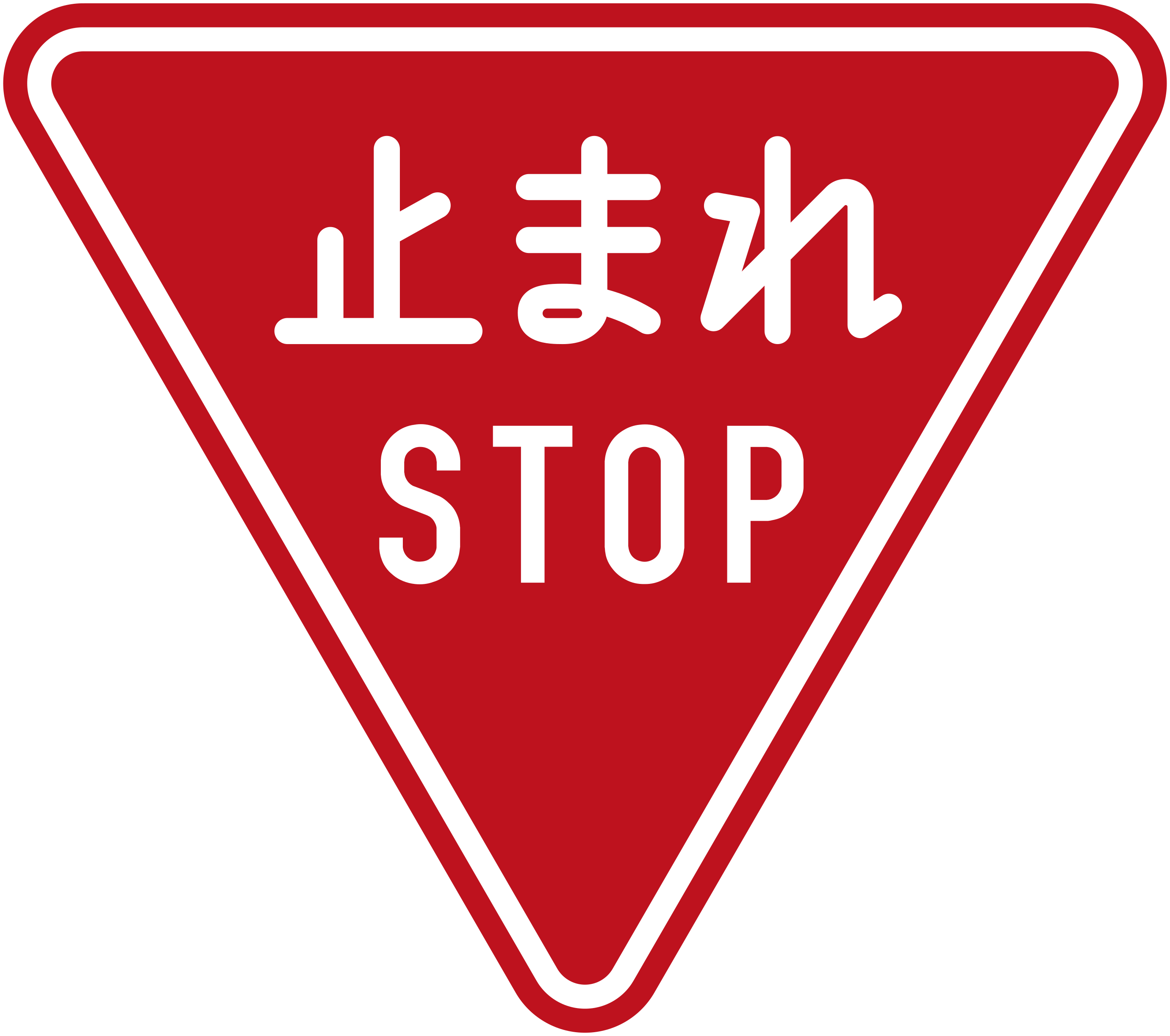
- A.Jokō
- B.Stop
- C.Berhenti dan parkir dilarang
- D.Kendaraan dilarang masuk
Answer: B: Stop
Explanation: Di persimpangan dengan rambu lalu lintas "止まれ", Anda harus berhenti sepenuhnya tepat sebelum garis berhenti, mengonfirmasi keamanan, lalu melanjutkan perjalanan.
Driving school curriculum: Tahap 1 – Topik 2: Mematuhi lampu lalu lintas
Source: Ch. 1 · Section (第2節 信号) · 第1章 第2節 信号、標識・標示に従うこと / 2(2)規制標識は、特定の交通方法を禁止したり、特定の方法に従つて通行するよう指定したりするものです。標識の種類とその意味は付表3(1)のとおりです。 本問の対象:「一時停止」(付表3(1)または付表3(2)参照)。
Q95Manakah arti yang benar dari rambu ini?[Multiple choice · Easy]

- A.Ada bahaya batu jatuh
- B.Ada persimpangan
- C.Ada perlintasan kereta
- D.Ada lalu lintas yang bergabung
Answer: C: Ada perlintasan kereta
Explanation: Ini adalah rambu berbentuk belah ketupat berwarna kuning yang memperingatkan adanya perlintasan kereta di depan. Di perlintasan kereta, Anda harus berhenti sepenuhnya tepat sebelumnya dan memastikan keamanan dengan mata dan telinga sebelum melintasi.
Driving school curriculum: Tahap 1 – Topik 2: Mematuhi lampu lalu lintas
Source: Ch. 1 · Section (第2節 信号) · 第1章 第2節 信号、標識・標示に従うこと / 2(4)警戒標識は、道路上の危険や注意すべき状況などを前もつて道路利用者に知らせて注意を促すものです。標識の種類とその意味は付表3(1)のとおりです。 本問の対象:「踏切あり」(付表3(1)または付表3(2)参照)。
Q96Manakah arti yang benar dari rambu ini?[Multiple choice · Easy]

- A.Ada tikungan ke kanan (atau kiri)
- B.Ada tikungan berlawanan arah ke kanan (atau kiri)
- C.Ada tikungan berkelok-kelok ke kanan (atau kiri)
- D.Ada tikungan tajam berlawanan arah ke kanan (atau kiri)
Answer: B: Ada tikungan berlawanan arah ke kanan (atau kiri)
Explanation: Rambu ini memperingatkan adanya tikungan berlawanan arah (tikungan berbentuk S yang berbelok ke arah berlawanan secara berurutan) di depan. Berbeda dengan tikungan berkelok-kelok (つづら折り) yang terdiri dari tiga tikungan atau lebih berturut-turut. Kurangi kecepatan saat melewati.
Driving school curriculum: Tahap 1 – Topik 2: Mematuhi lampu lalu lintas
Source: Ch. 1 · Section (第2節 信号) · 第1章 第2節 信号、標識・標示に従うこと / 2(4)警戒標識は、道路上の危険や注意すべき状況などを前もつて道路利用者に知らせて注意を促すものです。標識の種類とその意味は付表3(1)のとおりです。 本問の対象:「右(または左)つづら折り」(付表3(1)または付表3(2)参照)。
Q97Manakah arti yang benar dari rambu ini?[Multiple choice · Easy]

- A.Ada bahaya batu jatuh
- B.Ada sekolah
- C.Jalan licin
- D.Ada tikungan berkelok-kelok
Answer: C: Jalan licin
Explanation: Rambu ini memperingatkan bahwa permukaan jalan licin. Anda harus mengurangi kecepatan terutama saat hujan atau jalan membeku.
Driving school curriculum: Tahap 1 – Topik 2: Mematuhi lampu lalu lintas
Source: Ch. 1 · Section (第2節 信号) · 第1章 第2節 信号、標識・標示に従うこと / 2(4)警戒標識は、道路上の危険や注意すべき状況などを前もつて道路利用者に知らせて注意を促すものです。標識の種類とその意味は付表3(1)のとおりです。 本問の対象:「すべりやすい」(付表3(1)または付表3(2)参照)。
Q98Manakah arti yang benar dari rambu ini?[Multiple choice · Easy]

- A.Ada bahaya batu jatuh
- B.Jalan licin
- C.Ada sekolah
- D.Ada perlintasan kereta
Answer: A: Ada bahaya batu jatuh
Explanation: Rambu ini memperingatkan adanya bahaya batu jatuh di jalan di depan. Rambu ini sering ditemukan di jalan pegunungan.
Driving school curriculum: Tahap 1 – Topik 2: Mematuhi lampu lalu lintas
Source: Ch. 1 · Section (第2節 信号) · 第1章 第2節 信号、標識・標示に従うこと / 2(4)警戒標識は、道路上の危険や注意すべき状況などを前もつて道路利用者に知らせて注意を促すものです。標識の種類とその意味は付表3(1)のとおりです。 本問の対象:「落石のおそれあり」(付表3(1)または付表3(2)参照)。
Q99Manakah arti yang benar dari rambu ini?[Multiple choice · Easy]
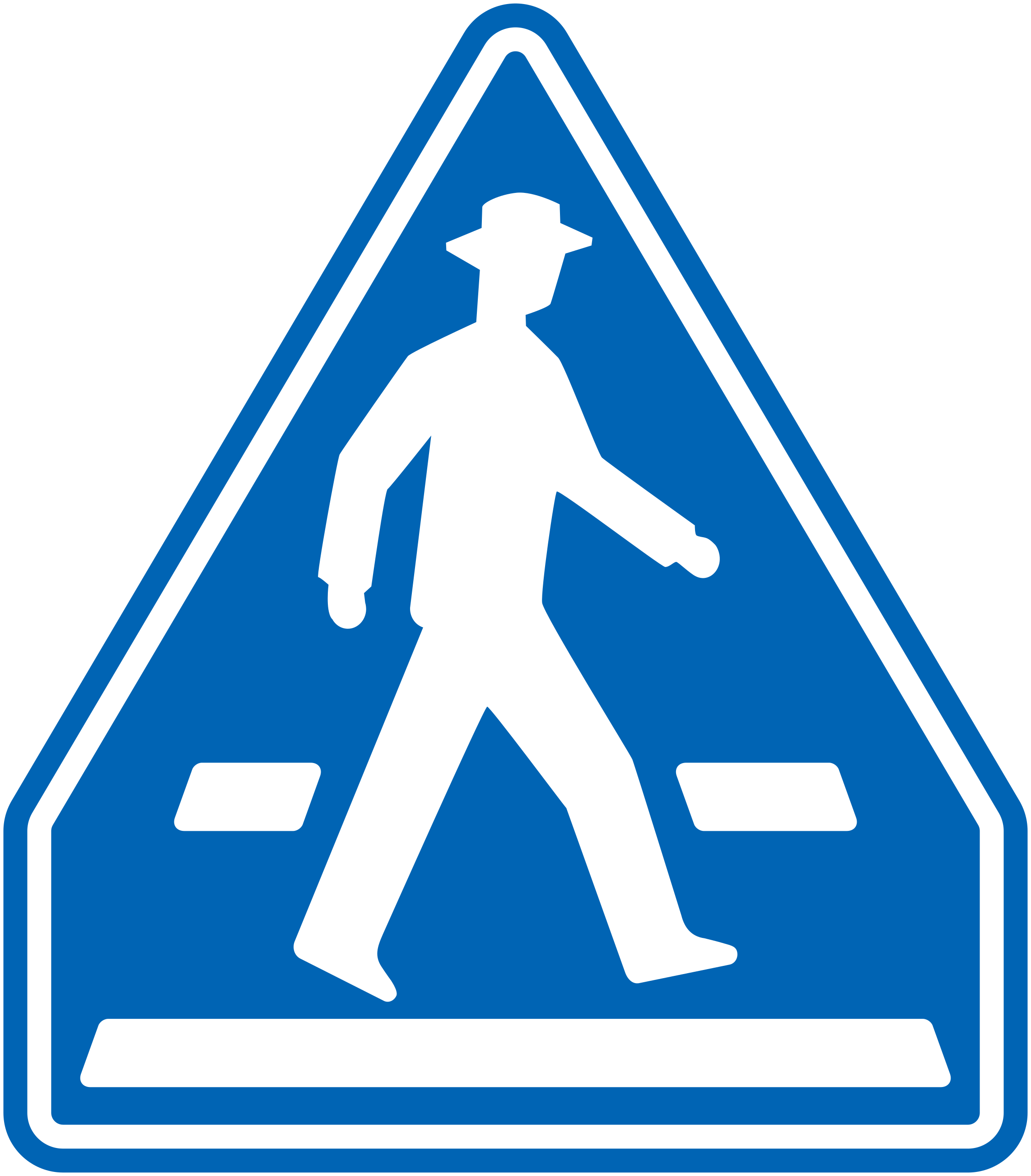
- A.Penyeberangan pejalan kaki dan jalur penyeberangan sepeda
- B.Penyeberangan pejalan kaki
- C.Jalur penyeberangan sepeda
- D.Khusus pejalan kaki
Answer: B: Penyeberangan pejalan kaki
Explanation: Ini adalah rambu indikasi yang menunjukkan adanya penyeberangan pejalan kaki. Sebelum penyeberangan pejalan kaki, Anda harus memeriksa apakah ada pejalan kaki, dan jika ada yang menyeberang, Anda wajib berhenti sepenuhnya.
Driving school curriculum: Tahap 1 – Topik 2: Mematuhi lampu lalu lintas
Source: Ch. 1 · Section (第2節 信号) · 第1章 第2節 信号、標識・標示に従うこと / 2(3)指示標識は、特定の交通方法ができることや道路交通上決められた場所などを指示するものです。標識の種類とその意味は付表3(1)のとおりです。 本問の対象:「横断歩道」(付表3(1)または付表3(2)参照)。
Q100Manakah arti yang benar dari rambu ini?[Multiple choice · Easy]

- A.Berhenti diperbolehkan
- B.Ruang parkir tersisa
- C.Zona parkir dengan batas waktu
- D.Parkir diperbolehkan
Answer: D: Parkir diperbolehkan
Explanation: Ini adalah rambu indikasi yang menunjukkan tempat yang diperbolehkan untuk parkir. Anda dapat parkir dalam metode dan batas waktu yang ditentukan.
Driving school curriculum: Tahap 1 – Topik 2: Mematuhi lampu lalu lintas
Source: Ch. 1 · Section (第2節 信号) · 第1章 第2節 信号、標識・標示に従うこと / 2(3)指示標識は、特定の交通方法ができることや道路交通上決められた場所などを指示するものです。標識の種類とその意味は付表3(1)のとおりです。 本問の対象:「駐車可」(付表3(1)または付表3(2)参照)。
Q101Manakah arti yang benar dari rambu ini?[Multiple choice · Easy]
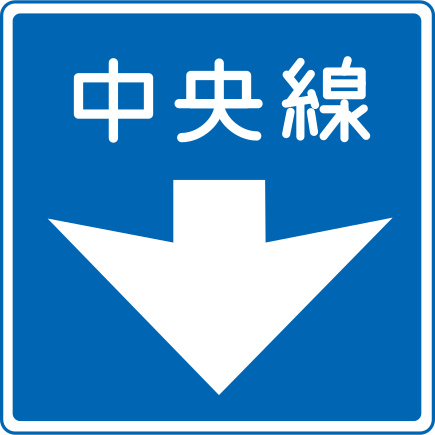
- A.Parkir diperbolehkan
- B.Berjalan berdampingan diperbolehkan
- C.Berhenti diperbolehkan
- D.Jalan prioritas
Answer: C: Berhenti diperbolehkan
Explanation: Ini adalah rambu indikasi yang menunjukkan tempat yang diperbolehkan untuk berhenti. Perhatikan bahwa parkir mungkin dilarang di lokasi ini.
Driving school curriculum: Tahap 1 – Topik 2: Mematuhi lampu lalu lintas
Source: Ch. 1 · Section (第2節 信号) · 第1章 第2節 信号、標識・標示に従うこと / 2(3)指示標識は、特定の交通方法ができることや道路交通上決められた場所などを指示するものです。標識の種類とその意味は付表3(1)のとおりです。 本問の対象:「停車可」(付表3(1)または付表3(2)参照)。
Q102Manakah arti yang benar dari rambu ini?[Multiple choice · Easy]

- A.Lampu kuning
- B.Lampu hijau
- C.Lampu merah
- D.Sinyal panah ke kanan
Answer: C: Lampu merah
Explanation: Lampu merah menunjukkan bahwa kendaraan dan pejalan kaki harus berhenti. Berhenti tepat sebelum garis berhenti.
Driving school curriculum: Tahap 1 – Topik 2: Mematuhi lampu lalu lintas
Source: Ch. 1 · Section (第2節 信号) · 第1章 第2節 信号、標識・標示に従うこと / 1 信号の意味:信号機の信号に従つて通行しなければなりません。手信号や灯火による信号で交通整理を行う警察官・交通巡視員の指示が信号機の信号と違つていても、警察官・交通巡視員の信号の方が優先します。 本問の対象:「赤色の灯火」(付表3(1)または付表3(2)参照)。
Q103Manakah arti yang benar dari rambu ini?[Multiple choice · Easy]

- A.Lampu kuning
- B.Lampu merah
- C.Sinyal panah ke kanan
- D.Lampu hijau
Answer: D: Lampu hijau
Explanation: Lampu hijau menunjukkan bahwa kendaraan dan pejalan kaki dapat melanjutkan. Namun, periksa keselamatan lalu lintas lain sebelum melanjutkan.
Driving school curriculum: Tahap 1 – Topik 2: Mematuhi lampu lalu lintas
Source: Ch. 1 · Section (第2節 信号) · 第1章 第2節 信号、標識・標示に従うこと / 1 信号の意味:信号機の信号に従つて通行しなければなりません。手信号や灯火による信号で交通整理を行う警察官・交通巡視員の指示が信号機の信号と違つていても、警察官・交通巡視員の信号の方が優先します。 本問の対象:「青色の灯火」(付表3(1)または付表3(2)参照)。
Q104Ketika kendaraan darurat mendekat, di sekitar persimpangan, Anda harus menghindari persimpangan, menepi ke sisi kiri jalan, dan berhenti sepenuhnya.[True / False · Easy]
Answer: ✓ Benar
Explanation: Dalam Peraturan Lalu Lintas ditetapkan bahwa ketika kendaraan darurat mendekat, di sekitar persimpangan Anda harus menghindari persimpangan, menepi ke sisi kiri jalan, dan berhenti sepenuhnya. Penting untuk dipahami bahwa di sekitar persimpangan tidak cukup hanya memberi jalan, tetapi harus berhenti sepenuhnya.
Driving school curriculum: Tahap 1 – Topik 5: Prioritas kendaraan darurat
Source: Ch. 1 · Section (第2節 信号、標識・標示に従うこと) · 第5章第2節5「緊急自動車が近づいてきたときは、交差点の付近では、交差点を避けて、道路の左側に寄つて一時停止をし」
Q105Ketika kendaraan darurat mendekat, di tempat selain sekitar persimpangan, Anda harus menepi ke sisi kiri jalan dan memberi jalan.[True / False · Easy]
Answer: ✓ Benar
Explanation: Dalam Peraturan Lalu Lintas ditetapkan bahwa ketika kendaraan darurat mendekat, di tempat selain sekitar persimpangan, Anda harus menepi ke sisi kiri jalan dan memberi jalan. Tidak diwajibkan berhenti sepenuhnya seperti di sekitar persimpangan, tetapi ada kewajiban untuk menepi ke kiri dan memberi jalan.
Driving school curriculum: Tahap 1 – Topik 5: Prioritas kendaraan darurat
Source: Ch. 1 · Section (第2節 信号、標識・標示に従うこと) · 第5章第2節5「その他のところでは、道路の左側に寄つて進路を譲らなければなりません。」
Q106Ketika kendaraan darurat mendekat di jalan satu arah, meskipun menepi ke kiri justru akan menghalangi kendaraan darurat, Anda tetap harus menepi ke kiri.[True / False · Medium]
Answer: ✕ Salah
Explanation: Dalam Peraturan Lalu Lintas ditetapkan bahwa di jalan satu arah, jika menepi ke kiri justru akan menghalangi kendaraan darurat, Anda harus menepi ke kanan. Ini adalah jebakan karena di jalan satu arah tidak selalu harus menepi ke kiri dalam semua situasi.
Driving school curriculum: Tahap 1 – Topik 5: Prioritas kendaraan darurat
Source: Ch. 1 · Section (第2節 信号、標識・標示に従うこと) · 第5章第2節5「一方通行の道路で左側に寄ると、かえつて緊急自動車の妨げとなるようなときは、右側に寄らなければなりません。」
Q107Ketika kendaraan darurat mendekat, di sekitar persimpangan, Anda harus masuk ke dalam persimpangan, kemudian menepi ke sisi kiri jalan dan melambat hingga kecepatan siap berhenti (jokō).[True / False · Hard]
Answer: ✕ Salah
Explanation: Dalam Peraturan Lalu Lintas ditetapkan bahwa di sekitar persimpangan Anda harus "menghindari persimpangan", menepi ke sisi kiri jalan, dan "berhenti sepenuhnya". Kesalahannya adalah bahwa masuk ke dalam persimpangan atau hanya melambat hingga kecepatan siap berhenti (jokō) tidak diperbolehkan.
Driving school curriculum: Tahap 1 – Topik 5: Prioritas kendaraan darurat
Source: Ch. 1 · Section (第2節 信号、標識・標示に従うこと) · 第5章第2節5「交差点の付近では、交差点を避けて、道路の左側に寄つて一時停止をし」
Q108Manakah cara berkendara yang benar ketika kendaraan darurat mendekat, sesuai dengan ketentuan Peraturan Lalu Lintas?[Multiple choice · Medium]
- A.Di sekitar persimpangan, harus menepi ke sisi kanan jalan dan berhenti sepenuhnya.
- B.Di tempat selain sekitar persimpangan, harus menepi ke sisi kiri jalan dan memberi jalan.
- C.Di jalan satu arah, terlepas dari situasi, harus selalu menepi ke kiri.
- D.Di sekitar persimpangan, cukup melewati persimpangan sambil melambat hingga kecepatan siap berhenti (jokō).
Answer: B: Di tempat selain sekitar persimpangan, harus menepi ke sisi kiri jalan dan memberi jalan.
Explanation: Dalam Peraturan Lalu Lintas ditetapkan bahwa di tempat selain sekitar persimpangan, Anda harus menepi ke sisi kiri jalan dan memberi jalan. Di sekitar persimpangan harus menghindari persimpangan, menepi ke kiri, dan berhenti sepenuhnya, dan di jalan satu arah jika sisi kiri menghalangi maka menepi ke kanan. Tidak ada ketentuan untuk melewati dengan melambat hingga kecepatan siap berhenti (jokō).
Driving school curriculum: Tahap 1 – Topik 5: Prioritas kendaraan darurat
Source: Ch. 1 · Section (第2節 信号、標識・標示に従うこと) · 第5章第2節5「その他のところでは、道路の左側に寄つて進路を譲らなければなりません。」「交差点の付近では、交差点を避けて、道路の左側に寄つて一時停止をし」「一方通行の道路で左側に寄ると、かえつて緊急自動車の妨げとなるようなときは、右側に寄らなければなりません。」
Q109Meskipun ada kemungkinan membeku, boleh menyiram air di jalan di depan tanah milik sendiri.[True / False · Medium]
Answer: ✕ Salah
Explanation: Dalam Peraturan Lalu Lintas Bab 1 Bagian 4 poin 1(8), "menyiram air ketika ada kemungkinan membeku" ditetapkan sebagai tindakan berbahaya yang tidak boleh dilakukan di jalan. Tidak ada pengecualian berdasarkan apakah itu di depan tanah milik sendiri atau tidak.
Driving school curriculum: Tahap 1 – Topik 1: Sikap pengemudi
Source: Ch. 1 · Section (第4節 道路でしてはいけないことなど) · 1(8) 凍り付くおそれのあるときに水をまくこと。
Q110Jika ada papan tanda dengan dasar putih dan panah kiri biru di tepi kiri jalan, Anda dapat berbelok kiri meskipun lampu lalu lintas di depan merah atau kuning, tetapi Anda harus stop sepenuhnya terlebih dahulu sebelum melanjutkan.[True / False · Medium]
Answer: ✕ Salah
Explanation: Peraturan Lalu Lintas menetapkan bahwa ketika ada papan tanda ini, Anda dapat berbelok kiri meskipun lampu lalu lintas di depan merah atau kuning sambil memperhatikan lalu lintas sekitar seperti pejalan kaki, tetapi tidak diatur bahwa Anda harus stop sepenuhnya. Yang benar adalah Anda tidak boleh menghalangi pejalan kaki atau sepeda yang menyeberang di penyeberangan pejalan kaki.
Driving school curriculum: Tahap 1 – Topik 2: Mematuhi lampu lalu lintas
Source: Ch. 1 · Section (第2節 信号) · 第2節 信号、標識・標示に従うこと / 1 信号の意味(1) 信号機の信号に従つて通行しなければなりません。 信号機の信号の種類とその意味は、付表1(1)、(2)のとおりです。(2) 信号機の信号は、 前方の信号を見るようにしましよう。 横の信号が赤であつても、前方の信号が青であるとは限りません。例えば、全方向が一
Q111Di antara pilihan berikut, rambu mana yang melarang seluruh lalu lintas termasuk pejalan kaki?[Multiple choice · Easy]
- A.Dilarang masuk
- B.Kendaraan dilarang lewat
- C.Jalan tertutup
- D.
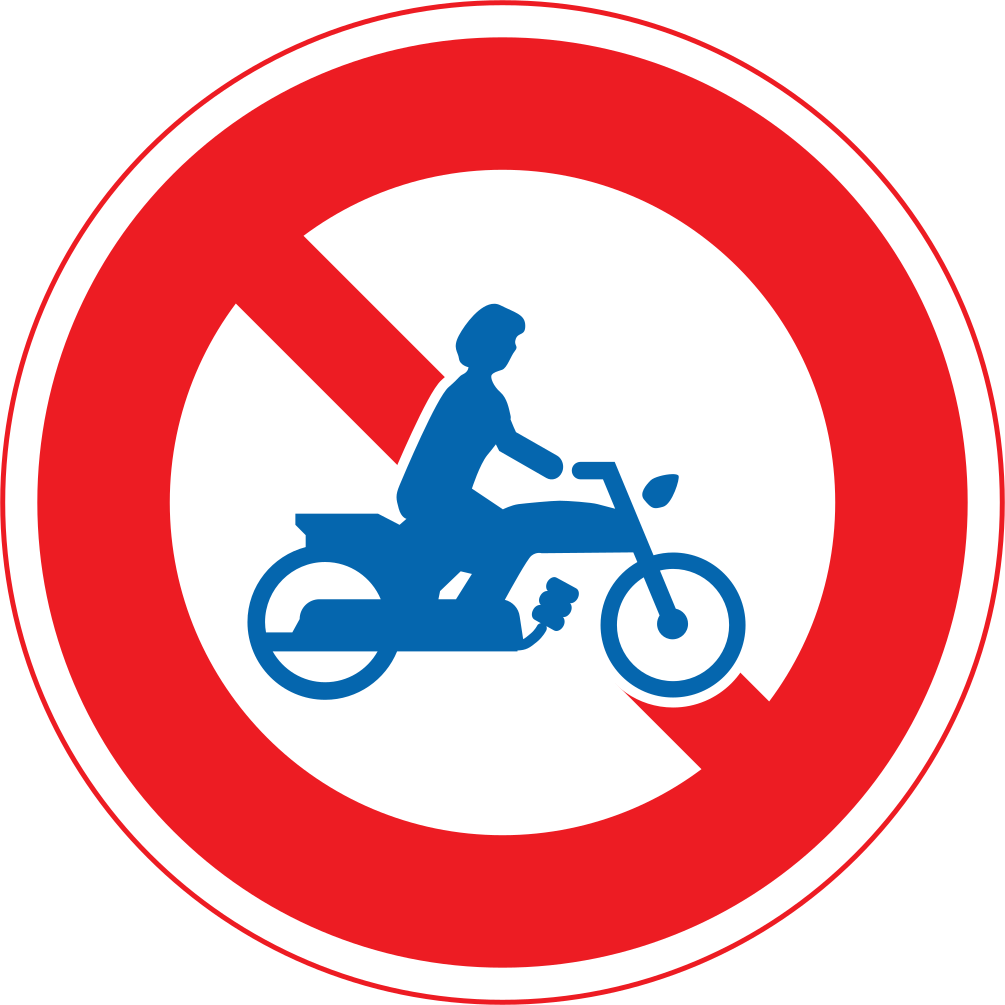 Sepeda motor dan moped dilarang lewat
Answer: C: Jalan tertutup
Explanation: Dalam Peraturan Lalu Lintas, "jalan tertutup" adalah rambu yang melarang seluruh lalu lintas termasuk pejalan kaki, bukan hanya kendaraan. "Kendaraan dilarang lewat" hanya menargetkan kendaraan dan pejalan kaki dapat lewat. "Dilarang masuk" menunjukkan sisi keluar jalan satu arah, dan "sepeda motor dan moped dilarang lewat" hanya menargetkan kendaraan tertentu.
Driving school curriculum: Tahap 1 – Topik 2: Mematuhi lampu lalu lintas
Source: Ch. 1 · Section (第2節 信号) · 第1章 第2節 信号、標識・標示に従うこと / 2(2)規制標識は、特定の交通方法を禁止したり、特定の方法に従つて通行するよう指定したりするものです。標識の種類とその意味は付表3(1)のとおりです。
- A.
Q112Rambu "penyeberangan pejalan kaki" adalah rambu indikasi yang menunjukkan tempat bagi pejalan kaki untuk menyeberang jalan.[True / False · Easy]
Answer: ✓ Benar
Explanation: Dalam Peraturan Lalu Lintas ditetapkan bahwa rambu indikasi adalah rambu yang menunjukkan bahwa metode lalu lintas tertentu dapat dilakukan atau menunjukkan tempat yang telah ditentukan dalam lalu lintas jalan. Rambu penyeberangan pejalan kaki adalah rambu indikasi tipikal yang menunjukkan tempat di mana pejalan kaki dapat menyeberang.
Driving school curriculum: Tahap 1 – Topik 2: Mematuhi lampu lalu lintas
Source: Ch. 1 · Section (第2節 信号) · 第1章 第2節 信号、標識・標示に従うこと / 2(3)指示標識は、特定の交通方法ができることや道路交通上決められた場所などを指示するものです。標識の種類とその意味は付表3(1)のとおりです。
Q113Karena malam hari dan volume lalu lintas sedikit, saya parkir selama 5 menit di tempat yang ditandai garis putus-putus kuning, tetapi saya menilai tidak masalah jika hanya berhenti.[True / False · Medium]
Answer: ✕ Salah
Explanation: Garis putus-putus kuning adalah marka pengatur yang menunjukkan larangan parkir. Berhenti diperbolehkan, tetapi parkir dilarang terlepas dari banyak atau sedikitnya volume lalu lintas. Dalam Peraturan Lalu Lintas ditetapkan bahwa harus mematuhi marka pengatur, dan tidak ada pengecualian berdasarkan situasi.
Driving school curriculum: Tahap 1 – Topik 2: Mematuhi lampu lalu lintas
Source: Ch. 1 · Section (第2節 信号) · 第1章 第2節 信号、標識・標示に従うこと / 3(2)規制標示とは、特定の交通方法を禁止又は指定するもので、駐車を禁止する標示やバスの専用通行帯を指示する標示などがあります。標示の種類とその意味は付表3(2)のとおりです。
Q114Jika tanda berbentuk belah ketupat berwarna putih tergambar di permukaan jalan, apa arti yang ditunjukkan oleh marka ini?[Multiple choice · Medium]
- A.Di depan terdapat rambu stop
- B.Di depan terdapat zona larangan parkir
- C.Di depan terdapat penyeberangan pejalan kaki atau jalur penyeberangan sepeda
- D.Di depan terdapat zona larangan menyalip
Answer: C: Di depan terdapat penyeberangan pejalan kaki atau jalur penyeberangan sepeda
Explanation: Tanda berbentuk belah ketupat berwarna putih adalah marka indikasi yang memberi tahu bahwa di depan terdapat penyeberangan pejalan kaki atau jalur penyeberangan sepeda. Dalam Peraturan Lalu Lintas ditunjukkan bahwa marka ini dipasang untuk membuat pengemudi menyadari fasilitas penyeberangan di depan dan mendorong persiapan seperti mengurangi kecepatan.
Driving school curriculum: Tahap 1 – Topik 2: Mematuhi lampu lalu lintas
Source: Ch. 1 · Section (第2節 信号) · 第1章 第2節 信号、標識・標示に従うこと / 3(2)規制標示とは、特定の交通方法を禁止又は指定するもので、駐車を禁止する標示やバスの専用通行帯を指示する標示などがあります。標示の種類とその意味は付表3(2)のとおりです。
Q115Di jalan dengan garis tengah berupa garis kuning utuh, kendaraan tidak boleh keluar ke bagian kanan jalan untuk melakukan menyalip, tetapi boleh keluar untuk berbelok kanan atau menghindari konstruksi.[True / False · Hard]
Answer: ✓ Benar
Explanation: Peraturan Lalu Lintas melarang "keluar ke bagian kanan jalan untuk menyalip" di tempat dengan garis tengah berupa garis kuning utuh. Di sisi lain, keluar untuk berbelok kanan atau menghindari rintangan seperti pekerjaan jalan atau kendaraan mogok diizinkan sebagai pengecualian berdasarkan Pasal 17 Ayat 5 Undang-Undang Lalu Lintas Jalan (bukan dari teks Peraturan Lalu Lintas, tetapi dari ketentuan undang-undang lalu lintas). Poin pentingnya adalah yang dilarang hanya "keluar untuk tujuan menyalip".
Driving school curriculum: Tahap 1 – Topik 2: Mematuhi lampu lalu lintas
Source: Ch. 1 · Section (第2節 信号) · 第1章 第2節 信号、標識・標示に従うこと / 3(2)規制標示とは、特定の交通方法を禁止又は指定するもので、駐車を禁止する標示やバスの専用通行帯を指示する標示などがあります。標示の種類とその意味は付表3(2)のとおりです。
Q116Di dalam persimpangan terdapat bagian yang dicat dengan garis diagonal kuning. Apa arti marka jalan ini?[Multiple choice · Easy]
- A.Area yang boleh dilalui dengan jokō (pelan siap berhenti)
- B.Bagian larangan berhenti
- C.Posisi berhenti khusus sepeda motor
- D.Area prioritas bus rute
Answer: B: Bagian larangan berhenti
Explanation: Bagian yang dicat dengan garis diagonal kuning adalah marka pengatur yang menunjukkan bagian larangan berhenti. Dalam Peraturan Lalu Lintas, marka ini ditetapkan di tempat dalam persimpangan yang jika kendaraan berhenti karena kemacetan akan mengganggu lalu lintas lain, dan kendaraan tidak boleh berhenti di bagian ini.
Driving school curriculum: Tahap 1 – Topik 2: Mematuhi lampu lalu lintas
Source: Ch. 1 · Section (第2節 信号) · 第1章 第2節 信号、標識・標示に従うこと / 3(2)規制標示とは、特定の交通方法を禁止又は指定するもので、駐車を禁止する標示やバスの専用通行帯を指示する標示などがあります。標示の種類とその意味は付表3(2)のとおりです。
Q117Marka jalan penyeberangan pejalan kaki yang digambar dengan garis putih di permukaan jalan menunjukkan tempat pejalan kaki dapat menyeberang.[True / False · Easy]
Answer: ✓ Benar
Explanation: Dalam Peraturan Lalu Lintas, rambu indikasi adalah yang menunjukkan metode lalu lintas tertentu yang diizinkan atau tempat yang ditentukan dalam lalu lintas jalan. Marka jalan penyeberangan pejalan kaki adalah contoh utamanya, menunjukkan tempat pejalan kaki dapat menyeberang dengan aman.
Driving school curriculum: Tahap 1 – Topik 2: Mematuhi lampu lalu lintas
Source: Ch. 1 · Section (第2節 信号) · 第1章 第2節 信号、標識・標示に従うこと / 3(2)指示標示とは、特定の交通方法ができることや道路交通上決められた場所などを指示するもので、斜め横断ができることを示す標示や車両の停止位置を示す標示などがあります。標示の種類とその意味は付表3(2)のとおりです。
Q118Karena malam hari dan lalu lintas sedikit, saya melakukan stop lalu mengonfirmasi keamanan saat lampu merah dan melanjutkan perjalanan.[True / False · Medium]
Answer: ✕ Salah
Explanation: Lampu merah berarti berhenti, dan Anda harus berhenti di garis pemberhentian tanpa memandang jumlah lalu lintas. Yang boleh stop lalu melanjutkan adalah saat lampu merah berkedip. Terlepas dari situasi, Anda tidak boleh jalan saat lampu merah.
Driving school curriculum: Tahap 1 – Topik 2: Mematuhi lampu lalu lintas
Source: Ch. 1 · Section (第2節 信号) · 第1章 第2節 信号、標識・標示に従うこと / 1 信号の意味:信号機の信号に従つて通行しなければなりません。手信号や灯火による信号で交通整理を行う警察官・交通巡視員の指示が信号機の信号と違つていても、警察官・交通巡視員の信号の方が優先します。
Q119Ketika lampu lalu lintas dan isyarat tangan polisi memberikan instruksi yang berbeda, lampu lalu lintas yang diprioritaskan.[True / False · Medium]
Answer: ✕ Salah
Explanation: Dalam Peraturan Lalu Lintas, ketika lampu lalu lintas dan isyarat tangan polisi berbeda, isyarat tangan polisi yang diprioritaskan. Ikuti instruksi polisi dalam pengaturan lalu lintas di tempat kejadian.
Driving school curriculum: Tahap 1 – Topik 2: Mematuhi lampu lalu lintas
Source: Ch. 1 · Section (第2節 信号) · 第1章 第2節 信号、標識・標示に従うこと / 1 信号の意味:信号機の信号に従つて通行しなければなりません。手信号や灯火による信号で交通整理を行う警察官・交通巡視員の指示が信号機の信号と違つていても、警察官・交通巡視員の信号の方が優先します。
Q120Mana yang benar sebagai arti rambu lalu lintas ini?[Multiple choice · Easy]

- A.Larangan jalan selain arah yang ditentukan
- B.Pembagian jalur menurut arah perjalanan
- C.Satu arah
- D.Boleh melintas di dalam jalur rel
Answer: C: Satu arah
Explanation: Rambu lalu lintas "satu arah" menunjukkan bahwa kendaraan hanya boleh melintas ke arah panah. Melintas ke arah sebaliknya dilarang.
Driving school curriculum: Tahap 1 – Topik 2: Mematuhi lampu lalu lintas
Source: Ch. 1 · Section (第2節 信号) · 第1章 第2節 信号、標識・標示に従うこと / 2(2)規制標識は、特定の交通方法を禁止したり、特定の方法に従つて通行するよう指定したりするものです。標識の種類とその意味は付表3(1)のとおりです。 本問の対象:「一方通行」(付表3(1)または付表3(2)参照)。
Q121Mana yang benar sebagai arti rambu lalu lintas ini?[Multiple choice · Easy]

- A.Khusus pejalan kaki
- B.Ada sekolah, taman kanak-kanak, tempat penitipan anak, dll
- C.Ada penyeberangan pejalan kaki
- D.Larangan penyeberangan pejalan kaki
Answer: B: Ada sekolah, taman kanak-kanak, tempat penitipan anak, dll
Explanation: Memperingatkan bahwa di depan terdapat sekolah, taman kanak-kanak, tempat penitipan anak, dll. Perlu melakukan jokō (pelan siap berhenti) untuk bersiap menghadapi anak yang tiba-tiba keluar.
Driving school curriculum: Tahap 1 – Topik 2: Mematuhi lampu lalu lintas
Source: Ch. 1 · Section (第2節 信号) · 第1章 第2節 信号、標識・標示に従うこと / 2(4)警戒標識は、道路上の危険や注意すべき状況などを前もつて道路利用者に知らせて注意を促すものです。標識の種類とその意味は付表3(1)のとおりです。 本問の対象:「学校・幼稚園あり」(付表3(1)または付表3(2)参照)。
Q122Ketika polisi mengangkat kedua lengan secara vertikal, bagi kendaraan yang bergerak ke arah lengan tersebut artinya sama dengan lampu merah.[True / False · Hard]
Answer: ✕ Salah
Explanation: Ketika polisi mengangkat kedua lengan secara vertikal, artinya sama dengan lampu merah untuk lalu lintas yang berhadapan dengan bagian depan dan belakang tubuhnya. Di sisi lain, untuk lalu lintas yang sejajar dengan arah kedua lengan, yaitu sisi tubuh, artinya sama dengan lampu kuning. Ketentuan ini ditetapkan dalam Pasal 2 Ayat 1 Peraturan Pelaksanaan Undang-Undang Lalu Lintas Jalan (Peraturan Lalu Lintas Bab 1 Bagian 3 Mengikuti instruksi polisi dll, Tabel Lampiran 1 (3)).
Driving school curriculum: Tahap 1 – Topik 2: Mematuhi lampu lalu lintas
Source: Ch. 1 · Section (第3節 警察官などの指示に従うこと) · 第3節 警察官などの指示に従うこと