Blind T-junction and a parked car
Look at the picture, read the situation, and mark each of the three statements true (○) or false (✕). All three right scores 2 points.
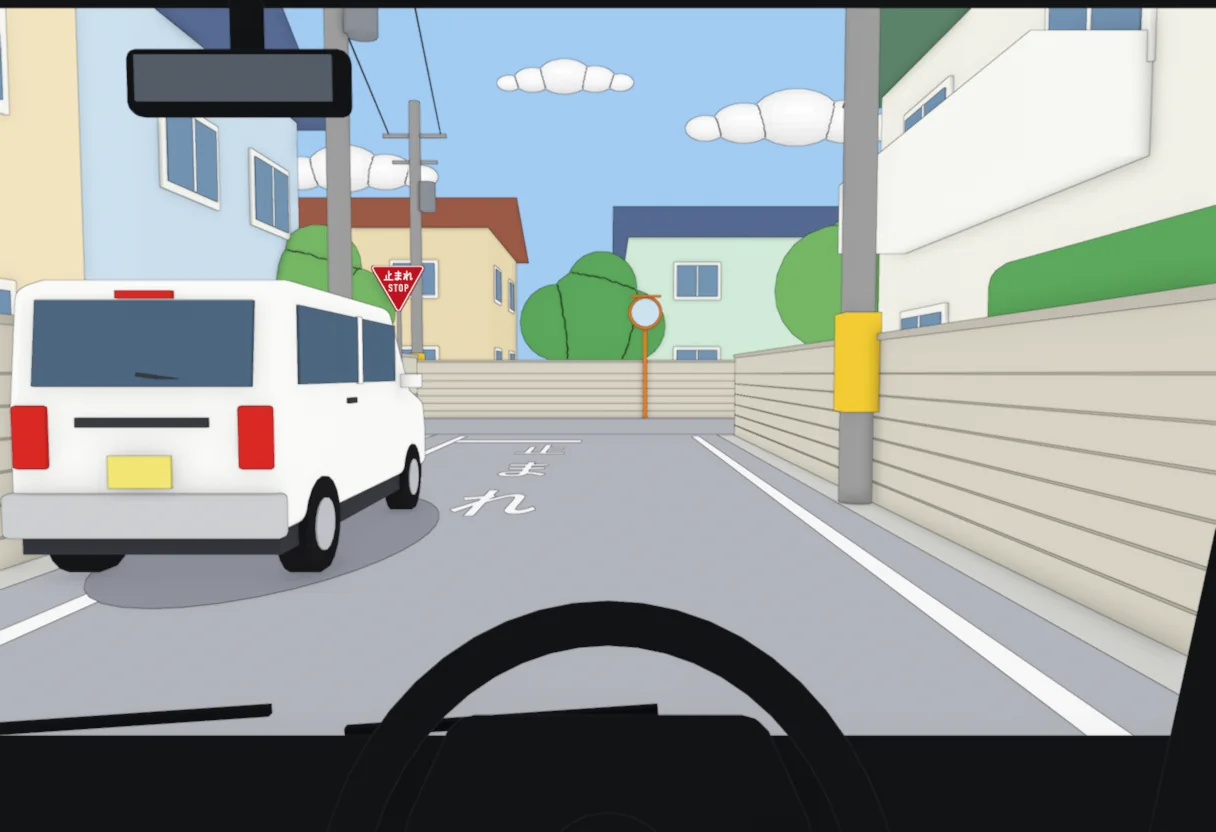
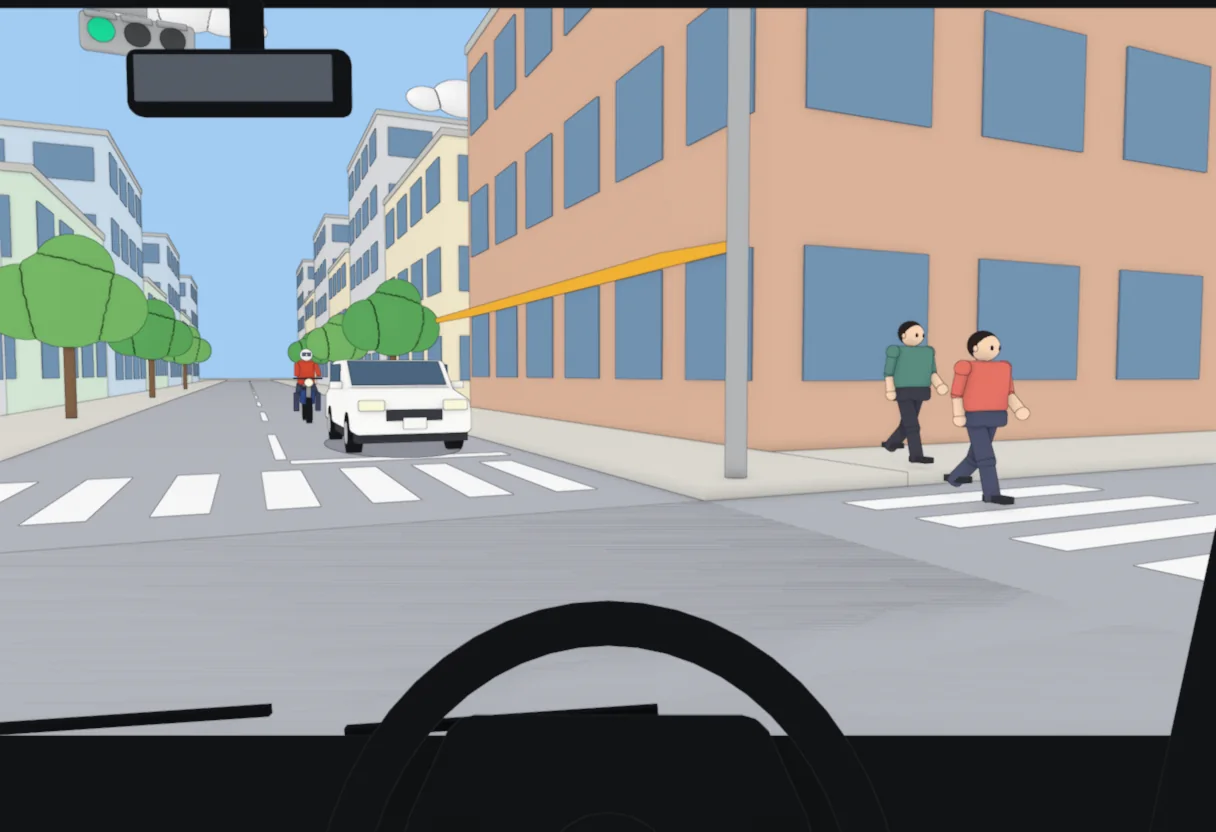
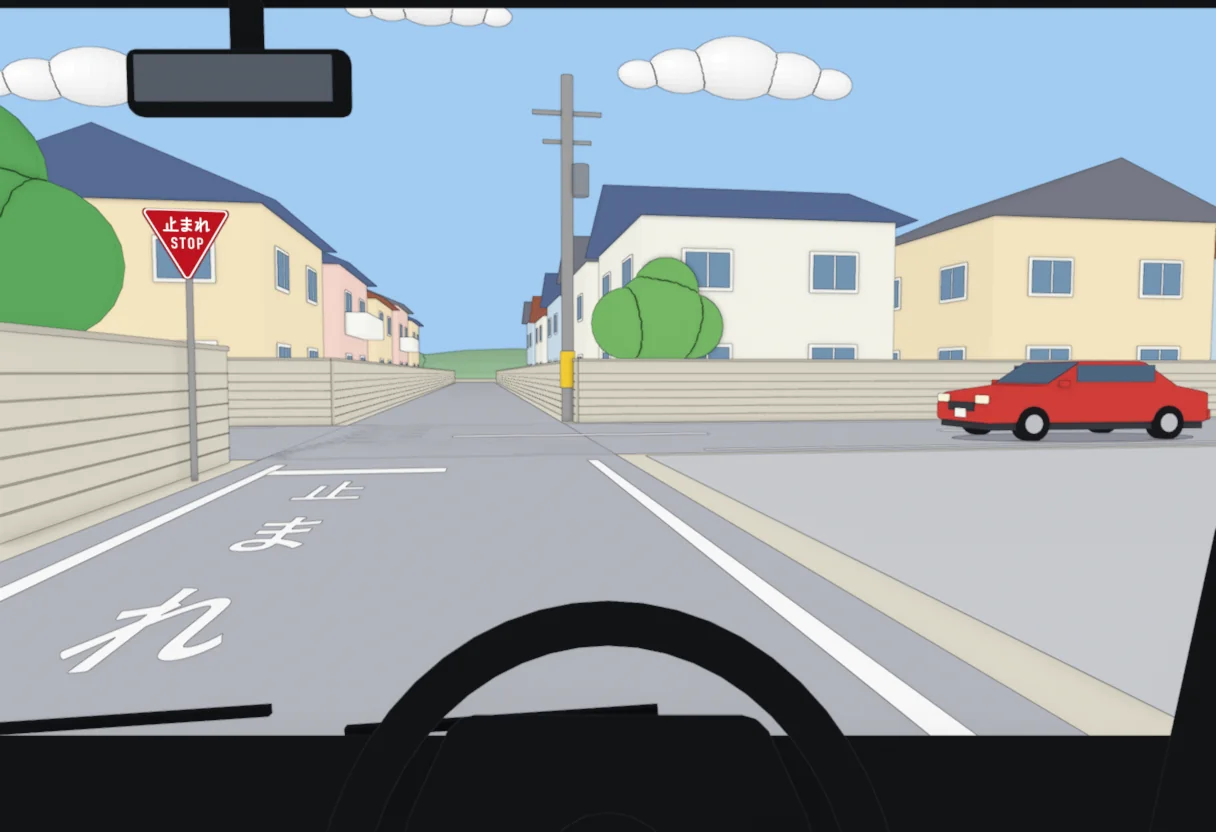
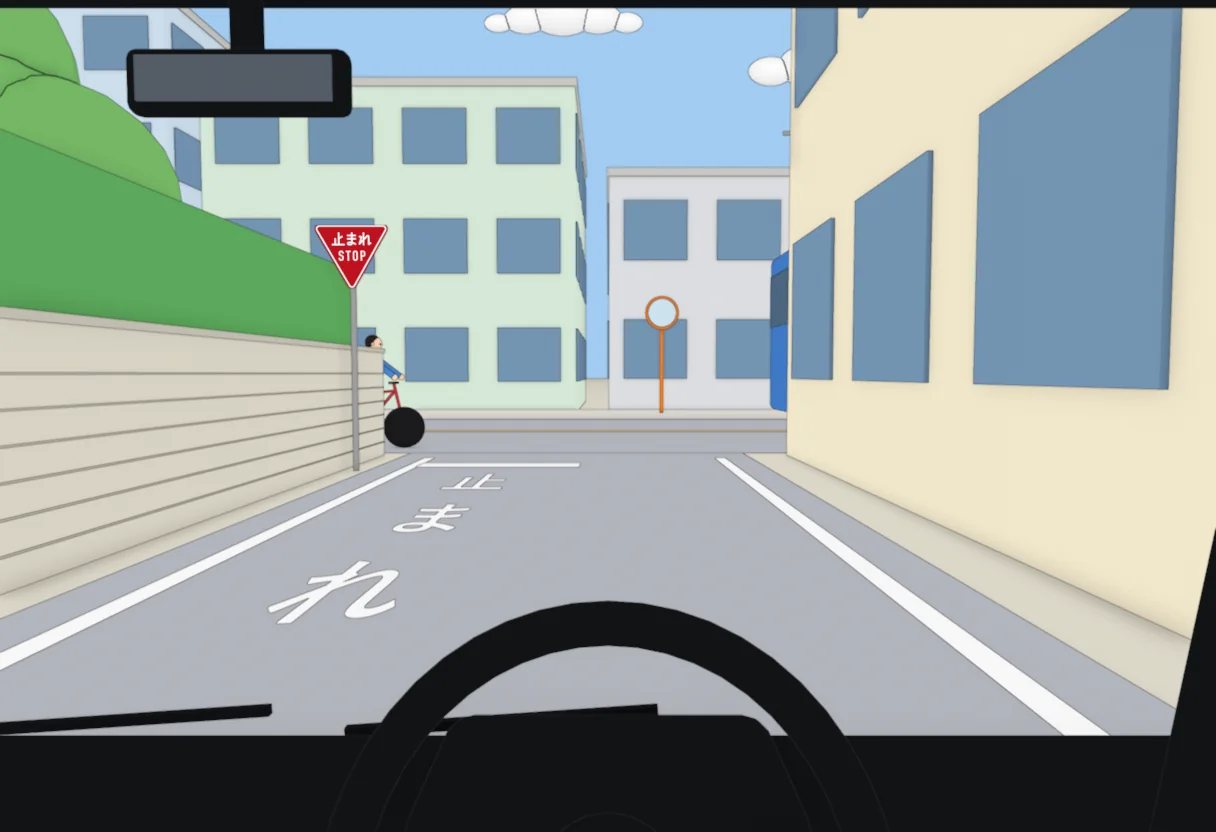
You are driving through a residential area at 30 km/h and approaching a T-junction with poor visibility. A white light motor vehicle (kei car) is parked ahead on the left, blocking your view. Answer true or false for each of the following.
- (1)A child might come out, so you sound the horn and pass through at the same speed.
- (2)A pedestrian might dart out from behind the parked car, so you get ready to brake and proceed slowly.
- (3)To avoid being hit from behind by the vehicle following you, you pass through without braking.
Show the answers and explanation
- (1) ✕ FalseA child might come out, so you sound the horn and pass through at the same speed.
- (2) ○ TrueA pedestrian might dart out from behind the parked car, so you get ready to brake and proceed slowly.
- (3) ✕ FalseTo avoid being hit from behind by the vehicle following you, you pass through without braking.
Explanation
At an intersection with poor visibility in a residential area, you are required to slow to a stop-ready speed (jokō) under the Rules of the Road (kyōsoku), Ch. 5, Sec. 4, 4(2). The right answer is to drop to a speed at which you can brake at any moment, in case someone darts out from behind the parked car. Under the Road Traffic Act, Art. 54, the horn may be used only when it is unavoidable to prevent danger; sounding it just to get someone's attention is a violation.
Source: Rules of the Road (kyōsoku), Ch. 5, Sec. 4, 4(2) (slow to a stop-ready speed (jokō) at intersections with poor visibility) / Road Traffic Act, Art. 54 (restrictions on use of the horn)