Traffic signal hard to see in the low evening sun
Look at the picture, read the situation, and mark each of the three statements true (○) or false (✕). All three right scores 2 points.
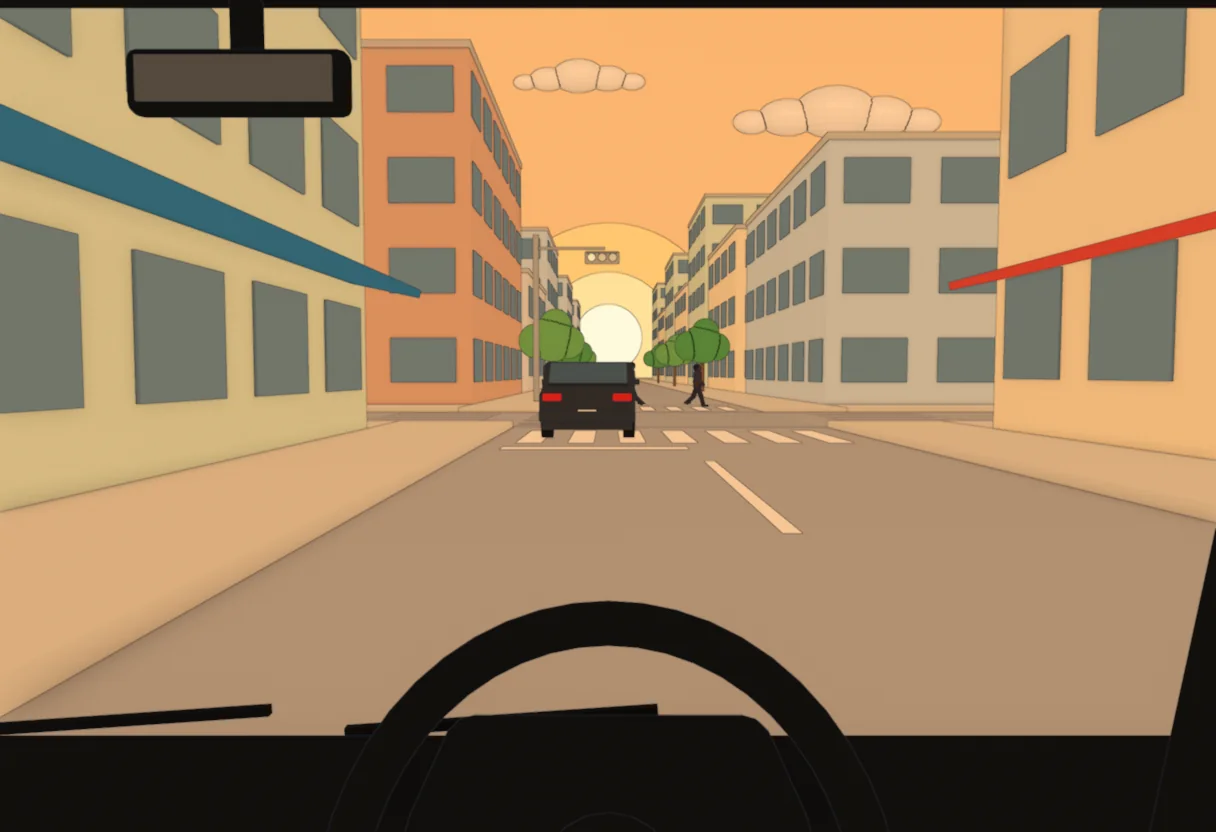
It is evening, and you are approaching a signalized intersection at 40 km/h. The low, glaring orange sun straight ahead makes the color of the traffic light hard to see. You can also see the shadowy figure of a pedestrian on the pedestrian crossing. Answer true or false for each of the following.
- (1)You cannot see the signal clearly, so you just follow the vehicle ahead.
- (2)When you cannot see the signal clearly, you lower the sun visor, slow to a stop-ready speed (jokō) and check it.
- (3)In the evening sun you cannot see the signal even when it changes, so you go by guesswork.
Show the answers and explanation
- (1) ✕ FalseYou cannot see the signal clearly, so you just follow the vehicle ahead.
- (2) ○ TrueWhen you cannot see the signal clearly, you lower the sun visor, slow to a stop-ready speed (jokō) and check it.
- (3) ✕ FalseIn the evening sun you cannot see the signal even when it changes, so you go by guesswork.
Explanation
Glare from the low evening sun is a classic cause of reduced visibility. You must obey traffic signals (Rules of the Road (kyōsoku), Ch. 1, Sec. 2, 1(1)); when you cannot see it, stay safe by slowing to a stop-ready speed (jokō), lowering the sun visor and checking with your own eyes. Following the vehicle ahead or going by guesswork is a serious violation that leads to running a red light.
Source: Rules of the Road (kyōsoku), Ch. 1, Sec. 2, 1(1) (obeying traffic signals) / Rules of the Road, Ch. 5, Sec. 4, 1(3) (a safe speed for the conditions)